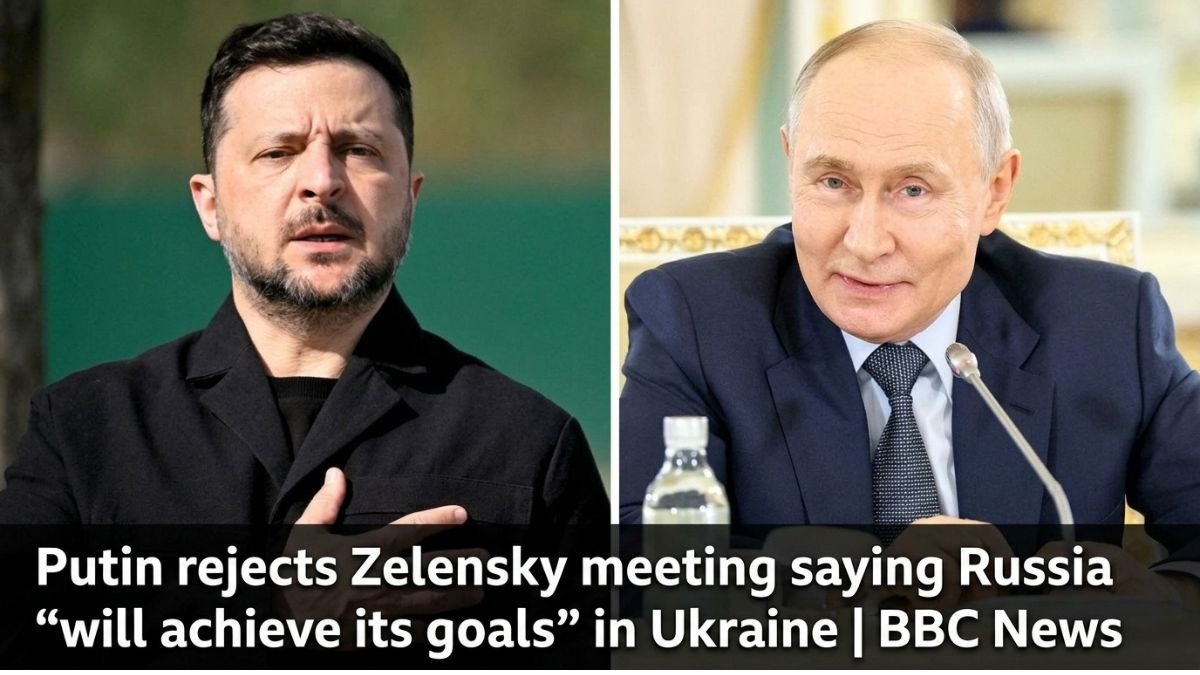
Putin Says Zelensky’s Letter Was “Rude” and Explains Why He Sees No Point in a Meeting
Russian President Vladimir Putin said he does not currently see a reason for a personal meeting with Ukrainian President Volodymyr Zelenskyy, arguing that the letter he received from the Ukrainian leader contained what he described as “elements of rudeness.” The remarks came during the plenary session of the St. Petersburg International Economic Forum.
Moscow reaction: Putin says the letter contained “elements of rudeness”
Speaking in Moscow’s political orbit through comments delivered at SPIEF in St. Petersburg, Putin said the tone of Zelenskyy’s letter raised doubts about whether it was intended to create conditions for talks or make such talks more difficult.
Russian President Vladimir Putin has publicly responded to Ukrainian President Zelensky’s open letter, saying that it contains “elements of rudeness” and does not create the conditions necessary for meaningful negotiations between Russia and Ukraine.
Speaking during the plenary session of the St. Petersburg International Economic Forum (SPIEF) 2026, Putin explained why he currently sees no reason for a personal meeting with Zelensky and outlined what he believes must happen before any direct talks can take place.
Putin Says Zelensky’s Comments About His Age Miss the Point
According to Putin, one of the first things that caught his attention in the letter was Zelensky’s reference to his age and long tenure in power.
Putin argued that age itself is not the most important factor for a political leader. Instead, he said capability, effectiveness, and the ability to perform official duties are what truly matter.
He pointed out that several world leaders older than him continue to carry out their responsibilities actively and effectively. Whether those leaders are successful or unsuccessful, he said, is ultimately a matter of political opinion.
Criticism Over Elections and Political Legitimacy
Putin also responded to remarks regarding the length of time he has remained in office.
He emphasized that political leaders should seek legitimacy through elections and operate within constitutional boundaries. According to Putin, remaining in power outside constitutional procedures amounts to the usurpation of power, which he described as a criminal offense.
He further questioned why Ukraine has not held elections, claiming that discussions about elections in Ukraine had largely disappeared from public debate.
Putin Questions Ukraine’s Position on International Guarantees
Another issue raised by Putin was Zelensky’s reported suggestion that future security guarantees should come primarily from Europe rather than from arrangements involving the United States.
Putin said he does not understand why Ukraine would reject a potential role for the United States and President Donald Trump in guaranteeing a future settlement.
According to the Russian president, Ukraine continues to seek military support from Washington while appearing reluctant to accept the U.S. administration as a guarantor of possible agreements.
He also praised Trump’s efforts and joked that the American president had publicly been “educating” the author of the letter, adding that there was still “work to be done.”
Russia Reveals Details of a Private Communication Channel
During his remarks, Putin disclosed details of what he described as a private communication attempt between Kyiv and Moscow.
He said that several weeks earlier, a Russian businessman informed him that he had been invited to Kyiv and expected discussions related to Russian-Ukrainian relations.
Putin stated that he did not authorize the businessman to negotiate on Russia’s behalf but allowed him to travel and later report back on the conversation.
According to Putin, the businessman met with Zelensky and later informed him that the Ukrainian leader was seeking a personal meeting with the Russian president.
Why Putin Says a Meeting Would Not Be Productive
Although Putin stressed that he has never categorically refused a meeting with Zelensky, he said he does not believe a summit would be useful at the current stage.
He referenced past negotiations and the Minsk agreements, arguing that previous diplomatic efforts failed because they were allegedly used to buy time rather than achieve a lasting settlement.
For that reason, Putin said he is unwilling to enter talks that lack concrete solutions and long-term commitments.
Instead, he argued that specialists, diplomats, military officials, and negotiators should first work out substantive agreements before leaders meet face-to-face.
According to Putin, a meeting should come only after solutions have been developed and documents are ready for signing.
Allegations Regarding an Attack in Luhansk
Putin also cited what he described as a deadly Ukrainian attack on a college dormitory in the Luhansk region.
He claimed that children and teenagers were killed and argued that there were no military targets present at the location.
Referring again to the businessman who had traveled to Kyiv, Putin said he asked how requests for peace talks could be reconciled with such attacks. According to Putin, no satisfactory explanation was provided.
The Russian president suggested that incidents like these make it difficult to create the atmosphere necessary for direct negotiations.
“The Letter Has Elements of Rudeness”
Returning to Zelensky’s message, Putin reiterated his criticism of its tone.
He questioned whether the letter was intended to create conditions for dialogue or instead make personal meetings impossible.
“I think it is the latter,” Putin said, arguing that the contents of the letter undermine prospects for a direct meeting between the two leaders.
Putin Addresses Russian Troops
Rather than directing his final remarks toward Zelensky, Putin chose to address Russian military personnel.
Speaking to soldiers, sailors, officers, admirals, and generals, he said that the entire country is watching them, is proud of them, and relies on them.
He concluded his speech with a message of support for Russian forces, telling them to continue their work on the front lines.
Conclusion
Putin’s response makes clear that a face-to-face meeting with Zelensky is unlikely in the immediate future. While he insists he has never ruled out direct talks altogether, he argues that meaningful negotiations require detailed agreements and a more constructive atmosphere first.
For now, the public exchange of letters has highlighted the deep divisions that remain between Moscow and Kyiv as the war continues, with both sides presenting sharply different visions of how a future peace process should begin.