Kodak Black Arrested on Drug Trafficking Charge: Rapper Faces Felony MDMA Trafficking Charge in Florida
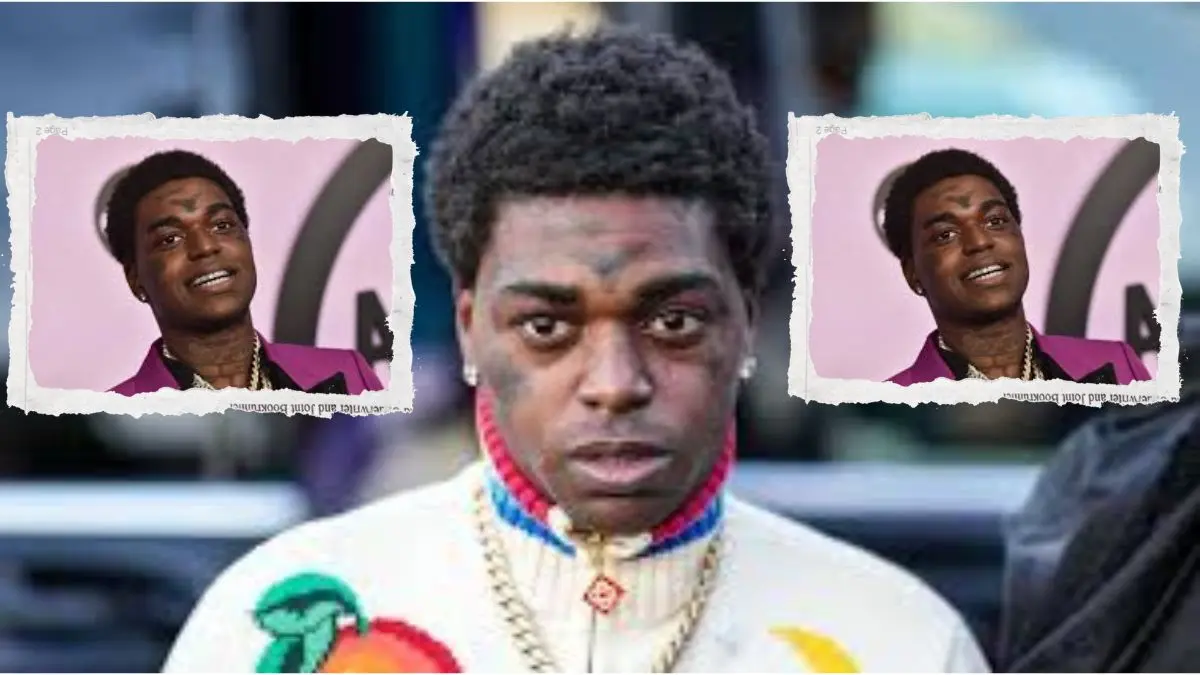
Kodak Black Arrested: Rapper Kodak Black, whose real name is Bill Kapri, was arrested on Wednesday, May 6, 2026, in Orange County, Florida on a felony drug trafficking charge. The 28-year-old South Florida rapper was booked into the Orange County Jail for allegedly trafficking MDMA, the synthetic drug commonly known as ecstasy or molly.
This marks another significant legal setback for the artist who had just begun to rebuild his career following his high-profile 2021 commutation from President Donald Trump.
Kodak Black Arrested : What Happened
The November 2025 Incident
The arrest stems from an investigation dating back to November 24, 2025, when Orange County Sheriff’s Office deputies were called to Children’s Safety Village on Fairvilla Road in Orlando after residents reported hearing gunshots.
When officers arrived at the scene, they found several people gathered around parked luxury sports utility vehicles, including a Lamborghini SUV and a BMW SUV. Among those present was Kodak Black himself.
The Search and Discovery
According to the arrest warrant affidavit, an officer noticed a white substance on a $100 bill inside the Lamborghini SUV, which smelled of cannabis. This gave the officer probable cause to search the vehicle.
During the search of the BMW SUV, officers discovered a pink bag containing what appeared to be a pink pill that tested positive for MDMA. The search also yielded approximately $37,000 in cash and numerous documents bearing Kapri’s name.
The Critical Evidence: The Instagram Connection
Police investigators made a significant connection between items found in the vehicle and images posted on Kodak Black’s Instagram accounts. The pink bag found at the scene matched a bag visible in a photo of Black posted on his Instagram, complete with a distinct lighter and pair of scissors also visible in the social media image.
This Instagram evidence became crucial in linking the drugs directly to the rapper, as it showed he had posted photos featuring the exact same distinctive items found in the vehicle during the police search.
The Lab Results
Testing by the Florida Department of Law Enforcement confirmed the substance in the pink bag was MDMA, weighing approximately 25 grams, which constitutes a trafficking amount under Florida law.
The testing and confirmation process took months, with the lab report coming back on April 17, 2026, leading to Kodak Black’s arrest warrant being issued.
Coordinated Surrender
According to Kodak’s attorney, Bradford Cohen, the arrest was a “coordinated surrender” related to the November 2025 case. This means Kapri’s legal team was aware of the pending charges and arranged for him to turn himself in rather than being arrested by law enforcement.
Cohen noted in his statement to TMZ that the search that led to the evidence occurred in a vehicle with one passenger who was NOT Kodak Black—a key point in the defense strategy going forward.
The Charges: What Kodak Black Is Facing
The Felony Charge
Orange County Jail records list the original charge as trafficking more than 10 grams and less than 200 grams of MDMA. Under Florida law, trafficking MDMA in this quantity is a first-degree felony.
The charge carries a mandatory minimum prison sentence of 3 years and a $50,000 mandatory fine. Under Florida’s mandatory minimum sentencing laws for drug trafficking, these penalties apply regardless of whether this is a first offense or a subsequent one, regardless of the defendant’s personal circumstances, and regardless of the judge’s assessment of the case’s specific facts.
This means if convicted, Kodak Black faces at minimum three years in Florida state prison, significantly more serious than his previous federal weapons conviction.
Prior Criminal History
Kapri’s prior criminal history influenced the judge’s bond decision. The court took into account his 12 prior felony convictions when setting bail, noting that prosecutors could argue for continued detention given the seriousness of the charge and his criminal past.
The Court Appearance and Bond Hearing
Initial Booking and Bond Status
At the time of booking, Kodak Black was initially held without bond, a significant indication of the seriousness prosecutors and the court viewed the charges.
Thursday Court Appearance
On Thursday, May 7, 2026, Kodak Black made his first appearance before an Orange County judge to address bond and other preliminary matters. He entered a written plea of not guilty and requested a jury trial. He also waived appearing in person at future arraignment hearings in state court.
The Bond Hearing Arguments
Prosecution’s Position:
The state requested that the bond be set high or that Kapri remain in custody without bond. The state argued: “The defendant is a professional rapper” and has no ties to Orlando, suggesting he might flee. The prosecution also noted his occupation and lack of local ties as reasons for increased bond.
Interestingly, prosecutors tried to use his status as a celebrity to argue for increased bail—a strategy that drew criticism from the defense.
Defense’s Response:
Kodak’s attorney, Bradford Cohen, responded to the prosecution’s celebrity argument with a pointed rebuttal, stating: “The fact that he’s a rapper doesn’t give you a legal purpose to raise the bond.”
Cohen argued the case against his client was weak and that Kapri had voluntarily turned himself in from California, demonstrating his willingness to cooperate with the legal process. He requested a $10,000 bond for his client.
Cohen further stated to the court and media that he was “typing up a motion to dismiss” the case on his way to court, suggesting he views the charges as lacking merit.
The Judge’s Decision
Ultimately, Orange County Circuit Court Judge set Kodak Black’s bond at $75,000. The judge stated that while the rapper’s profession as a rapper had “no binding” on the decision, other factors weighed heavily:
“I am going to increase the bond, not for the fact that you’re a rapper. I think that has no binding. But the other factors that the court considered is your prior criminal history, including 12 prior felony convictions.”
The judge’s decision reflected concern about Kapri’s extensive criminal record rather than his celebrity status, establishing that criminal history—not occupation—was the determinative factor in setting higher bail.
Request for Passport Surrender
The state also requested that Kapri surrender his passport given his “lack of ties to Orlando” and his status as a professional musician. The defense argued this was unnecessary, noting that Kodak is “a proud Haitian American” but also “an American” with a U.S. passport who has no plans to leave the country.
Who Is Kodak Black? Biography and Career
Early Life
Bill Kahan Kapri was born Dieuson Octave on June 11, 1997, in Pompano Beach, Florida. He was raised in the Golden Acres housing project by his Haitian immigrant mother, Marcelene Octave. He began rapping at age six.
His stage name “Kodak Black” eventually became his professional identity after initially going by “Lil Black” as a nickname. On May 2, 2018, he legally changed his name from “Dieuson Octave” to “Bill Kahan Kapri.”
Musical Breakthrough
Kodak Black gained initial recognition following the release of his 2014 songs “No Flockin” and “Skrt,” both of which led him to sign a recording contract with Atlantic Records.
His breakthrough success came with:
- “No Flockin” (2014) – Double platinum certification, marked his first Billboard Hot 100 entry in 2016
- “Tunnel Vision” (2017) – Peaked at number 6 on the Billboard Hot 100
- “Painting Pictures” (2017) – Debut studio album, peaked at number 3 on Billboard 200
- “Project Baby 2” (2017) – First commercial mixtape, peaked at number 2
- “Roll in Peace” (2017) – Triple platinum-certified single featuring XXXTentacion
Commercial Peak: “Dying to Live” Album
His second album, “Dying to Live” (2018), marked his furthest commercial success, peaking atop the Billboard 200. It spawned the single “Zeze” (featuring Travis Scott and Offset), which peaked at number 2 on the Billboard Hot 100.
“Zeze” received sextuple platinum certification by the RIAA and remains his highest-charting song to date.
Recent Success
More recently, Kodak Black released the hit single “Super Gremlin” in 2022, which reached number 3 on the Billboard Hot 100. He has sold over 30 million singles throughout his career, making him one of rap’s most commercially successful artists despite his legal troubles.
Extensive Criminal History: A Pattern of Legal Troubles
Early Arrests (2015-2016)
Kodak Black’s legal troubles began in middle school and escalated dramatically during his music career:
- 2015: Arrested in Pompano Beach on charges of robbery, battery, false imprisonment (two counts of a child under 13, three counts of an adult), driving with a suspended license, and marijuana possession. He was sentenced to house arrest, anger management classes, community service, and five years of probation.
- April 2016: Arrested in Broward County for possession of a weapon by a convicted felon, possession of marijuana, and fleeing from law enforcement.
- August 2016: Arrested for armed robbery and false imprisonment.
Sexual Assault Allegation (2016)
In 2016, Kodak Black was accused of rape and faced a charge of first-degree criminal sexual conduct in South Carolina after allegedly assaulting a teenage girl in a hotel room.
The charge was extremely serious and hung over his career for years. However, in 2021, he was given a plea bargain to the lesser offense of assault and battery and was sentenced to probation.
Federal Weapons Conviction (2019)
In 2019, Kodak Black pleaded guilty to making false written statements when trying to acquire firearms. He falsely claimed he was not under indictment when submitting federal firearms purchase forms.
On November 18, 2019, U.S. District Judge Federico Moreno sentenced Kapri to 46 months (nearly four years) in federal prison, followed by three years of supervised release.
He served at FCI Big Spring in Texas and USP Thomson in Illinois while incarcerated.
The Trump Commutation (2021)
On January 20, 2021, President Donald Trump’s final day in office, the White House announced that Kodak Black’s sentence would be commuted. The commutation was supported by numerous religious leaders, including Reverend Darrell Scott and Rabbi Schneur Kaplan of Fort Lauderdale.
Other supporters included:
- Former New York City Police Commissioner Bernie Kerik
- Hunter Pollack (brother of Parkland shooting victim Meadow Pollack)
- Fellow rappers Gucci Mane, Lil Pump, Lil Yachty
- Baltimore Ravens quarterback Lamar Jackson
The White House statement emphasized his philanthropic efforts and community contributions, noting that Kodak had donated $50,000 to David Portnoy’s Barstool Fund while still incarcerated, with all proceeds going to restaurants in his hometown.
Post-Release Legal Issues (2022-2025)
After his commutation, Kodak Black’s legal troubles continued:
- February 2022: Shot during a fight outside a West Hollywood restaurant during an event connected to Justin Bieber’s Super Bowl-week party.
- July 2022: Arrested in Fort Lauderdale after Florida Highway Patrol troopers pulled him over and found 31 oxycodone tablets and $74,960 in cash. He was also driving with an expired driver’s license and tags.
- 2025: Released from jail after a drug possession charge involving oxycodone was dismissed because he held a valid prescription for the medication.
- July 2025: Despite his legal troubles, Kodak Black was honored with a key to the city of Pompano Beach for his extensive philanthropic work—a remarkable contrast to his ongoing legal problems.
Current Situation (May 2026)
The May 2026 MDMA trafficking arrest represents the most serious legal charge since his Trump commutation in 2021, potentially carrying a mandatory minimum of three years in state prison—significantly more serious than his previous federal weapons conviction.
Philanthropic Efforts and Community Contributions
Despite his troubled legal history, Kodak Black has engaged in significant charitable work:
Educational and Charitable Donations
- Paid for notebooks for school children
- Provided funding and supplies to daycare centers
- Provided food for the hungry
- Annually provided gifts and support for underprivileged children during Christmas
- Provided educational resources to students and families of fallen law enforcement officers
- Donated $50,000 to David Portnoy’s Barstool Fund while incarcerated (specifically for restaurants in his hometown)
- Donated $1 million to charity (promised if Trump granted clemency, which he did)
Community Recognition
In July 2025, just months before his May 2026 arrest, Pompano Beach honored Kodak Black with a key to the city recognizing his philanthropic contributions—a remarkable testament to his community impact despite his legal challenges.
The Contradiction: Success and Struggle
Kodak Black’s career and life represent a stark contradiction between commercial success and criminal behavior. His music has reached massive audiences, with hits like “Zeze,” “Super Gremlin,” “Tunnel Vision,” and “Roll in Peace” generating hundreds of millions of streams.
Yet his personal life has been marked by:
- Robbery and battery charges
- Sexual assault allegations
- Federal weapons convictions
- Oxycodone possession
- Multiple arrests and incarcerations
- Controversial social media statements
This dichotomy—between his status as a commercially successful artist and his repeated legal troubles—has defined much of his public narrative.
The Attorney’s Defense Strategy
Bradford Cohen’s Arguments
Kodak Black’s legal team is led by attorney Bradford Cohen, who has expressed confidence in the case’s outcome. Cohen’s defense strategy appears to focus on weaknesses in the prosecution’s case:
- Lack of Direct Ownership: Everyone at the scene, including Kodak, denied owning the bag. The fact that he requested the money while denying ownership of the bag could weaken the trafficking charge.
- Questionable Search: Cohen notes that the original search occurred in a vehicle with a passenger who was NOT Kodak Black, raising questions about the connection between the rapper and the drugs found.
- Weak Evidence: Cohen stated he was working on a “motion to dismiss,” suggesting he views the evidence as insufficient to support trafficking charges.
- Instagram Evidence Issues: While investigators matched items to his Instagram photos, this alone may not prove he owned or possessed the drugs in the vehicle.
Legal Implications and Sentencing
Mandatory Minimum Sentencing
If convicted of trafficking MDMA between 10 and 200 grams in Florida, Kodak Black faces:
- Minimum 3 years in state prison
- $50,000 mandatory fine
- 12 prior felony convictions that will likely be considered by the judge
The mandatory minimum removes judicial discretion—meaning even if a judge believes the sentence is too harsh, they cannot impose less than three years.
Comparison to Previous Cases
This current charge is more serious than his previous federal weapons conviction, which resulted in a commuted 46-month sentence. A conviction here would likely mean serving considerably more time than he previously served.
The Story Beyond the Headlines
Pattern of Behavior vs. Genuine Rehabilitation
The question surrounding Kodak Black is whether his legal troubles represent a pattern he cannot overcome or whether there are deeper systemic issues at play. His charitable work suggests genuine interest in giving back, yet his repeated arrests suggest he may have difficulty avoiding high-risk situations.
The Role of Environment and Circumstances
Many of Kodak’s arrests have occurred in situations where he was present but not necessarily the primary actor—like the current case where others were present and the ownership of the bag was disputed.
Celebrity and Justice
The prosecution’s attempt to use his celebrity status to argue for higher bail (which the judge explicitly rejected) raises questions about how the justice system treats famous defendants compared to unknowns.
Current Status and Next Steps
Bond and Detention
Kodak Black was released on $75,000 bond, though initial booking records had him without bond. The conditions of his release are not yet fully disclosed, but typically would include regular check-ins, possible drug testing, and restriction on leaving the jurisdiction.
Legal Timeline
- May 6, 2026: Arrested and booked into Orange County Jail
- May 7, 2026: First appearance before judge; pleaded not guilty; bond set at $75,000; jury trial requested
- Future: Discovery process, potential motions to dismiss, pre-trial conferences, potential plea negotiations, or trial
Sentencing Possibilities
If convicted as charged, Kodak faces:
- Minimum: 3 years in Florida state prison + $50,000 fine
- Maximum: 30 years in state prison (though prosecutors typically wouldn’t seek maximum on a first-degree trafficking charge)
- Actual outcome: Likely somewhere between 3-10 years, depending on plea negotiations, judge’s discretion within sentencing guidelines, and any aggravating or mitigating factors
Reactions and Industry Impact
Hip-Hop Community Response
The arrest has drawn reactions from the hip-hop community, with some expressing shock given his recent key to the city of Pompano Beach, while others noted his pattern of legal troubles as a continuing concern.
Career Implications
If convicted and incarcerated, this arrest could significantly impact his music career, tour schedule, and ability to generate revenue. However, his legions of devoted fans have supported him through previous incarcerations.
Broader Implications
The case raises questions about:
- How the justice system treats celebrity defendants
- The role of mandatory minimums in drug sentencing
- Rehabilitation versus punishment
- Second chances for those with criminal histories
The Bigger Picture: Kodak Black’s Legacy
Musical Contributions
Despite his legal troubles, Kodak Black has made undeniable contributions to hip-hop music, influencing emerging artists and creating commercially successful work that resonated with millions.
The Cautionary Tale
His story serves as a cautionary tale about the challenges of escaping poverty and crime, the impact of legal troubles on even successful individuals, and the gap between commercial success and personal stability.
The Question of Redemption
The key to the city from Pompano Beach in July 2025 suggested Kodak might be turning a corner. Just ten months later, his May 2026 arrest raises questions about whether genuine redemption is possible or if his circumstances keep pulling him back into legal troubles.
Timeline of Kodak Black’s Major Events
- June 11, 1997: Born Dieuson Octave in Pompano Beach, Florida
- 2014: Releases “No Flockin” and “Skrt”; signs with Atlantic Records
- 2015: First major arrest (robbery, battery, false imprisonment, etc.)
- 2016: Sexual assault allegations in South Carolina; multiple arrests
- 2017: Releases debut album “Painting Pictures”; commercial success begins
- 2018: Releases “Dying to Live” album; “Zeze” becomes major hit
- 2019: Pleads guilty to federal weapons charge; sentenced to 46 months
- 2020: Releases “Bill Israel” album while incarcerated
- January 20, 2021: Trump commutes sentence; released after serving ~2 years
- February 2022: Shot outside Los Angeles restaurant
- July 2022: Arrested in Fort Lauderdale on oxycodone charges
- 2025: Released from jail after drug charge dismissed; key to city from Pompano Beach (July)
- November 24, 2025: Incident at Children’s Safety Village where MDMA is found
- April 17, 2026: Lab confirms MDMA; arrest warrant issued
- May 6, 2026: Surrenders and is arrested on MDMA trafficking charge
- May 7, 2026: Court appearance; bond set at $75,000; pleads not guilty
Conclusion: Where Kodak Black Goes From Here
Kodak Black’s arrest on May 6, 2026, on drug trafficking charges marks a critical juncture in his life and career. At 28 years old, he faces his most serious legal challenge since his Trump commutation in 2021.
The mandatory minimum three-year sentence attached to the MDMA trafficking charge means that if convicted, he will spend a significant portion of his creative prime years behind bars—time he could spend making music and contributing to his community.
His attorney Bradford Cohen’s confidence in resolving the case favorably and his willingness to file a motion to dismiss suggest the defense believes the prosecution’s case has weaknesses. The fact that everyone at the scene, including Kodak, denied owning the bag adds complexity to establishing possession for trafficking charges.
However, the Instagram evidence matching items found in the vehicle to his social media posts, combined with his 12 prior felony convictions, creates challenges for the defense.
The coming months will determine whether Kodak Black can overcome what appears to be his most serious legal challenge since receiving presidential clemency five years ago. The outcome will likely define not only his future but also potentially reshape public perception of whether individuals with extensive criminal histories can genuinely rehabilitate themselves.
For now, Kodak Black awaits trial, his $75,000 bond set, his next court date pending, and his future uncertain.
Key Facts About Kodak Black’s 2026 Arrest
- Full Name: Bill Kahan Kapri (born Dieuson Octave)
- Age: 28 years old
- Hometown: Pompano Beach, Florida
- Arrest Date: May 6, 2026
- Booking Location: Orange County Jail, Orlando, Florida
- Charge: Felony trafficking MDMA (10-200 grams)
- Incident Date: November 24, 2025
- Incident Location: Children’s Safety Village, Fairvilla Road, Orlando
- Amount of MDMA: Approximately 25 grams (confirmed by FDLE)
- Cash Found: $37,000
- Bond: $75,000
- Plea: Not guilty; jury trial requested
- Prior Felony Convictions: 12
- Mandatory Minimum Sentence: 3 years in state prison
- Mandatory Fine: $50,000
- Trump Commutation: January 20, 2021
- Highest-Charting Song: “Zeze” (peaked #2 on Billboard Hot 100)
- Total Single Sales: 30 million+
- Attorney: Bradford Cohen
Sources: TMZ, NBC Miami, Click Orlando, Local 10, Washington Times, Artvoice, ABC News, AP News, Wikipedia, Prisonpedia, Hollywood Life, Last.fm, White House Archives