Dave Mason: The Unsung Guitar Hero Who Shaped the Sound of Classic Rock
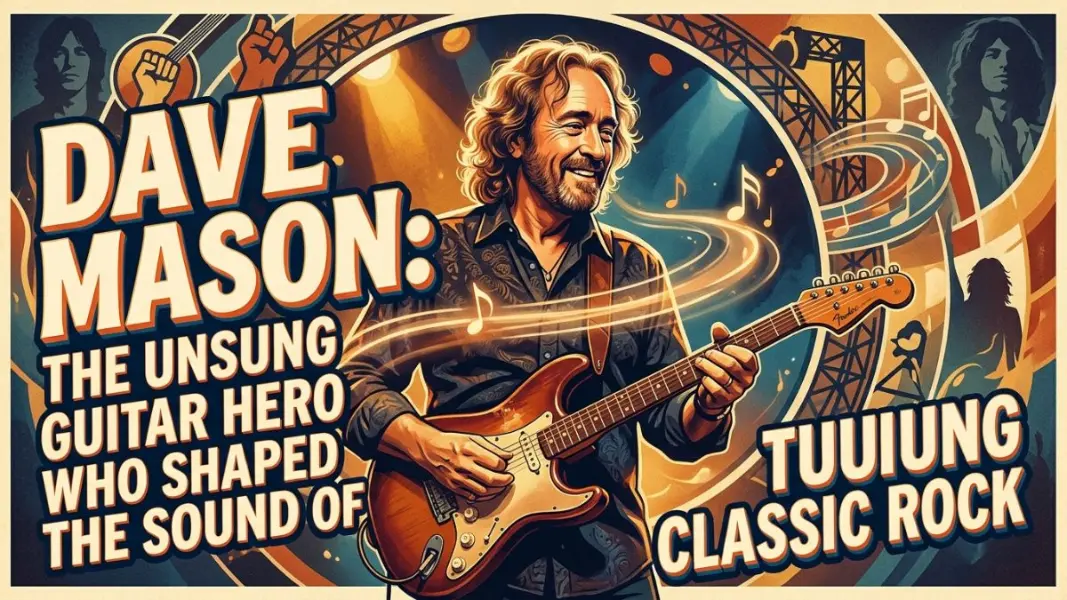
When you think of the architects of classic rock, names like Eric Clapton, Jimi Hendrix, and George Harrison come to mind. But there’s another name that deserves equal recognition—Dave Mason. This British-born guitarist, singer, and songwriter didn’t just witness the birth of rock music; he helped deliver it.
Dave Mason’s fingerprints are all over some of the most beloved songs of the 1960s and 70s. From his groundbreaking work with Traffic to his successful solo career and legendary collaborations, Mason carved out a unique space in rock history. Yet somehow, he remains one of music’s best-kept secrets—a musician’s musician whose influence far exceeds his mainstream recognition.
Let’s dive into the remarkable story of Dave Mason, a man whose guitar has spoken to millions, even if they didn’t always know his name.
The Beginning: A Young Boy with a Guitar and a Dream
David Thomas Mason was born on May 10, 1946, in Worcester, England. Growing up in post-war Britain, young Dave found his escape in music. Like countless British teenagers of his generation, he was captivated by American blues and rock and roll. Artists like Muddy Waters, Chuck Berry, and Bo Diddley became his teachers through crackling radio waves and precious vinyl records.
By his early teens, Mason had picked up the guitar and never looked back. He wasn’t content with just playing—he wanted to understand music. This curiosity led him to experiment with different instruments, from bass to keyboards, making him a versatile musician who could contribute to any song in multiple ways.
His first taste of professional music came with local Birmingham bands in the early 1960s. These weren’t glamorous gigs—smoky clubs, small paychecks, and long nights—but they were his classroom. Mason learned how to connect with an audience, how to make a guitar sing, and how to turn musical ideas into unforgettable moments.
Traffic: Where the Magic Started
Joining Forces with Musical Visionaries
In 1967, Dave Mason’s life changed forever when he became a founding member of Traffic. Alongside Steve Winwood, Jim Capaldi, and Chris Wood, Mason helped create one of the most innovative bands of the psychedelic rock era.
Traffic wasn’t just another rock band. They blended rock, jazz, folk, and psychedelia into something entirely new. And Dave Mason was essential to that sound. His guitar work provided the melodic backbone, while his songwriting brought a pop sensibility that balanced the band’s experimental tendencies.
Must Read:15 Most Beautiful Diwali Home Decoration Ideas
The Hits That Defined an Era
Mason’s contributions to Traffic’s debut album, Mr. Fantasy (1967), were nothing short of brilliant. He wrote and sang “Hole in My Shoe,” a whimsical, psychedelic masterpiece that became a hit in the UK. The song showcased Mason’s ability to craft catchy melodies while embracing the experimental spirit of the times.
But his relationship with Traffic was complicated. Mason left and rejoined the band multiple times between 1967 and 1968, creating a tumultuous dynamic. Despite the instability, he contributed to their self-titled second album in 1968, including the beautiful acoustic track “You Can All Join In.”
His time with Traffic was brief but impactful. Even after his final departure, the songs he helped create remained classics, played on radio stations for generations to come.
Going Solo: Finding His Own Voice
The Launch of a Solo Career
After leaving Traffic for good in 1968, Dave Mason faced a crossroads. He could have faded into obscurity, another talented musician lost to the chaos of the 60s. Instead, he doubled down on his artistry and launched a solo career that would prove his staying power.
His debut solo album, Alone Together (1970), became an instant classic. The album showcased Mason’s growth as a songwriter and his ability to blend rock, folk, and blues into a sound that was uniquely his own. The title track remains one of his most beloved songs—a gentle, introspective piece that reveals the softer side of this rock guitarist.
Major Albums and Hit Songs
Throughout the 1970s, Dave Mason released a string of successful albums that cemented his reputation as a solo artist:
- “It’s Like You Never Left” (1973) – This album featured the hit single “We Just Disagree,” which reached the Top 20 on the Billboard charts. The song’s bittersweet lyrics about a relationship’s end resonated with millions of listeners and remains a classic rock radio staple.
- “Split Coconut” (1975) – Mason continued to refine his sound, delivering both rock energy and emotional depth.
- “Let It Flow” (1977) – Perhaps his most commercially successful solo album, featuring the title track that became a hit and showcased his signature guitar tone.
Mason’s solo work proved he wasn’t just a talented sideman—he was a formidable artist in his own right. His songs combined technical skill with emotional honesty, making them accessible to both casual listeners and serious music fans.
Legendary Collaborations: Playing with the Best
A Musician’s Musician
One of the most remarkable aspects of Dave Mason’s career is the sheer number of legendary artists who wanted to work with him. His guitar playing and musical sensibility made him a sought-after collaborator.
Jimi Hendrix considered Mason a friend and fellow traveler in the world of experimental rock. Eric Clapton frequently called on Mason for sessions and tours. Mason played on George Harrison’s landmark triple album All Things Must Pass (1970), contributing to one of the greatest solo albums in rock history.
He also worked with:
- The Rolling Stones – contributing to their sessions
- Delaney & Bonnie – touring and recording
- Fleetwood Mac – joining them for live performances during their early years
- Mama Cass Elliot – adding his guitar touch to her solo work
These weren’t just professional gigs—they were artistic partnerships with some of the greatest musicians of the era. Mason’s ability to adapt to different musical styles while maintaining his distinctive voice made him invaluable.
The Struggles Behind the Success
The Price of Perfection
Dave Mason’s career wasn’t all gold records and sold-out shows. Like many artists of his generation, he struggled with the darker side of rock and roll. His perfectionism sometimes led to conflicts with bandmates, contributing to his turbulent relationship with Traffic.
The music industry’s demands took their toll. Constant touring, creative pressures, and the expectations of commercial success created stress that affected both his personal life and musical output. Mason experienced periods of creative drought and personal challenges that tested his commitment to music.
Turning Points and Resilience
But Mason never gave up. Even when the hits stopped coming as frequently in the 1980s and 90s, he continued to tour and record. He understood that real artistry isn’t measured solely in chart positions—it’s about the connection between musician and audience, the joy of creation, and the integrity of the work.
His willingness to keep playing, even when the spotlight dimmed, earned him respect from fellow musicians and die-hard fans. Mason proved that true rock and rollers don’t retire—they just keep playing.
The Legacy: An Influence That Echoes
Impact on Rock and Blues Music
Dave Mason’s influence on rock and blues music cannot be overstated. His guitar style—melodic, tasteful, and emotionally resonant—inspired countless musicians. He showed that you didn’t need to be the loudest or fastest guitarist to make an impact; sometimes, the right note at the right time is more powerful than a thousand flashy solos.
His songwriting demonstrated that rock music could be both commercially successful and artistically meaningful. Songs like “Feelin’ Alright” (which he wrote and Traffic popularized, later covered by Joe Cocker) and “We Just Disagree” have become timeless classics, covered by artists across multiple generations.
Recognition and Honors
In 2004, Dave Mason was inducted into the Rock and Roll Hall of Fame as a member of Traffic. While the honor came for his work with the band, it recognized his broader contribution to rock music. Fans and critics alike celebrated the acknowledgment of an artist who had given so much to the music world.
Today, Mason continues to tour, bringing his classic songs to new audiences and reminding longtime fans why they fell in love with his music in the first place. At over 75 years old, he still picks up his guitar with the same passion he had as a teenager in Worcester.
Interesting Facts About Dave Mason
- Mason played the sitar on Traffic recordings, showcasing his multi-instrumental abilities during the psychedelic era.
- He was one of the first rock guitarists to extensively use the talk box effect, influencing future generations of players.
- Despite writing “Feelin’ Alright,” Mason’s version was overshadowed by Joe Cocker’s powerful cover, which became the definitive version.
- He turned down an opportunity to join Fleetwood Mac permanently, choosing to maintain his solo career instead.
- Mason is known for his collection of vintage guitars and his meticulous attention to tone.
Conclusion: The Quiet Giant of Classic Rock
Dave Mason may not have the household name recognition of some of his contemporaries, but his contribution to rock music is undeniable. From his pioneering work with Traffic to his enduring solo career and legendary collaborations, Mason has consistently delivered music that moves people.
He represents the best of what rock and roll can be: authentic, emotionally honest, and musically excellent. In an era of manufactured pop stars and viral sensations, Mason’s career reminds us that true artistry endures. His songs continue to resonate because they were crafted with skill, sincerity, and soul.
For music lovers exploring the roots of classic rock, Dave Mason’s catalog is essential listening. For those who already know his work, his legacy serves as a reminder that sometimes the quiet giants make the loudest impact.
The next time “We Just Disagree” comes on the radio or you hear that opening riff from “Feelin’ Alright,” remember Dave Mason—the guitarist, songwriter, and rock and roll journeyman who helped shape the soundtrack of our lives.