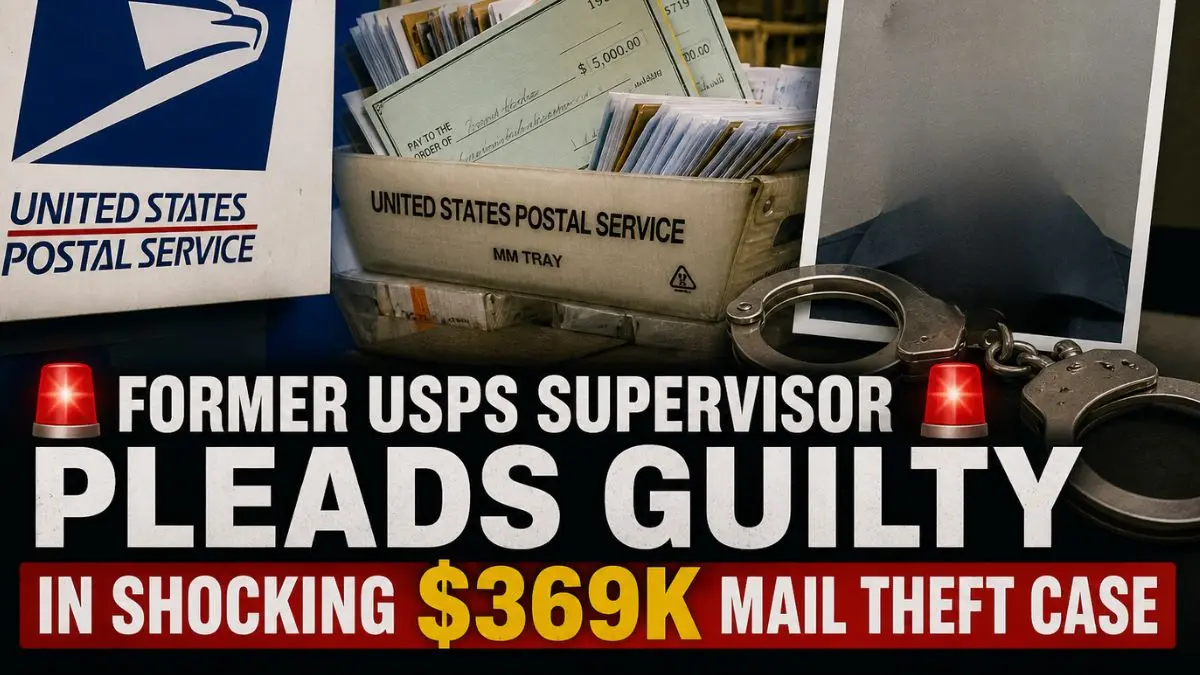
Former US Postal Service Supervisor Benita D. Randle Pleads Guilty in $369K St. Louis Check Theft Scheme
ST. LOUIS, Mo. — Benita D. Randle, 43, a former supervisor at the U.S. Postal Service’s St. Louis Processing and Distribution Center, pleaded guilty on Monday, May 5, 2026, in U.S. District Court in St. Louis to one count of theft of mail by a postal employee.
The St. Louis Processing and Distribution Center is one of the region’s key mail hubs, handling large volumes of incoming and outgoing correspondence. Because supervisors have elevated access to sorting areas and mail streams, they are placed in positions of significant trust—making internal theft cases particularly serious in federal investigations.
Benita D. Randle and Details of the Theft Scheme
According to federal prosecutors, the scheme took place between September and October 2023. During this period, Randle allegedly removed envelopes containing checks from the mail stream and passed them to her accomplice, John W. Harrison, 26, of Black Jack, Missouri.
Harrison then allegedly opened the stolen envelopes, extracted the checks, and prepared them for potential deposit or alteration.
Authorities report that:
- A total of 89 checks were stolen
- The combined face value of the checks was $369,248
- One additional counterfeit check linked to the scheme was also identified
- Some checks were reportedly targeted because they were business-related or high-value payments, making them easier to exploit before detection
Federal investigators believe the operation was not random theft but a coordinated effort involving repeated access to mail over multiple weeks.
How the Scheme Was Discovered
The case began to unravel in an unexpected way unrelated to postal operations.
Authorities say the breakthrough came after Randle’s leased Nissan Juke was repossessed due to a failure to maintain insurance coverage. During the repossession process, dealership employees discovered suspicious items inside a backpack belonging to Harrison.
Those items reportedly included:
- An AR-style rifle
- Controlled substances, including cocaine and fentanyl
- Multiple loose checks and mail-related documents
Because of the presence of financial instruments and suspected stolen mail, law enforcement was alerted immediately. St. Charles Police responded to the scene and began coordinating with federal authorities.
Investigation and Postal Service Involvement
Once postal inspectors became involved, the case expanded into a full federal investigation led by the U.S. Postal Inspection Service and the Office of Inspector General.
Investigators conducted interviews with both defendants. According to court records, Randle:
- Initially denied working in mail handling roles
- Claimed she did not operate or use the Nissan Juke involved in the case
- Later made statements that contradicted evidence recovered from the vehicle and witness accounts
A key piece of evidence included a counterfeit check that matched information from one of the stolen original checks, strengthening the connection between stolen mail and attempted financial fraud.
Federal agents ultimately reconstructed the timeline of thefts using mail tracking data, recovered items, and financial records.
Court Proceedings and Guilty Pleas
- Benita D. Randle pleaded guilty on May 5, 2026 to theft of mail by a postal employee
- John W. Harrison previously pleaded guilty on February 10, 2026 to possession of stolen mail matter
Both defendants admitted involvement in handling stolen mail, though sentencing outcomes will ultimately depend on federal guidelines, prior history, and cooperation with investigators.
Sentencing and Potential Penalties
Both defendants face serious federal penalties:
- Maximum sentence: 5 years in federal prison
- Maximum fine: $250,000
- Possible additional penalties include supervised release and restitution orders
Scheduled sentencing dates:
- Randle: August 20, 2026
- Harrison: June 3, 2026
Judges in federal mail theft cases often consider aggravating factors such as abuse of public trust, volume of stolen mail, and financial harm to victims.
Broader Context: Rising Mail Theft Cases
This case is part of a broader trend of increasing mail theft investigations in the St. Louis region and other major U.S. cities.
Federal authorities have noted that:
- Check theft from mail remains one of the most common forms of postal fraud
- Internal employee involvement significantly increases the scale and success rate of theft schemes
- Criminal groups often target business checks, tax refunds, and insurance payments due to higher cash value
In some recent cases across the region, multi-defendant schemes have involved millions of dollars in stolen or altered checks, indicating organized activity rather than isolated incidents.
Impact on Victims and Financial Losses
Prosecutors have emphasized that the total financial exposure—$369,248—represents the face value of stolen checks, but the actual confirmed loss may differ.
Some checks may have been:
- Canceled before cashing
- Reversed by issuing banks
- Flagged as fraudulent before processing
The U.S. Attorney’s Office for the Eastern District of Missouri is currently working to identify all affected victims and determine restitution eligibility.
Advice for Potential Victims
Authorities recommend that individuals and businesses take immediate steps if they suspect mail interference:
- Contact your bank or financial institution immediately
- Report suspicious activity to the U.S. Postal Inspection Service
- Monitor credit reports and account statements closely
- Consider placing fraud alerts or credit freezes if needed
The Postal Inspection Service hotline (1-877-876-2455) remains active for reporting suspected mail theft.
What Happens Next
With both defendants now pleading guilty, the case moves toward sentencing and restitution proceedings. Prosecutors are expected to present detailed financial impact statements and victim reports during upcoming hearings.
The case underscores ongoing concerns about internal vulnerabilities in high-volume mail processing systems and highlights how abuse of trusted positions can enable large-scale fraud before detection systems intervene.