Austin Mass Shooting at Buford’s Bar on 6th Street: Everything We Know — The Attack, the Suspect, the Victims, and the FBI Terrorism Investigation
Austin Mass Shooting: In the early hours of Sunday, March 1, 2026, a gunman opened fire on customers at one of Austin’s most beloved entertainment district bars. Two innocent people were killed. Fourteen were hospitalized. Three are in critical condition. And the FBI is now investigating a potential act of terrorism. This is the complete, detailed breakdown of everything we know.
⚠️ Breaking: The Essential Facts Right Now
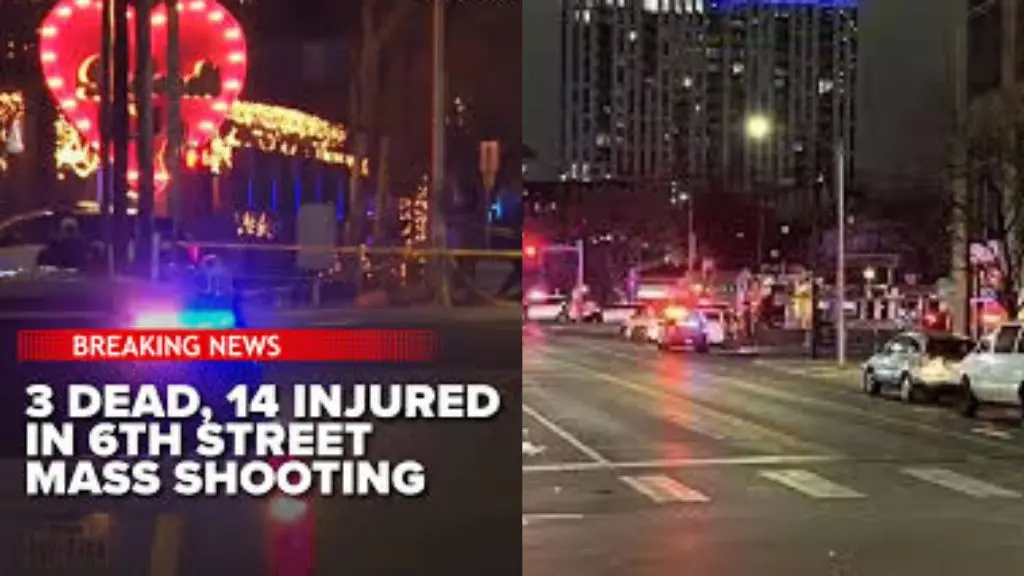
Three people died and 14 people have been hospitalized in a shooting on West Sixth Street in Austin early Sunday morning. Three were pronounced dead on scene, including the suspect. Of the 14 people taken to the hospital, three were in critical condition.
The shooting is being investigated by the FBI as a potential act of terrorism, according to Acting Special Agent in Charge Alex Doran.
The suspect, who is included in the number of dead, was killed by Austin police officers responding to the shooting.
If you are searching for a loved one: Austinites looking for loved ones in the aftermath of the shooting should call APD’s victim services unit at 512-974-5037.
Austin Mass Shooting: Buford’s Backyard Beer Garden on West 6th Street
To understand why this shooting struck such a deep nerve in Austin and across the country, you first need to understand where it happened.
Buford’s bar is located in the downtown area, just 2 miles from the heart of Austin’s University of Texas campus and less than a mile from the Texas Capitol building.
Buford’s is a popular beer garden. Located at the intersection of West Sixth Street and Rio Grande Street, it sits at the heart of Austin’s most famous entertainment corridor — a stretch of bars, restaurants, live music venues, and beer gardens that draws tens of thousands of people every weekend night. West 6th Street is not a back alley or a quiet neighborhood. It is one of the most vibrant, densely populated nightlife destinations in the entire state of Texas — a place where young people go to celebrate, to listen to music, to enjoy warm evenings, and to feel alive in a city that has long prided itself on being a destination for exactly those kinds of experiences.
West Sixth Street is home to numerous bars and restaurants and is typically crowded late at night.
That crowded, joyful, completely ordinary Saturday night was shattered at 1:59 a.m. Sunday morning.
Austin Mass Shooting Minute by Minute
1:40 a.m. — First Reports
Austin Police Chief Lisa Davis said police received a call around 1:40 a.m. for reports of a “male shooting” at Buford’s, a beer garden in the city’s busy entertainment district.
1:58–1:59 a.m. — The 911 Call and the First Shot
Officers responded to reports of a shooting at Buford’s bar, a popular beer garden downtown, at about 1:58 a.m.
Austin EMS Chief Robert Luckritz said paramedics and police officers arrived to the shooting scene and began treating patients 57 seconds after receiving a call around 1:59 a.m. in front of Buford’s bar on West 6th Street.
Fifty-seven seconds. In a mass shooting situation, that response time is extraordinary — and it almost certainly saved lives.
LIVE – Al Jazeera English | Watch 24/7 Global News Coverage Online
Phase 1 — The Vehicle Attack: Drive-By Shooting From the SUV
Austin Police Chief Lisa Davis said the suspect, who was driving a large SUV, circled the block several times before stopping, turning on the SUV’s hazard lights, and firing a handgun.
This detail — the suspect circling the block multiple times before attacking — suggests a level of deliberate planning and reconnaissance that investigators are taking very seriously. He was not a man who stopped impulsively. He drove around. He watched. He waited. And then he turned on his hazard lights — a chilling, methodical act — and opened fire.
“At one point, he put his flashers on, pulled down his window and began using a pistol shooting out of his car windows, striking patrons of the bar that were on the patio, and out in front of the bar,” Davis said.
Customers sitting on the patio at Buford’s — people having a drink on a warm Saturday night — were shot from a moving vehicle. They had no warning. No time to run. No reason to expect that the SUV circling their block was about to become a weapon.
Phase 2 — On Foot With a Rifle: The Attack Escalates
Police said he then parked near Wood Street, got out and continued shooting with a pistol and later a rifle as he walked east on Sixth Street.
The attack escalated dramatically when the shooter abandoned his vehicle and moved on foot. He was now walking through one of Austin’s busiest entertainment strips in the early hours of Sunday morning — armed with both a pistol and a rifle — shooting at anyone in his path.
The suspect then parked the car and walked out with a rifle, shooting some people who were walking by, Davis said.
Davis said the suspect never entered Buford’s bar but fired shots from outside the building. She said evidence from the SUV and nearby businesses is still being processed and confirmed that only two weapons — a pistol and a rifle — were recovered.
Phase 3 — Officers Engage: The Shooter Is Killed
The male suspect was armed when police arrived, and three officers “returned fire,” killing him, Davis said.
Davis said officers who were on East 6th Street quickly transitioned to West 6th, where they confronted the suspect. Three officers returned fire, killing the shooter.
The speed of the police response — possible only because officers were already staged in the entertainment district — ended the attack before it could claim even more lives. Three officers confronted the armed gunman and neutralized the threat. Their actions, combined with the extraordinary 57-second EMS response time, are the reason the death toll was not significantly higher.
The Casualties: Who Was Hurt and How Seriously
Three people were pronounced dead on scene, including the suspect. Of the 14 people taken to the hospital, three were in critical condition.
Breaking down the human toll of what happened:
Dead at the scene: 3 total — 2 innocent victims and the shooter himself
Hospitalized: 14 people transported to nearby hospitals
Critical condition: 3 of the 14 hospitalized are in critical condition as of Sunday morning
Total patients treated on scene: 17 patients were located at the scene.
As of the time of this writing, the names of the two victims who were killed have not been publicly released by authorities. Their families are being notified. They were people who went out on a Saturday night in their city and did not come home. They deserve to be named, remembered, and honored — and when that information is officially released, this article will be updated immediately.
The Shooter: What We Know About the Suspect
The suspect was not identified by police. As of Sunday morning, authorities have deliberately withheld the shooter’s identity pending the ongoing investigation and notification of family members. This is standard protocol in active investigations, and the FBI’s involvement adds an additional layer of sensitivity around the release of identifying information.
What has been confirmed:
Sex: Male
Vehicle: A large SUV, which he drove around the block multiple times before initiating the attack
Weapons: A pistol and a rifle — both recovered at the scene
Status: Deceased — killed by three Austin police officers at the scene
Two law enforcement sources tell CBS News that investigators believe the shooter has a history of mental health issues. They are looking at whether the shooter was influenced by extremist ideology, specifically Islamic extremism, but they say the mental health issues appeared to be significant.
It is critically important to note that this remains an active, developing investigation. No formal determination of motive has been made. The mental health angle and the extremism angle are both being investigated simultaneously — and it is entirely possible that both factors played a role, or that neither ultimately proves to be the primary explanation. Responsible coverage of this story requires making that uncertainty clear.
The FBI Investigation: What Does “Potential Nexus to Terrorism” Mean?
This is the detail that has escalated this story from a local tragedy to a national and international news event: the FBI’s announcement that there are indicators of a potential terrorism connection.
The shooting is being investigated by the FBI as a potential act of terrorism, according to Acting Special Agent in Charge Alex Doran. He added that the FBI’s Joint Terrorism Task Force as well as its other specialty teams are involved in the investigation. “In terms of specifically what type of terrorism, we’re just at this point prepared to say that it was potentially an act of terrorism,” Doran said during a news conference.
“There were indicators on the subject and in his vehicle that indicate potential nexus to terrorism,” Doran said. The FBI said it was too early in the investigation to determine an exact motivation for the shooting.
FBI Acting Special Agent in Charge Alex Doran confirmed that indicators inside the suspect’s SUV suggested a possible terrorism link. Authorities later cleared those items as non-threatening but said the investigation into motive continues.
What “Indicators” Could Mean
When law enforcement officials use the phrase “indicators of a potential nexus to terrorism” in a press conference, they are typically referring to materials found at the scene or on the suspect that suggest ideological motivation — this can include written manifestos, extremist literature, communications with known terrorist organizations or individuals, symbols or flags, or electronic devices containing extremist content.
The fact that the FBI’s Joint Terrorism Task Force was immediately activated — a specialized unit that handles both domestic and international terrorism investigations — signals that investigators believe these indicators are credible enough to warrant the full weight of federal investigative resources.
They are looking at whether the shooter was influenced by extremist ideology, specifically Islamic extremism, but they say the mental health issues appeared to be significant.
Sen. Ted Cruz, a Texas Republican, told “Face the Nation with Margaret Brennan” on Sunday morning that “we don’t know for sure” if the shooting was related to terrorism. “At this point, we don’t know what the evidence will show in terms of whether this was an act of terrorism,” Cruz said.
The honest answer, as of this writing, is that no one outside of the active investigation knows definitively what motivated this attack. The FBI and APD will not be rushed into a conclusion by the pressure of a 24-hour news cycle. The investigation will take time. And the public deserves that thoroughness — because getting the answer wrong, in either direction, has serious consequences.
The Response That Saved Lives: 57 Seconds
In a story defined by tragedy, one number stands out as a testament to preparation, professionalism, and the direct preservation of human life: 57 seconds.
“We have paramedics that are embedded in the entertainment district and with the Austin Police Department on the weekends,” said Chief Robert Luckritz with ATCEMS. “We received the call at 1:59 a.m. and within 57 seconds, the first paramedics and officers were on scene actively treating the patients.”
This is not a coincidence. It is the result of a deliberate strategy — stationing trained emergency medical personnel and law enforcement officers within the entertainment district on weekend nights, precisely because the district’s density and activity level create elevated risk. That preparation paid off in the most concrete possible way on Sunday morning.
“I’m very thankful for the speed with which our public safety officials responded to this. I don’t think there’s any question that it saved lives,” Mayor Kirk Watson said.
“My condolences to those that have been touched by this. This is a tragic, tragic incident,” Davis said.
Political Reaction: Leaders Respond
The shooting drew immediate responses from elected officials at both the local and national level.
Austin Mayor Kirk Watson, who was visibly shaken at the morning press conference, expressed gratitude for the emergency response while emphasizing his grief for the victims and their families. His message was one of a community in pain, determined to face what had happened and support those affected.
Several Texas and national lawmakers weighed in on the mass shooting in Austin that claimed the lives of two victims and injured 14 others.
Sen. Ted Cruz appeared on CBS News’s Face the Nation on Sunday morning, addressing the potential terrorism angle while cautioning against premature conclusions.
Lawmakers across the political spectrum have expressed condolences — and, inevitably, the shooting has already become a flashpoint in ongoing national debates about gun safety, mental health resources, terrorism prevention, and the safety of public entertainment spaces.
About West 6th Street: Why This Place Matters to Austin
To fully understand the impact of this shooting on Austin’s community, you need to understand what West 6th Street means to the city.
West 6th Street is one of several entertainment corridors that define Austin’s identity as a live-music capital and a destination for young professionals, university students, tourists, and long-time residents. On a typical Saturday night, hundreds — sometimes thousands — of people fill its sidewalks, patios, and venues, creating the kind of vibrant, mixed crowd that makes Austin’s nightlife reputation. It is not a dangerous neighborhood. It is not a place where people expect to fear for their lives.
Buford’s Backyard Beer Garden specifically is a beloved Austin institution — the kind of place with string lights and cold beer and the particular warmth of an outdoor space where strangers become temporary friends. The people on that patio in the early hours of Sunday morning were doing what people do in Austin on Saturday nights: living their lives, enjoying their city, being present in a moment of ordinary joy.
That ordinariness is precisely what makes what happened so devastating. There was no warning. There was no reason. There was just a gunman in an SUV, circling the block, turning on his hazard lights, and opening fire.
The Broader Context: Austin’s History With Public Safety
This shooting comes at a particularly charged moment for Austin and for Texas. The city has experienced significant growth over the past decade, bringing with it both the benefits of expansion and the challenges of managing public safety at scale. The entertainment district has faced periodic scrutiny over crowd management, late-night incidents, and resource allocation — but nothing in recent memory approaches the severity of what happened early Sunday morning.
For Texas more broadly, the shooting arrives in a state that has experienced some of the most devastating mass shootings in American history — from the 2017 Sutherland Springs church shooting to the 2019 El Paso Walmart shooting to the 2022 Uvalde elementary school massacre. Each of those events prompted intense national debate about gun laws, mental health resources, and emergency response protocols. Each time, the immediate grief eventually gave way to political disagreement — and, for survivors, to a grief that never fully ends.
What Happens Next: The Investigation Timeline
The investigation into the Buford’s shooting is in its earliest hours as of this writing. Here is what the coming days are likely to involve:
Identity release: Law enforcement will publicly identify the suspect once next-of-kin notifications are complete and the investigative timeline allows. This is likely to happen within 24 to 48 hours.
Victim identification: The two civilians killed will be publicly identified after their families are notified. The community will then be able to properly grieve and honor them by name.
FBI terrorism determination: The Joint Terrorism Task Force will complete its analysis of the materials found in the suspect’s vehicle and on his person. This determination — whether the attack is formally classified as a terrorist act or not — will have significant implications for how the case is prosecuted and how it is characterized in the public record.
Community response: Austin’s political leadership, business community, and residents will begin the process of responding — with vigils, with policy discussions, with support for victims’ families, and with the harder, longer work of deciding what this means for how the city manages its public spaces going forward.
A Message to Austin
Austin is a city that prides itself on being a welcoming, creative, joyful place. That identity did not die in the early hours of Sunday morning — but it was wounded. The people who go out on West 6th Street are not statistics. They are your neighbors, your friends, your children, your coworkers. Two of them did not come home last night. Fourteen are in hospitals this morning. Three of those are fighting for their lives.
Please hold them in your thoughts. Please reach out to the people you love. And please, if you have any information that could assist the ongoing investigation, do not hesitate to contact authorities.
Official Contact Information
| Resource | Contact |
|---|---|
| Emergency | 911 |
| APD Victim Services Unit | (512) 974-5037 |
| Austin Police Department | (512) 974-2000 |
| FBI San Antonio Field Office | (210) 225-6741 |
| Crime Stoppers tip line | (512) 472-8477 |