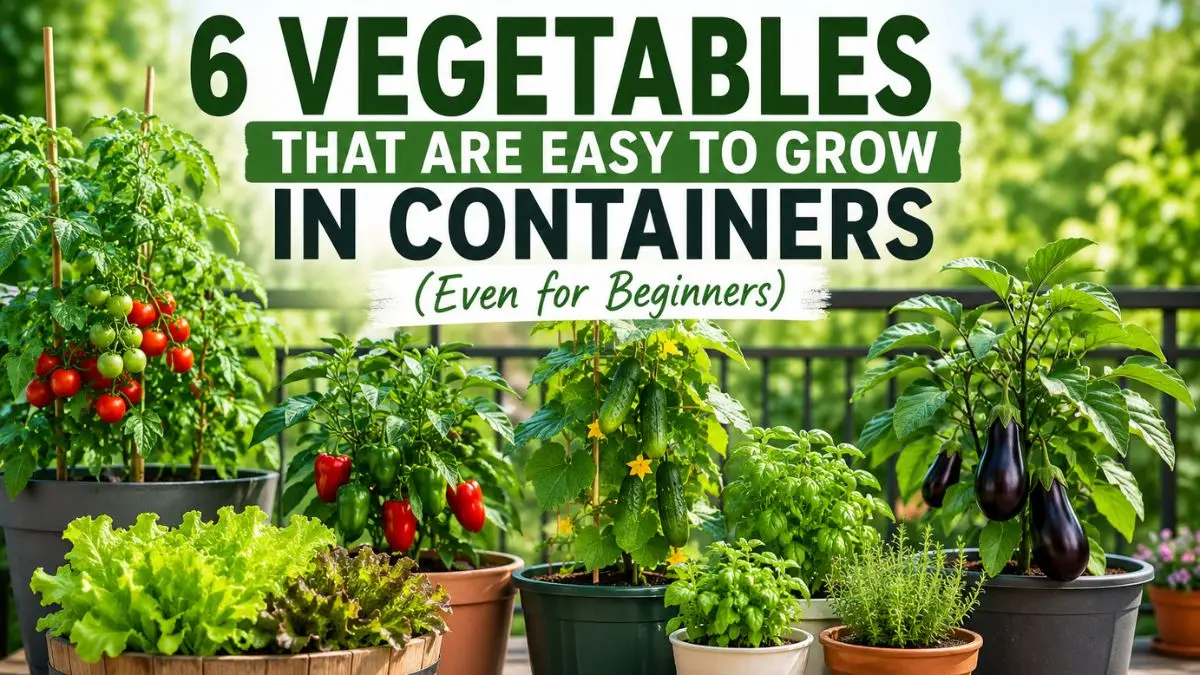
6 Vegetables That Are Easy to Grow in Containers (Even for Beginners + Expert Guide)
Vegetables That Are Easy to Grow in Containers: Container gardening is a practical and flexible way to grow vegetables, especially for people with limited space or poor soil conditions. Unlike traditional gardening, containers warm up faster in spring, giving plants an early start and a longer growing season.
One of the biggest advantages is full control over soil quality, so you can avoid problems like heavy clay, sandy soil, or soil-borne diseases. It is also easier on the body, since raised pots reduce bending and strain on your back and knees.
Containers also help plants grow better by lifting them above ground level, reducing shading from other crops and protecting them from common pests like rabbits and slugs. Many pots can even be moved easily—especially those on wheels or dollies—so you can follow sunlight throughout the day.
You can grow almost any vegetable in containers, but compact and dwarf varieties perform the best.
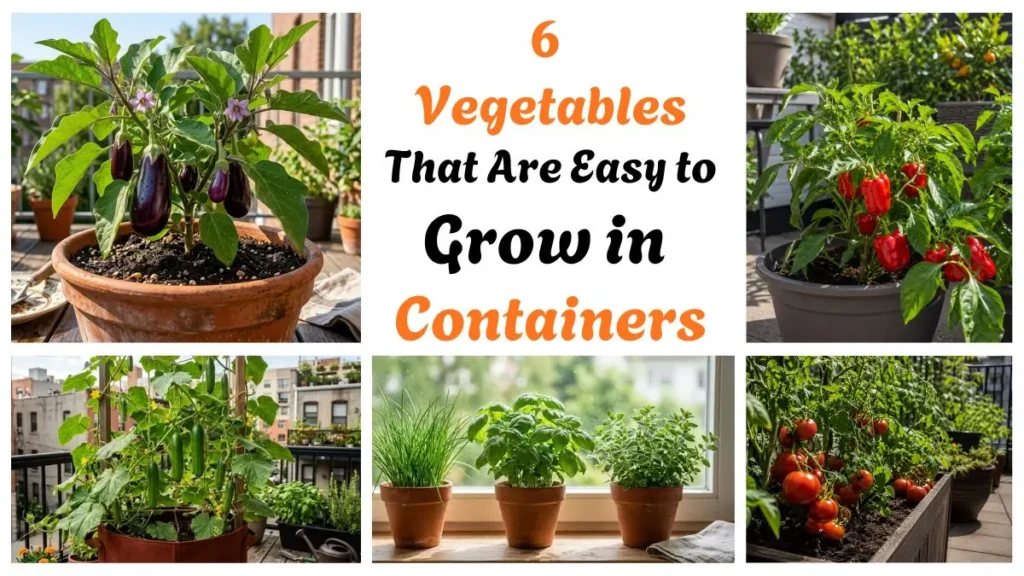
Before planting, keep these essential factors in mind:
Sunlight: Most vegetables need full sun — at least 6 to 8 hours of direct sunlight per day. Place your containers in the sunniest spot available on your patio, deck, or balcony. Lettuce, spinach, and other greens can grow well in less sunlight (3 to 5 hours per day), but for fruiting plants like tomatoes, peppers, squash, or eggplant, full sun should be the goal.
Understanding Microclimates: Think about the microclimates that exist on your property. Microclimates are small pockets of space where the climate of the immediate area doesn’t match the broader climate of your location.
For example, an asphalt driveway will hold onto warmth longer than a patch of grass, so any pots placed on the driveway will be exposed to that extra warmth. Lining pots along a south-facing wall in early spring warms soil quickly so you can plant sooner. On the other hand, pots on hot pavement dry out more quickly and need extra water.
Wind Protection: Depending on the size of your containers and the plants you are growing, they may get top-heavy as the season goes on, which makes them more vulnerable to tipping over in strong winds. Place containers in sheltered locations or plan to secure them with cinderblocks, stones, or ropes. Taller plants like tomatoes and eggplant are particularly vulnerable to wind damage.
Watering: Containers dry out significantly faster than in-ground plantings. Expect to water daily, and possibly even twice a day as plants mature during peak summer heat. Ideally, position your containers within easy reach of a garden hose — lugging heavy watering cans gets tiring quickly.
Another option is to install a drip irrigation system, sold in simple-to-assemble kits online and at home improvement stores, that will do the watering work for you. Self-watering containers with built-in reservoirs that last several days are another smart investment. When in doubt about whether to water, stick your finger about an inch into the potting mix — if it feels dry, it is time to water.
Fertilizing: Nutrients leach out of pots rapidly with regular watering, unlike in-ground beds where nutrients stay longer. Use a slow-release granular fertilizer at planting time, or apply liquid fertilizer consistently when you water, following package instructions carefully.
Container-grown crops need fertilizing once weekly during the growing season. About a month after planting, begin feeding regularly with a water-soluble vegetable plant food for best results.
Pot Size: Bigger plants need bigger pots. Tomatoes, peppers, and eggplants need containers that hold at least 5 gallons of soil to thrive. Shallow-rooted plants like lettuce and herbs are perfectly happy in pots holding as little as 1 gallon. Keep in mind that larger containers will be heavier and harder to move, and may be too heavy for a balcony. On the other hand, small containers are easier to move and more versatile but tend to dry out faster, requiring more attention on hot days. Also, the shallower the pot, the faster it dries out — especially as plants fill in and mature.
Pot Material: Light-colored pots made from plastic or glazed ceramic retain moisture better than dark-colored options, which absorb more heat and dry out faster. Porous materials like unglazed clay and fabric grow bags also dry out more quickly than non-porous materials. Always choose containers with drainage holes at the bottom to prevent waterlogging and root rot. Good potting mixes do not compact over time, instead providing good drainage and consistent air flow around roots.
Soil Type: Avoid garden soil, which is too heavy and not suitable for container gardening. For most outdoor plants, a good quality all-purpose potting mix is the best option. Think light, fluffy, and nutrient-rich.
6 Vegetables That Are Easy to Grow in Containers
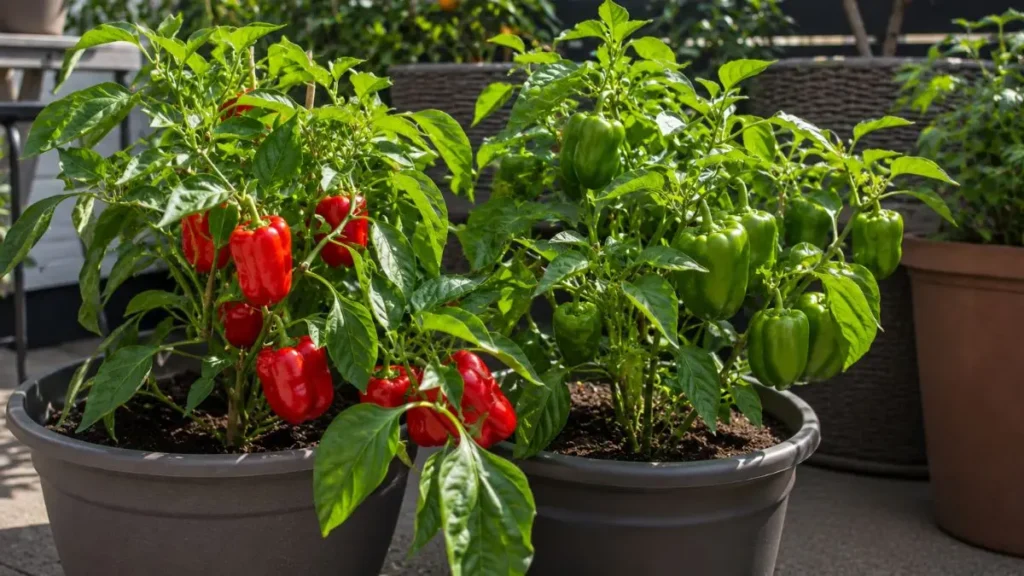
1. Peppers
Botanical Name: Capsicum annuum Sun: Full sun | Soil: Well-draining, rich | pH: 6.0 to 8.0
Peppers are among the very best vegetables for container growing. Both hot and sweet varieties produce excellent yields in pots and bring beautiful color to your patio throughout the season. Peppers are true heat lovers — do not rush planting them.
Wait until all danger of frost has completely passed before moving them outdoors. Self-watering containers work particularly well for peppers because they deliver the steady, consistent moisture level that peppers need to set fruit reliably.
As a bonus, hot peppers with their capsaicin content naturally deter aphids, whiteflies, and even rabbits — making them a great neighbor for other container vegetables too.
Best container varieties: Quickfire (AAS winner), Prism Midi Bell, Milena, Nassau
2. Cucumbers
Botanical Name: Cucumis sativus Sun: Full sun | Soil: Well-draining, rich | pH: 6.0 to 8.0
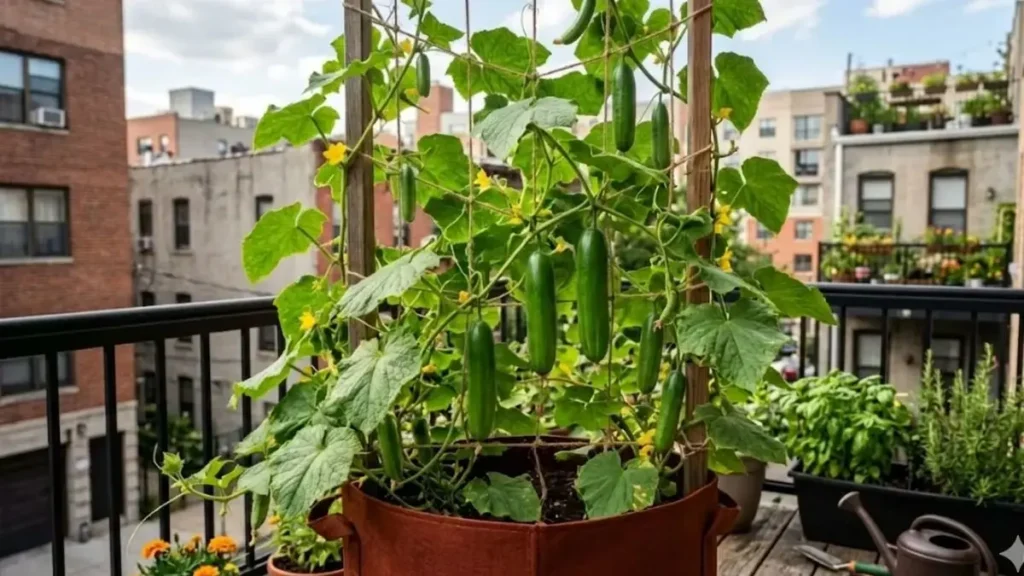
Cucumbers are traditionally sprawling, space-hungry vines — but newer compact varieties have been bred specifically for container gardening. Because cucumbers need warm soil to both germinate and grow well, always plant seeds after your last frost date when the ground has warmed up.
Adding a small trellis inside your container is a smart move — it keeps developing fruit up off the soil surface and significantly reduces the risk of disease. Cucumbers also benefit naturally from their fuzzy exterior, which physically deters crawling insects like cucumber beetles and squash bugs.
Best container varieties: Patio Snacker (AAS winner), Quick Snack
3. Lettuce
Botanical Name: Lactuca sativa Sun: Full sun to part shade | Soil: Well-draining, rich | pH: 6.0 to 8.0
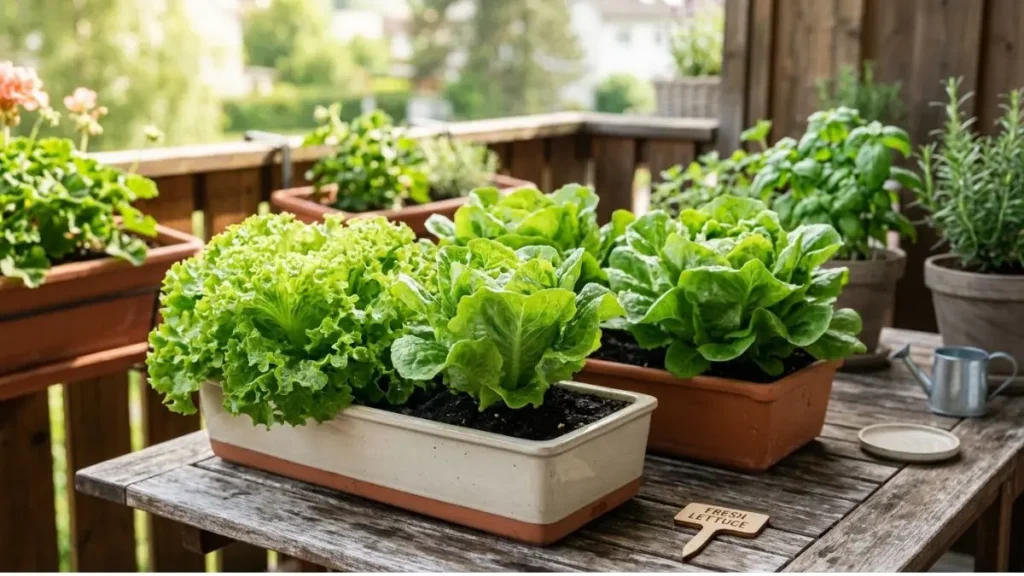
With its naturally shallow root system, lettuce is practically made for container gardening. It is a cool-weather crop that performs best in spring and fall rather than the height of summer. Sow seeds in spring about two weeks before your last expected frost date.
To maintain a continuous, steady supply of fresh lettuce, sow new seeds every few weeks rather than all at once — a technique called succession planting. For a fall harvest, plant a few months before your first expected autumn frost.
If you want to grow lettuce through summer, limit it to just a few hours of direct morning sun and shade it during the hottest part of the afternoon. Keep the soil slightly and consistently moist throughout the growing period. Pick outer leaves first and leave the center intact — the plant will keep producing fresh new leaves.
Best container varieties: Bauer (AAS winner), Muir, Magenta, Cherokee
4. Herbs
Botanical Name: Various Sun: Full sun | Soil: Well-draining | pH: 6.0 to 7.0 (slightly acidic)
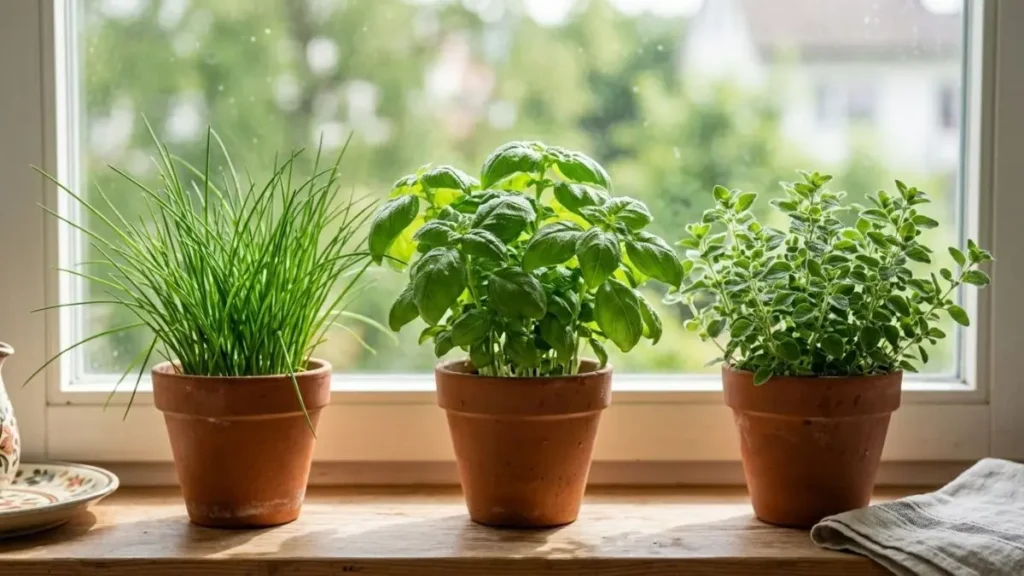
Herbs are arguably the single easiest and most rewarding edibles to grow in containers. Even just one or two pots on a small balcony or patio can keep you stocked with fresh herbs all season — at a fraction of the cost of buying them at the grocery store.
For year-round value, consider growing perennial herbs like chives, oregano, and sage, which survive and thrive nearly year-round in mild climates and come back season after season. For summer growing, basil is a standout choice — it loves the heat and comes in a wide range of varieties.
Many herbs including basil, parsley, chives, oregano, thyme, and cilantro all thrive in containers. They often prefer slightly drier soil than most vegetables, so avoid overwatering.
Beyond flavor, herbs double as natural pest deterrents. Oregano’s strong aroma acts as a general pest repellent, protecting a wide range of plants from aphids, cabbage moths, and whiteflies. Mint repels ants, whiteflies, and even mosquitoes — just always plant it in its own container to prevent it from spreading aggressively.
Best container varieties: Everleaf Thai Towers Basil, Emerald Towers Basil
5. Eggplant
Botanical Name: Solanum melongena Sun: Full sun | Soil: Well-drained, rich | pH: 5.5 to 6.8 (slightly acidic to neutral)
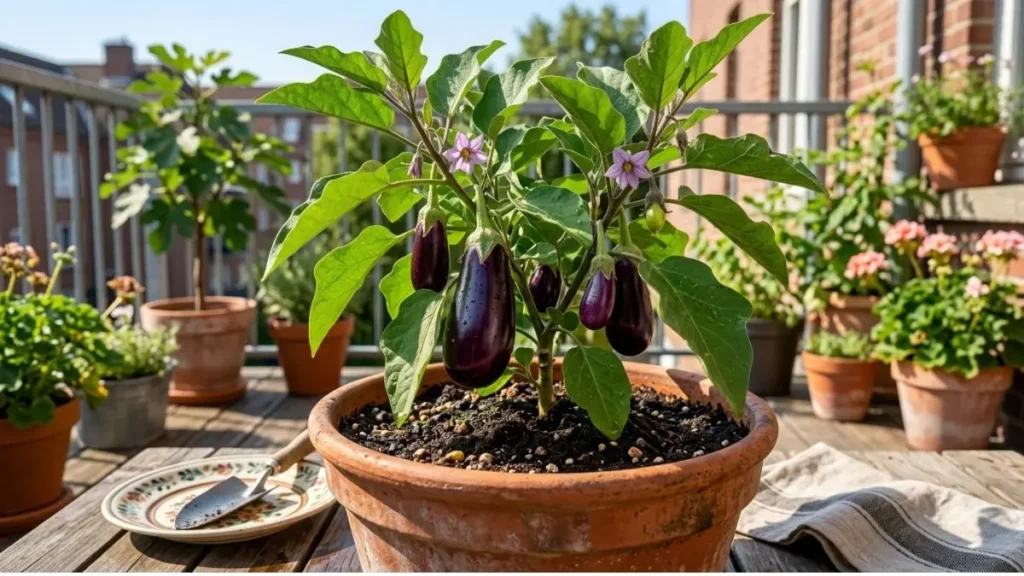
Eggplant has zero cold tolerance, so it is essential to wait until all frost risk has completely passed before planting. Once established in warm conditions, eggplant thrives — it grows best when temperatures sit between 70 and 85 degrees Fahrenheit.
Beyond its culinary appeal, eggplant is genuinely beautiful in containers, available in deep purple, white, pink, green, and rose shades. When selecting a variety, read the plant tag carefully to make sure you are choosing a compact variety suited to pots, or plan to use a very large container such as a half whisky barrel.
Like peppers, eggplants prefer consistent and even moisture, making self-watering containers an excellent choice. Support plants with stakes as they grow taller and begin producing heavy fruit.
Best container varieties: Fairy Tale, Calliope, Florida Market, Patio Baby
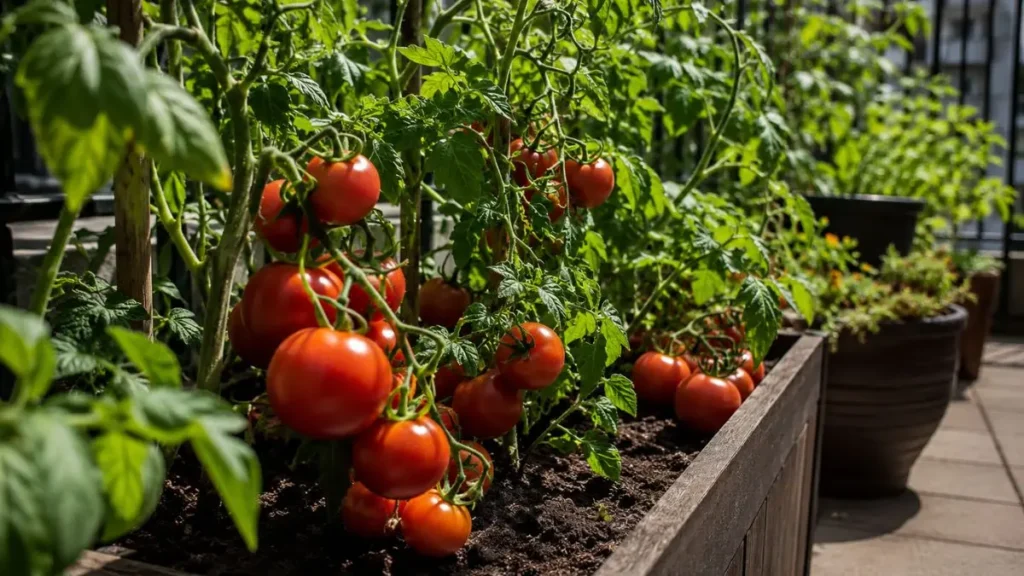
6. Tomatoes
Botanical Name: Solanum lycopersicum Sun: Full sun | Soil: Well-drained, rich | pH: 5.5 to 6.8 (slightly acidic to neutral)
There is nothing quite like the taste of a homegrown tomato, and many types grow very well in containers. For container growing, look for determinate varieties — these grow in a tidy, compact bushy form reaching 3 to 4 feet tall and conveniently produce most of their fruit within a concentrated 4 to 5 week window.
Alternatively, choose varieties specifically bred and labeled for container growing. Use a balanced, water-soluble fertilizer once every 2 to 3 weeks during the growing season since tomatoes are heavy feeders. Stake or cage plants early before they become top-heavy and start leaning or falling over.
Best container varieties: Celebrity, Tidy Treats, Little Bing Cherry, Verona, Jolene
Quick Reference: Container Vegetable Growing Guide
| Vegetable | Min. Pot Size | Sun Needed | Special Notes |
|---|---|---|---|
| Pepper | 5+ gallons | Full sun | Self-watering pots ideal; natural pest deterrent |
| Cucumber | 5+ gallons | Full sun | Add trellis; warm soil needed to germinate |
| Lettuce | 1+ gallon | Full sun to part shade | Succession plant every few weeks for steady supply |
| Herbs | 1+ gallon | Full sun | Keep mint in its own pot; natural pest control |
| Eggplant | 5+ gallons | Full sun | Self-watering pots ideal; stake for support |
| Tomato | 5+ gallons | Full sun | Determinate/compact varieties; feed every 2–3 weeks |
Common Beginner Mistakes to Avoid
- Using garden soil in pots — it is too heavy, compacts easily, and drains poorly. Always use a potting mix.
- Choosing pots without drainage holes — standing water causes root rot and kills plants quickly.
- Underwatering or overwatering — check soil moisture daily by pressing a finger an inch deep into the soil.
- Skipping fertilizer — nutrients in containers deplete much faster than in garden beds; weekly feeding during the growing season is essential.
- Planting too early — warm-season crops like peppers, tomatoes, cucumbers, and eggplant must go out only after your last frost date, when soil has warmed.
- Ignoring wind — top-heavy containers tip easily in wind; secure them or move to a sheltered spot.
- Not harvesting regularly — leaving overripe produce on the plant signals it to stop producing new fruit.
- Overcrowding pots — each plant needs sufficient root space and air circulation. When in doubt, use a bigger pot or fewer plants per container.
- Forgetting to check for pests — inspect the undersides of leaves regularly. Catching aphids, spider mites, or whiteflies early makes them far easier to manage.
Final Tips for a Thriving Container Vegetable Garden
Start small with just two or three containers and expand as your confidence and experience grow. Water consistently — containers need far more attention than garden beds. Feed your plants regularly since nutrients deplete quickly in pots.
Position containers where they receive maximum sun, and take advantage of warm microclimates like south-facing walls to extend your growing season. Add companion plants like marigolds, basil, and nasturtiums to naturally protect your crops from pests without chemicals.
Choose light-colored pots to reduce heat absorption, always use potting mix rather than garden soil, and make sure every container has drainage holes.
Within a single growing season, you will be stepping out onto your patio or balcony to harvest fresh, homegrown vegetables — no large garden required.
Happy growing!