The Trials of Anthony Gray:The Full Shocking Story Behind the 2007 Murder of James & Vivian Gray
A married couple executed in their own living room. A son with a motive and a confession. Forged DNA evidence. A landmark Kentucky Supreme Court ruling. Three trials across 14 years. And a documentary producer who — after reading every word of every trial — still says he doesn’t know who did it. This is the complete story of the Gray family murders.
Who Were James and Vivian Gray?
James Gray, 63, and his wife Vivian, 55, were considered generally affluent in their community, having owned and operated a flourishing thrift store downtown for several decades. They resided in a beautiful home a few miles south of the Grant–Scott County line, in the Stonewall area, and had been married for over 40 years.
On the surface, the Grays lived a comfortable, established life — respected business owners with decades of roots in Scott County, Kentucky. But beneath that appearance, the family was hiding secrets that would only come to light after the worst night of their lives.
A Friend’s Horrifying Find
On April 26, 2007, when nobody had heard from the couple for over 24 hours, a friend went to their home to check up on them — only to discover their cold and bloody bodies. When authorities arrived at the scene shortly after 8:50 a.m., it was determined that both James and Vivian had been shot to death in their own living room.
There were no signs of forced entry or any indication of a severe struggle, meaning the couple probably knew their assailant. Investigators said it did not appear to have been a break-in because no valuables were removed. At first, there were rumors this was a murder-suicide, but a coroner quickly ruled that out.
According to various reports, James and Vivian Gray were actually slain on April 24 — two days before they were discovered. James Gray had been shot twice in the back of the head. Vivian was shot once in the head.
“Two people killed in their own home, in their own living room, with no sign of a break-in. Whoever did this was someone the Grays had let inside.”
James Anthony Gray — The Only Son
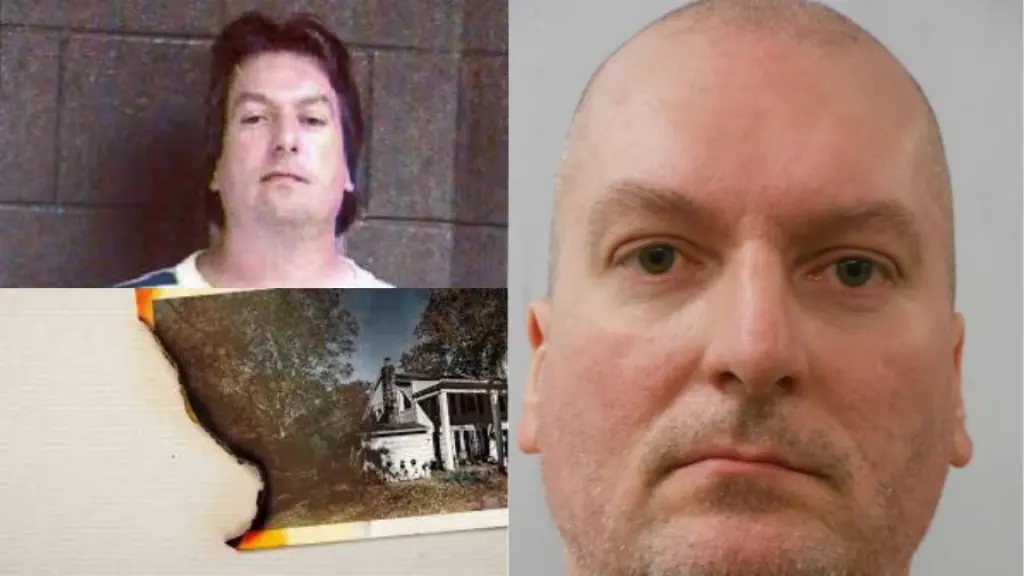
James Anthony Gray, now 52, vowed to find his parents’ killer. But months later, he was accused of being the one to pull the trigger. The strained bond between Anthony and his parents was not a secret — neighbors, friends, and community members were all aware of the deep family rift that had festered for years.
The Missing Wills
What made Anthony an even more compelling suspect was a discovery during the search of the property: the couple’s last wills and testaments, which purportedly disinherited Anthony, were missing. The prosecution’s theory was straightforward — Anthony had been cut out of a significant inheritance, had a history of deep animosity toward his parents, and stood to gain financially from their deaths, provided the wills never surfaced.
💰 The Financial Motive
Prosecution witnesses testified that the Grays’ assets totaled more than $600,000. Their estate would not go to Anthony if he was found responsible for their deaths.
Commonwealth’s Attorney Gordie Shaw told the jury that Anthony had spoken openly for years about wanting to kill his parents. Statements allegedly made by Gray included “they had it coming” and “I didn’t want them to suffer.”
What People Were Saying?
Witness Theresa Colson testified that she heard Anthony make a chilling statement at the crime scene after his parents were found dead: “I heard him say, ‘I’ll never work a day in my life.’ ‘I need to go to the store and get the paperwork of who owes dad money and start collecting.'” Several other witnesses corroborated that Gray told them he “would never have to work again.”
A Gun-Running Ring Inside the Gray Home
One of the most shocking revelations in this case had nothing to do with Anthony — it had everything to do with his parents. Once investigations began, it turned out the affluent residents of Cincinnati Pike were apparently running a gun ring from their home.
🔫 By the Numbers
82 firearms were found inside the Gray home. There was also money left in the house, and no sign of ransacking or searching. The Grays were not just a retired couple running a thrift store — they were deeply entangled in an underground network of stolen weapons.
This discovery opened up a terrifying alternative theory: what if the motive for the murders had nothing to do with a family dispute or inheritance, and everything to do with the criminal underworld operating right through the Grays’ living room?
What Police Did to Get a Confession
This is where the case takes one of its most disturbing turns — and it involves the conduct of law enforcement itself. About six months after the murders, investigating officers called Anthony in for questioning, claiming they only wanted to ask about the lost will. After a few hours, they shifted gears and began interrogating him about his parents’ murders.
Five and a Half Hours — Off the Record
The police turned off the camera. What followed was five-and-a-half hours of unrecorded interrogation. Investigators used a number of different ruses and forms of trickery, including a forged lab report of DNA evidence linking Gray to the murders.
🚨 Fabricated Evidence Used During Interrogation
Law enforcement admitted they told Gray the following — and that all of it was false:
→ His parents’ blood was found on his clothes and in his vehicle
→ Gunshot residue was found on his clothing
→ An eyewitness and a videotape placed him at the scene
→ A fake document from the Kentucky State Police linked his parents’ DNA to his vehicle
Upon returning to the interview room, it had been staged with photos of the crime scene and murder victims. A piece of pecan pie and a Pepsi were placed on the table to recreate the crime-scene environment.
The Alleged Death Penalty Threat
During the interrogation, officers showed him an alleged phone call from a judge threatening the certain imposition of the death penalty if Gray did not confess. The trial court made a factual finding that this phone call did not actually take place. However, the fabricated DNA document and the other lies remained deeply troubling to the highest court in the state.
The Confession — On Camera
After hours of unrecorded psychological pressure, the cameras were switched back on. Anthony confessed on October 20, 2007.
“A fight broke out between my mom, my dad, and me. I blacked out, or [my father] hit me. I stood up and shot him. I was out of control. I shot my mother, then I shot him again… I ran out the door. I got in my car and left. I panicked. I didn’t remember doing it. It was like a dream. I loved my mom, don’t know why I done it.”
But just two days later, on October 22, 2007, Anthony’s story changed entirely:
“I didn’t even know I was there until you told me I was there. I still ain’t got my memory back. I’m not sure if I told you the truth. It don’t seem real.”
Peter Hafer and the Stolen Guns
Anthony’s defense team did not simply argue that the confession was coerced — they built an entirely alternate theory of the crime, pointing to a man named Peter Hafer.
In the time leading up to the murders, Hafer had recently stolen a large number of guns from a local gun dealer. After the theft, he sold some of the stolen guns to James Gray. The defense’s alternate perpetrator theory focused on Hafer’s knowledge of the Gray family’s wealth and statements Hafer had made that he intended to rob and kill the Grays. Hafer also drove a van — and witnesses reported seeing a van near the Grays’ property around the time of their murders.
Jodi Lucas, a family friend and the first person to discover the bodies, informed police she had found a large number of guns the elder Gray had left in her basement — further deepening the gun connection.
Hafer’s Silence
At Gray’s first trial, Hafer appeared as a witness — but his testimony was never offered because he immediately invoked his Fifth Amendment right against self-incrimination on the advice of counsel. The fact that Peter Hafer refused to speak under oath — and lawyered up before even taking the stand — only deepened the mystery surrounding his role in this case.
A jailhouse witness named Hoover claimed that Hafer told him he shot James Gray immediately after James handed him a gun. However, prosecutors challenged this directly: if true, James would have been facing his killer at the time he was shot — contradicting the autopsy evidence showing James was shot in the back of the head.
Another Name: Blaine Colson
Defense attorney Brian Hewlett’s closing arguments at the third trial also suggested another suspect: Blaine Colson. Colson, who had been friends with the elder Grays since the 1970s, is also the caretaker of the Gray property at the request of the estate administrator since the murders in 2007.
“When they asked who wanted to help clean up the scene, Blaine Colson said, ‘Absolutely. I am in. I’ll clean up the scene.'”
— Defense attorney Brian Hewlett, Third Trial closing arguments
This was the first instance in which Colson was suggested as a suspect in the murders — raising questions about why someone would voluntarily place themselves at a murder scene.
2012: A Hung Jury
Anthony was formally charged with the crime in October 2007. His first trial commenced in January 2012, ending in a mistrial when jurors were unable to reach a consensus on his guilt or innocence.
The jury deliberated for more than 10 hours before deciding they could not reach a unanimous decision. Gray repeatedly testified that he did not commit the crime. The hung jury meant the prosecution would have to try the case again — from scratch.
2013: Guilty — Then Overturned
Anthony’s second trial, in February 2013, resulted in a conviction — especially after evidence of a .45 caliber gun (the same caliber as the murder weapon) was found in his work van. After nearly 11 hours of deliberation, the jury returned guilty verdicts at 11 p.m.
Anthony was sentenced in April 2013 to serve 45 years in prison — 20 years each for the murder counts and five years for evidence tampering.
The Kentucky Supreme Court Steps In
In February 2016, the Kentucky Supreme Court unanimously reversed the conviction, ordering the case remanded to Scott County Circuit Court for retrial. The court’s reasoning was devastating to the prosecution:
“Although no single factor prompts our decision, the hours of manipulation and fabricated evidence can be nothing other than coercion that overbore Gray’s free will.”
— Kentucky Supreme Court, Gray v. Commonwealth (2016)
The court held that (1) Gray’s confession was involuntarily extracted through interrogation techniques that were constitutionally unjustifiable, and (2) the trial court had improperly excluded Gray’s alternate perpetrator evidence. It was a landmark ruling on the limits of police deception during interrogations.
2021: The Final Verdict
The third trial took place in August 2021 — fourteen years after the murders, during a global pandemic. Twelve Scott County citizens showed up every day, wearing masks and listening intently.
The Prosecution’s Case
The prosecution rebuilt their case without relying on the overturned confession. Prosecutor Keith Eardley laid out his theory in stark terms:
“He killed his parents for hate and greed. He hated them his entire life. He was jealous of them. He wanted what they had. He wanted the house. He wanted their cars. He didn’t want his kids to get the estate. He killed his parents and stole his kids’ inheritance. That is Anthony Gray.”
— Prosecutor Keith Eardley, Third Trial closing arguments
Eardley also reminded the jury of a phone call recording in which Anthony spoke to Jodi Lucas: “I don’t want to be responsible for another death… Not by something I did. You know I did it.” The prosecution argued Gray had no idea they were listening to his phone calls.
In his closing, Eardley created a vivid reconstruction of the Grays’ final moments — noting that “at least James didn’t know what was coming” when he was shot in the back of the head. Vivian saw her own son execute her husband, then tried to reach the gun cabinet. When she realized she didn’t have time, she crouched and raised her hands in front of her face — and Anthony shot through her hand, through her head.
The Defense’s Final Stand
Gray’s attorney Rodney Barnes argued: “When those three shots rang out, Anthony was on a job site,” claiming cell phone data and witnesses would prove his alibi. Defense attorney Brian Hewlett tried to convince the jury that Anthony was also a victim: “A lot has happened in this case that is unfair… to everyone. But some of the unfairness happened to Anthony Gray. He is a victim.”
The Verdict
Following just two hours of deliberation, the six-man, six-woman jury found James Anthony Gray guilty of two counts of murder and one count of tampering with evidence.
The Sentence 55 Years in Prison
⚖️ Final Sentencing Breakdown
20 years — Murder of father, James Edward Gray
30 years — Murder of mother, Vivian Gray
5 years — Tampering with physical evidence (disposing of the gun)
−14 years — Credit for time already served
Special Judge Thomas D. Clark upheld the jury recommendation and denied probation, citing the violence of the crime and Gray’s previous criminal history, which included several violations of emergency protective orders.
Family’s Response
Robert and Missy Jones traveled from Chicago to attend every day of all three trials
For Vivian Gray’s brother, Robert Jones, and his wife Missy, the verdict brought closure after an agonizing 14-year wait. Jones and Missy made the trip from Chicago to attend every single day of all three trials as well as the sentencing.
“I still love Vivian and I still miss her. She is never far from my thoughts, or my wife’s thoughts. She had a cute way of talking that would keep you smiling for weeks. She was special.”
— Robert Jones, Vivian Gray’s brother
Jones also stated firmly: “I am glad, being a big brother to Vivian, that I did what I thought was right. The only person who could have done this was Anthony.”
Commonwealth’s Attorney Lou Anna Red Corn said after the sentencing: “The family of James and Vivian Gray have waited patiently for this day. Bob and Missy were here in 2012, 2013, had to deal with delays in a change of prosecutors and a global pandemic to get here today. I know they are grateful to finally have closure.”
Darwin Nowacki: Anthony’s Own Son Speaks
In a deeply emotional moment before sentencing, Darwin Nowacki — the biological son of Anthony Gray and his late wife Amy Bray Gray — spoke to the jury, begging for leniency for the man who gave him and his brother Charlie up for adoption instead of letting their grandparents raise them.
“A lot of people lost a lot of things in this. But I feel like I am one of the ones to lose the most — my father, my grandfather, my grandmother… My mom, Amy, my grandma, Vivian, and my grandpa, James wouldn’t want Anthony to sit and rot.”
— Darwin Nowacki, Anthony Gray’s biological son, at sentencing
Darwin, 20, also testified on his father’s behalf, sharing a memory: “I’ve seen him shoot a gun. He can’t hit the broad side of a barn,” relating a time from when he was 7 years old and still in his father’s custody.
The Defense Team’s Reaction
Public defender Rodney Barnes, who had fought for Anthony for nearly 14 years, posted his raw reaction on social media — expressing devastation over the outcome and saying the verdict made him want to “walk away from this work & never try another case again.”
Unanswered Questions That Still Linger
❓ What happened to the missing wills?
The wills that allegedly disinherited Anthony were never recovered. Were they destroyed by Anthony to cover his motive? Or did someone else remove them — and why?
❓ What was the full extent of the gun-running ring?
82 firearms were found in the Gray home. The connections between the Grays, Peter Hafer, stolen guns, and the broader criminal network were never fully explored in court.
❓ Why did Peter Hafer refuse to testify?
Hafer invoked his Fifth Amendment rights at the first trial and never spoke publicly about his involvement with the Grays or the stolen guns. His silence remains one of the most unexplained elements of the case.
❓ Were the police tactics justified?
The forged DNA evidence, fabricated witness claims, and psychological pressure tactics used by Scott County Sheriff’s Deputies Roger Persley and Dave Willis led to a landmark Kentucky Supreme Court ruling. But the officers were never publicly disciplined or charged.
❓ Was Anthony truly at a job site when the murders occurred?
The defense claimed cell phone data supported an alibi, but the jury ultimately did not find it convincing enough to override the other evidence.
❓ Who is Blaine Colson — and why did he volunteer to clean up a murder scene?
His connection to the Grays since the 1970s and his role as property caretaker raised eyebrows, but he was never formally investigated as a suspect.
Where Is Anthony Gray Now?
James Anthony Gray is currently serving a 55-year prison sentence in Kentucky. His conviction has already gone back to the Kentucky Supreme Court on appeal.
The 2024 Parole Hearing Controversy
In June 2024, Anthony Gray appeared before two members of the Kentucky Parole Board by Zoom. At the hearing, Gray maintained that he was innocent and that someone else killed his parents. He told the board he felt he’d been convicted based solely on his prior bad relationship with his parents.
But the hearing turned out to be a mistake. The Department of Corrections later revealed that a miscalculation had allowed Gray to receive the initial hearing — he was not supposed to be eligible for parole until 2027. The miscalculation was caught after LEX 18 asked about a discrepancy in the years Gray had reportedly served.
“While a miscalculation occurred that allowed Mr. Gray to receive an initial hearing, there are checks and balances in place that would have prevented him from ever being released from incarceration following his full hearing. He remains incarcerated and will not be released.”
— Kentucky Department of Corrections, June 2024
The 2024 Kentucky Supreme Court Appeal
The vote of the six participating justices on the two murder convictions was equally divided (3–3). Pursuant to Supreme Court Rule 1.020(1)(a), the judgment of the Scott Circuit Court on these convictions therefore stands affirmed. However, the Court voted to reverse and remand the tampering conviction — meaning the tampering charge has been overturned on appeal, but the murder convictions stand.
Final Thoughts
The murder of James and Vivian Gray is not just a story about a son who allegedly killed his parents. It is a story about a family fractured by greed and resentment. It is a story about a criminal underworld hiding behind a thrift store in rural Kentucky. And it is a story about the lengths law enforcement will go to secure a confession — and what happens when those tactics cross the line.
Whether Anthony Gray is truly guilty or whether the real killer remains at large, one thing is undeniable: the way this case was handled — from the forged evidence to the coerced confession to the three trials spanning 14 years — raises serious and lasting questions about justice, accountability, and the pursuit of truth.
What Do You Think Really Happened?
Drop your thoughts in the comments below. Was Anthony guilty — or is there someone else the investigation missed?
Alex Pretti, 37-year-old ICU nurse, killed by Border Patrol in Minneapolis Jan 24, 2026