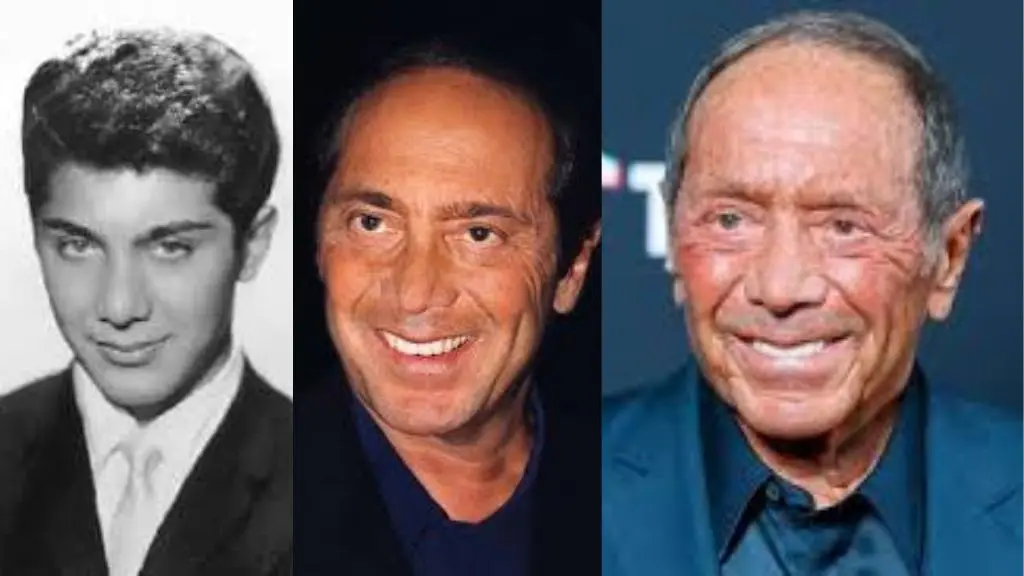
Paul Anka: A Complete Life Story — The Boy from Ottawa Who Wrote the Soundtrack of the 20th Century
Born July 30, 1941, Ottawa, Ontario, Canada
There are pop stars. There are songwriters. There are entertainers. And then, very rarely, there is someone who is all three simultaneously — someone whose name appears not just on their own greatest hits but on the greatest hits of Frank Sinatra, Tom Jones, Michael Jackson, Buddy Holly, and Connie Francis — someone whose melodies have been heard by billions of people who may not even know his name, and whose career has not merely survived seven decades of pop culture upheaval but has actively threaded through all of it, writing the music of each era in turn.
Paul Anka is that person.
He wrote “Diana” at 15 years old in a hotel room in New York and it sold over 20 million copies. He wrote the English lyrics to what became Frank Sinatra’s signature song — “My Way” — sitting up through the night in a Paris hotel suite, translating a French pop song into a philosophical manifesto about living without regret. He wrote “It Doesn’t Matter Anymore” for Buddy Holly, who recorded it just weeks before dying in a plane crash. He wrote the theme for The Tonight Show Starring Johnny Carson — which ran for 30 years and remains the longest-running television theme in history. He wrote “She’s a Lady” for Tom Jones. He co-wrote three songs with Michael Jackson — including “This Is It” — that became posthumous global hits.
He discovered Michael Bublé.
He is 84 years old as of 2025 — he turned 84 on July 30, 2025 — and he is still touring. He was the subject of a documentary that premiered at the 2024 Toronto International Film Festival. He is one of the most decorated and prolific Canadian artists in the history of popular music. His estimated net worth is between $80 and $100 million, accumulated largely through the royalties of songs he owns — because one of the shrewdest decisions he made, at the age of 22, was to buy back the publishing rights to his ABC-Paramount catalog rather than let a record company hold them forever.
This is the complete story of Paul Albert Anka — from a Lebanese-Syrian immigrant family’s restaurant in Ottawa to the stages of Las Vegas, the Rat Pack’s inner circle, a Paris hotel room where “My Way” was born, and the recording sessions with Michael Jackson that nobody knew about until Jackson died.
Paul Anka Early Life: Ottawa, a Restaurant, and a Boy Who Couldn’t Stop Performing
Paul Albert Anka was born on July 30, 1941, in Ottawa, Ontario, Canada — the eldest of three children born to Andrew Emile “Andy” Anka Sr. and Camelia Anka (née Tannis). His parents were Lebanese and Syrian immigrants who had come to Canada and built their lives in Ottawa, the nation’s capital. His father Andy ran a restaurant called the Locanda — a popular establishment that was frequently patronized by local entertainers and musicians. Growing up around performers, around people who sang and played and made an audience feel something, was Paul Anka’s first education in the entertainment business.
His heritage was culturally rich and musically complex. The Anka family was Antiochian Orthodox Christian — a tradition of Eastern Christianity rooted in the Antioch patriarchate that encompasses both Lebanese and Syrian communities. Young Paul sang in the choir of St. Elias Antiochian Orthodox Cathedral in Ottawa under the direction of Frederick Karam, with whom he also studied music theory. Those early choir years gave him the foundational understanding of harmony, pitch, and the physical mechanics of the singing voice that would serve him for eight decades.
He also briefly studied piano under Winifred Rees, and taught himself additional instruments — guitar, drums, trumpet — with the self-directed intensity of someone who had already decided that music was not a hobby but a vocation.
He attended Fisher Park High School in Ottawa, where he was part of a vocal trio called the Bobby Soxers — a name that captures the mid-1950s teen culture in which he was operating: the poodle skirts, the 45 rpm records, the Coca-Cola, the earnest romanticism of a generation that had grown up in postwar prosperity and was discovering, simultaneously, television and rock and roll.
He was performing locally by age 10 — amateur shows, radio appearances, any platform he could find. By 13, he was leading the Bobby Soxers in local talent shows, and he was doing something else that separated him from every other ambitious teenager in Ottawa: he was writing his own songs. In the mid-1950s, the idea of a teenage performer composing original material was genuinely unusual. Pop singers sang other people’s songs. Paul Anka was already different.
He worked briefly at the Ottawa Citizen as a cub reporter — exploring journalism as a potential career path, developing the writing skills and the nose for a story that would later make him one of the great wordsmith-songwriters of his generation. The journalism training didn’t take him away from music. It made him better at it.
And then there was the Campbell’s soup contest — one of the more charming origin stories in the history of pop stardom. Paul Anka spent three months collecting Campbell’s soup can labels, entered a contest, and won a trip to New York City. Visiting New York as a Canadian teenager in the mid-1950s — seeing the clubs, the recording studios, the sheer concentrated energy of the music industry — solidified everything. He knew, with the absolute certainty that only young people and visionaries share, that this was where he needed to be.
He also, less glamorously, drove his mother’s car without a license to reach talent shows across the river in Quebec. This detail appears in virtually every biographical account of his early life and deserves to be noted: Paul Anka, the future OC (Order of Canada) recipient and subject of TIFF documentaries, used to steal the family car as a 12-year-old to get to amateur nights. The ambition was always there. The method was whatever it took.
The First Record and the Road to New York (1956–1957)
In 1956, Paul Anka’s parents agreed to let him travel to Los Angeles with a $100 given to him by his uncle — his first real money for his first real music journey. In Los Angeles, he connected with Ernie Freeman, the A&R man at Modern Records, who agreed to listen to his material. Freeman was impressed enough to sign him to Modern Records’ subsidiary label RPM — the same label that had artists including B.B. King, Elmore James, Lightnin’ Hopkins, and John Lee Hooker on its roster.
His first single, released in 1956, was “Blau-Wile Deveest Fontaine” (sometimes rendered as “Blauwildesbestfontaine”) — a curiosity of a song that failed to chart. The B-side was “I Confess.” Neither went anywhere commercially. He was 14. He had made a record. The world did not notice.
He went home to Ottawa. He appeared on CBC Television’s “Pick the Stars” and “Cross-Canada Hit Parade.” He kept writing. He kept hustling. He was not discouraged by a single failed single the way most people would be.
Then came the story of Fats Domino’s dressing room. According to Paul Anka’s own account, while Fats Domino was performing in Ottawa, young Paul managed to get backstage and into the dressing room, where both Fats Domino and Chuck Berry were present. He sang his songs for them. Their combined advice: “Stay in school.” He did not take the advice.
In early 1957, he traveled to New York with a copy of a song he had written — a lovestruck ode to an older girl he had known in Ottawa. In one version of the story, the girl was a former babysitter. In an interview Paul gave to NPR’s Terry Gross in 2005, he clarified that it was “a girl at his church whom he hardly knew.” The specific inspiration matters less than the song itself: it was called “Diana.”
He secured a meeting with Don Costa, the A&R representative for ABC-Paramount Records. Costa heard Diana and the other songs Anka played for him on piano and was immediately convinced. Within a week, Paul Anka was signed to ABC-Paramount as both a recording artist and a songwriter.
He was 15 years old. He had a record deal with one of the most important labels in America. And “Diana” hadn’t even been released yet.
“Diana” (1957): The Song That Changed Everything
“Diana” was released in the summer of 1957. What happened next was not a gradual build or a slow commercial climb. It was an explosion.
The song went to number one in both Canada and the United States. It reached the top of the charts in dozens of countries worldwide. It ultimately sold over 20 million copies — making it one of the best-selling singles in the history of popular recorded music, and one of the best-selling singles ever recorded by a Canadian artist.
To understand what “Diana” accomplished, you have to understand the musical landscape of 1957. Elvis Presley had exploded a year earlier and was transforming popular music. The era of the crooner — the smooth, orchestrated ballad — was giving way to something rawer, more physical, more youthful. Into that moment walked a 15-year-old kid from Ottawa with a song about longing for an older girl, a song that was simultaneously innocent and emotionally real, that had a melody as direct and memorable as a heartbeat, and that was performed by a voice that didn’t sound like a child but did sound like genuine feeling.
The success was immediate, total, and permanent. Paul Anka was famous at 15 in a way that very few people of any age have ever been famous. He was a teen idol in the first and truest sense of that term — not merely popular but worshipped, the recipient of the kind of female fan attention that would later be associated with Elvis, the Beatles, and every subsequent generation of pop heartthrobs.
He was also, crucially, the songwriter. While Elvis was recording songs written by other people and Little Richard was performing his own compositions, Paul Anka sat at the intersection of teen idol and songwriter-craftsman — a combination that was genuinely unusual and that gave him a kind of durability his contemporaries would struggle to match.
The Teen Idol Years (1957–1963): Hits, Tours, and the Copacabana
The years following “Diana” produced a remarkable string of original recordings:
“You Are My Destiny” (1958) — Top 10 in the U.S. “Crazy Love” (1958) — Top 20 “Let the Bells Keep Ringing” (1958) — charting success “(All of a Sudden) My Heart Sings” (1958) — No. 15 in the U.S. “I Miss You So” (1959) — continued chart presence “Lonely Boy” (1959) — No. 1 in the U.S. for four weeks; wrote this for his mother “Put Your Head on My Shoulder” (1959) — Top 3 in the U.S., one of his most enduring recordings “It’s Time to Cry” (1959) — No. 4 in the U.S. “Puppy Love” (1960) — inspired by his relationship with Annette Funicello, became a major hit (and a hit again in 1972 when Donny Osmond recorded it) “My Home Town” (1960) — No. 8
During this period, Paul Anka was not merely recording hits in studios. He was touring relentlessly — across the United States, Canada, Britain, Australia, and Europe. He toured Britain and Australia with Buddy Holly — the Texas rockabilly pioneer whose guitar playing, songwriting, and spectacles-wearing stage persona were reshaping what a rock and roll artist could look like. The Anka-Holly touring relationship produced one of the most poignant side stories in 1950s pop history: Paul Anka wrote “It Doesn’t Matter Anymore” for Holly, who recorded it in the final recording sessions of his life. Holly died in the February 3, 1959 plane crash — alongside Ritchie Valens and The Big Bopper — that the songwriter Don McLean would later memorialize as “the day the music died.” “It Doesn’t Matter Anymore” became a posthumous number one hit in the UK, and Anka donated his composer’s royalty to Holly’s widow. “It has a tragic irony about it now,” he said, “but at least it will help look after Buddy Holly’s family.”
In 1960, Paul Anka became the youngest performer ever to appear at the Copacabana in New York City — the legendary nightclub that was the apex of American entertainment prestige, where Frank Sinatra, Sammy Davis Jr., and the greatest nightclub acts of the era performed. A live album, “At the Copa”, was recorded at those performances. He was 18 years old, performing the same room as the Rat Pack, and he was holding his own.
He was also, during this same period, writing for other artists:
“Teddy” — a Top 20 hit for Connie Francis in 1960 “I Don’t Know Anything About Love” — written for Connie Francis Songs for Annette Funicello, the Disney star and Mouseketeer who was both his inspiration for “Puppy Love” and an important early recording associate.
He was a junior associate of the Rat Pack — invited into Sinatra’s inner circle as a songwriter, a performer, and someone who understood the world of Las Vegas and nightclub entertainment. This connection would produce the most significant song of his career more than a decade later.
In 1963, Anka made a financial decision of extraordinary foresight that distinguished him from virtually every other pop star of his generation: he purchased the rights and ownership of his ABC-Paramount catalog — buying back the recordings and publishing rights that most labels retained permanently, paying what were probably significant sums for a 22-year-old, and securing control over the songs that would generate royalties for the rest of his life.
This decision — to own his music — is the foundation of his estimated $80–100 million net worth. The royalties from “Diana,” “Put Your Head on My Shoulder,” “Lonely Boy,” and dozens of other songs have been flowing to Paul Anka, not to a record company, for more than 60 years.
Kevin Fiala: A Complete Life Story — The Swiss Sniper Who Found His Home in Los Angeles
The Longest Day (1962): Film Career and the Theme Song
In 1962, Paul Anka made his most significant film appearance: he played a U.S. Army Ranger in “The Longest Day” — Darryl F. Zanuck’s epic World War II film about the D-Day invasion, featuring one of the most extraordinary casts ever assembled for a single film: John Wayne, Henry Fonda, Robert Mitchum, Sean Connery, Richard Burton, Rod Steiger, Peter Lawford. The film cost $10 million to make — the most expensive black-and-white film ever produced at that time — and was one of the highest-grossing films of 1962.
Paul Anka not only acted in the film — he wrote and recorded its theme song, which became one of the most memorable film themes of its era and was later adopted as the official march of the Canadian Airborne Regiment. The theme was also nominated for an Academy Award.
The combination of acting and composing the score for the same major studio film was a remarkable professional achievement for a 20-year-old.
His other film credits include: “Let’s Rock” (1958), “Girls Town” (1959), “Look in Any Window” (1961), and “Lonely Boy” — not a feature film but a celebrated National Film Board of Canada documentary about his rise to stardom, released in 1962 and considered a landmark of Canadian documentary filmmaking. The NFB film captured him at the peak of his teen idol years and remains one of the most vivid documents of what it looked like to be Paul Anka in 1960.
“My Way”: The Greatest Song He Never Sang First (1969)
The story of “My Way” begins in France.
In 1967, the French singer and chansonnier Claude François recorded a song called “Comme d’habitude” — “As Usual” in English — with music by Jacques Revaux and lyrics by Claude François and Gilles Thibaut. The song was about the quiet, grinding sadness of a deteriorating relationship — a couple going through the mechanical motions of a life together while the love has dried up. It was a modest hit in France.
In 1968, Paul Anka was in Paris when he heard the song. Something in the melody struck him — not the French lyric, which was about sadness and domestic failure, but the musical structure, which had something in it he felt could carry a completely different emotional meaning. He contacted Claude François and Jacques Revaux and arranged to acquire the rights to write new English lyrics to their music.
He flew home. In a Paris hotel suite in a single sitting, according to most accounts — working through the night, alone — he wrote entirely new English lyrics that transformed the original song’s subject matter completely. Where “Comme d’habitude” was about a relationship breaking down, Anka’s English version was about a man looking back on his entire life and declaring — with pride, without apology — that he had lived it on his own terms. “And now, the end is near / And so I face the final curtain…”
He wrote it specifically for Frank Sinatra, who was, at that moment in his life, exhausted by his career and publicly considering retirement. Anka tailored the philosophical language of the lyric to Sinatra’s persona — the saloon singer’s defiant self-sufficiency, the outsider who made his own rules, the man who didn’t explain himself to anyone. He called Sinatra and said: “I’ve got your song.”
Sinatra recorded “My Way” in 1969. It spent 75 weeks on the UK Singles Chart — the longest chart run for a single in UK chart history. It became his signature song, the one he closed almost every concert with for the rest of his life. It has been covered by Elvis Presley, Sid Vicious and the Sex Pistols, Robbie Williams, Nina Simone, Shirley Bassey, Luciano Pavarotti, and hundreds more. It has been played at more funerals than perhaps any other popular song in history. A survey of UK funeral directors regularly names it the single most frequently requested funeral song.
Paul Anka did not receive writing credit for “My Way” for many years — the song was formally credited to Claude François, Jacques Revaux, and Gilles Thibaut, with Anka’s contribution acknowledged as “English lyrics” rather than as co-writing. The issue of his specific royalty share and credit was a matter of some complexity. He has said he was paid a lump sum for his lyrics at the time. The song made others far wealthier from its royalties than it made him, though the prestige and professional legacy it generated for Anka are incalculable.
“She’s a Lady” — written for Tom Jones in 1971 — was another major international hit from the same era of Anka’s writing-for-others career, reaching No. 2 in the U.S. and becoming one of Jones’s most recognizable recordings.
Carolyn Bessette Kennedy: A Complete Life Story — The Woman Who Was More Than a Kennedy
The Tonight Show Theme: 30 Years of Royalties (1962)
In 1962, Paul Anka wrote a theme for “The Tonight Show Starring Johnny Carson” — reworked from an earlier song called “Toot Sweet” that he had written previously (a version with lyrics had been recorded by Annette Funicello as “It’s Really Love” in 1959).
The Carson-era Tonight Show ran from October 1, 1962 to May 22, 1992 — 30 years of nightly broadcasting, during which Paul Anka’s theme played every single night at the opening and closing of the program. It is widely cited as the longest-running television theme in history.
The royalties from 30 years of nightly broadcasting are not trivial. This is another dimension of Anka’s extraordinary financial intelligence: understanding, at an age when most young performers were blowing their first earnings, that owning the publishing rights to theme songs and catalog recordings creates permanent, compounding income.
Randy Fine: A Complete Life Story — From Harvard Halls to the Hebrew Hammer of Congress
“(You’re) Having My Baby” and the 1970s Comeback (1974)
By the mid-1960s, the British Invasion — the Beatles, the Rolling Stones, The Who, The Kinks — had fundamentally transformed popular taste in ways that left most of the previous generation’s teen idols stranded. Paul Anka’s recording career slowed significantly. He concentrated on live performance — particularly in Las Vegas, where he became a major draw at the casino hotels — and on songwriting for others.
He re-signed with RCA Victor in 1960 and recorded for them through the mid-1960s, producing modest hits including “Love Me Warm and Tender,” “A Steel Guitar and a Glass of Wine,” and “Eso Beso” (which he recorded in Spanish). His “Ogni Volta” was a million-seller in Italy in 1964 — demonstrating his European following’s remarkable durability even as his American chart presence faded.
The comeback came in 1974, when he signed with United Artists Records and teamed up with vocalist Odia Coates to record “(You’re) Having My Baby.” The song — a first-person male declaration about the joy of impending fatherhood — debuted at number one and proved controversial with both pro-choice advocates (who viewed it as anti-feminist) and pro-life groups (who had complex feelings about its celebratory framing). The controversy drove attention, the song was inescapable on radio, and it sold enormously.
Anka and Coates recorded three more successful duets: “One Man Woman/One Woman Man” (No. 7), “I Don’t Like to Sleep Alone” (No. 8), and “(I Believe) There’s Nothing Stronger Than Our Love” (No. 15). Paul Anka was back.
In 1975, he recorded a jingle for Kodak written by Bill Lane and Roger Nichols, originally titled “Times of Your Life.” It became so popular as a commercial that Anka recorded it as a full song, which peaked at No. 7 — another remarkable demonstration of his ability to take a commercial assignment and transform it into genuine pop artistry.
In 1983, he recorded “Hold Me ‘Til the Morning Comes” — a hit duet with Peter Cetera of Chicago, which reached the Top 40 and added another generation of listeners to his fanbase.
Michael Jackson: The Songs Nobody Knew About (1983–2009)
In the early 1980s, Paul Anka collaborated with Michael Jackson in a series of songwriting sessions that produced three songs. The collaborations were not initially released — they sat in Jackson’s vault for years, and their existence was not publicly known until after Jackson’s death in 2009.
The three songs co-written by Anka and Jackson:
“This Is It” (originally titled “I Never Heard”) — released in 2009 as the title track of the This Is It documentary and album following Jackson’s death. It became a number one hit worldwide — a posthumous chart-topper for Jackson and a remarkable revelation for Anka, who had not publicly discussed the collaboration. When the song’s co-writing credit emerged, some disputed the attribution, but Paul Anka produced receipts: a signed contract from 1983 establishing the co-writing credit, and a recording of himself and Jackson in the studio. The matter was settled in his favor.
“Love Never Felt So Good” — released in 2014 on the Xscape posthumous Jackson album. It charted internationally and became a significant posthumous hit.
“Don’t Matter to Me” — released in 2018 by Drake, who interpolated the Jackson-Anka composition on his Scorpion album. The track reached number one on multiple charts and introduced the Jackson-Anka collaboration to an entirely new generation of listeners.
The Jackson co-writes are a remarkable dimension of Paul Anka’s story — one of the world’s most prolific songwriters, quietly collaborating with the world’s most famous entertainer, producing work that wouldn’t see public release until decades later, and that would generate chart-topping success in three separate decades (2009, 2014, 2018).
Rock Swings, Classic Songs: My Way, and the 21st-Century Albums
Paul Anka’s recording career in the 21st century has been characterized by creative boldness and commercial intelligence:
“Amigos” (1996) — a Spanish-language album that charted in Latin music markets and demonstrated his genuine multilingual facility (he has recorded in English, French, Italian, Spanish, and Japanese across his career).
“A Body of Work” (1998) — a duets album featuring collaborations with Frank Sinatra, Celine Dion, Tom Jones, Patti LaBelle, and his daughter Anthea Anka. It was a celebration of his catalog and his relationships across the industry.
“Rock Swings” (2005) — one of the most audacious albums of his career: Paul Anka reimagined rock and alternative hits in the style of a big band swing arrangement. The tracks included: Nirvana’s “Smells Like Teen Spirit,” Cyndi Lauper’s “Time After Time,” Soundgarden’s “Black Hole Sun,” Bon Jovi’s “It’s My Life,” Van Halen’s “Jump,” Michael Jackson’s “Black or White,” and R.E.M.’s “Everybody Hurts.” The album was simultaneously camp and genuinely skilled — the arrangements were real, the performances were committed, and the results were frequently more interesting than the concept suggests. The album was a global hit, reaching No. 1 in Canada and charting internationally.
“Classic Songs: My Way” (2007) — a companion volume to Rock Swings, with further rock standards reimagined in his swing idiom.
“Duets” (2013) — collaborations with Dolly Parton, Willie Nelson, Michael Bublé, Gloria Estefan, and others. The album was a reunion with Bublé — the singer Anka had discovered and mentored — on new material.
Discovering Michael Bublé: The Mentor Role
Among Paul Anka’s less-discussed contributions to popular music is his role in launching the career of Michael Bublé — the Canadian crooner who became one of the most commercially successful vocalists of the 2000s.
Anka saw Bublé performing and was immediately struck by the young singer’s voice, charisma, and instinct for the Great American Songbook tradition. He became Bublé’s executive producer for the singer’s debut album — a set that included a cover of Anka’s own “Put Your Head on My Shoulder.” The debut album launched Bublé’s international career.
He also discovered Corey Hart (the Canadian singer best known for “Sunglasses at Night”) and David Clayton-Thomas (the vocalist of Blood, Sweat & Tears). The pattern is consistent: Anka’s ear for talent extended beyond his own recording career into the mentorship of younger artists.
Personal Life: Marriages, Children, and Jason Bateman
Paul Anka has been married three times and has six children.
Anne de Zogheb (1963–2000)
His first and longest marriage was to Anne de Zogheb, a Lebanese-French model of considerable beauty whose father was Charles de Zogheb, a prominent Lebanese diplomat. They married in 1963 — when Paul was 21 and Anne was 20 — and remained married for 37 years, until 2000. Together they had five daughters:
Anthea Anka — born 1965; became a writer and journalist, wrote the memoir “Inheritance” (2012) about his life and their family; has also recorded music herself.
Amanda Anka — born 1968; became an actress and writer; married actor and director Jason Bateman in 2001, making Paul Anka the father-in-law of the Arrested Development and Ozark star. The Paul Anka-Jason Bateman connection is one of the more delightfully unexpected family trees in Hollywood.
Alexandra Anka — Paul Anka’s daughter.
Alicia Anka — Paul Anka’s daughter.
Amelia Anka — Paul Anka’s daughter.
The five daughters were raised in considerable privilege and several have pursued careers in entertainment and media. The marriage to Anne ended in divorce in 2000 after 37 years — a remarkably long marriage for a show business personality of Anka’s profile.
Anna Anka (2008–2010)
In 2008, Anka married Anna Anka (born Anna Åberg), a Swedish model and personality significantly younger than himself. The marriage was the subject of a Swedish reality television series called “Swedish Housewives,” in which Anna appeared. They divorced in 2010.
Lisa Pemberton (2016–present)
In 2016, Paul Anka married Lisa Pemberton. She is his current wife, and the couple has a son — bringing his total number of children to six (five daughters from his first marriage and one son from his current marriage).
Daughter Anthea’s Book
The most detailed inside account of Paul Anka’s personal life and marriage comes from his daughter Anthea Anka’s memoir “Inheritance” (2012), which explored her experience growing up as Paul Anka’s daughter, her complicated feelings about his fame and the attention it brought their family, and her attempt to understand the father who was simultaneously everywhere in pop culture and not always fully present at home.
“Lonely Boy”: Written for His Mother
One biographical note that often gets lost in the catalogue of hit singles and industry achievements: Paul Anka wrote “Lonely Boy” — one of his biggest hits, which reached number one in the U.S. in 1959 — for his mother, who died from diabetes. The song was an expression of the particular loneliness of a boy who felt the absence of a parent — either through death or through the emotional distance that comes with illness. It is one of the most personal songs in his catalog, and its commercial success never diminished the private meaning at its core.
US Citizenship, the Order of Canada, and Official Honors
Paul Anka became a United States citizen in 1990 while retaining his Canadian citizenship — a dual citizenship that reflects the genuinely bicultural nature of his professional life. He was born in Canada, built his early career in both Canada and the U.S., married a Lebanese-French woman, spent decades performing in Las Vegas, and has lived for many years in Carmel, California.
He was inducted into the Canadian Songwriters Hall of Fame in 2008 — presented by former Prime Minister Jean Chrétien, a marker of the degree to which his cultural contribution to Canada is recognized at the highest levels.
He holds the Order of Canada (OC) — the civilian honor placed after his name in formal contexts — which is the highest civilian honor the Canadian government confers, recognizing extraordinary contribution to Canadian society and culture.
He received an honorary Doctor of Music degree from St. John’s University in New York in 1978.
He has received Grammy nominations across his career.
His star on the Hollywood Walk of Fame confirms his permanent place in American entertainment history.
In 2008, a documentary titled “Lonely Boy: Stories from a Montreal Jail” drew attention — though this was a different film from the 1962 NFB “Lonely Boy.” The 2024 TIFF documentary “Paul Anka: His Way” — premiering at the prestigious Toronto International Film Festival — chronicled his extensive career and served as the most comprehensive cinematic treatment of his life and work yet produced.
Pop Culture Footprints: Gilmore Girls and Beyond
Paul Anka’s cultural reach extends into unexpected corners of popular culture:
Gilmore Girls: The character Lorelai Gilmore’s dog on the beloved WB/CW drama series Gilmore Girls (2000–2007) is named Paul Anka — a choice by creator Amy Sherman-Palladino that is simultaneously an absurdist joke and a tribute to the fact that Paul Anka’s name is so deeply embedded in Americana that naming a dog after him reads as both affectionate and funny. The show never fully explained the reference, which made it funnier.
That ’70s Show: Paul Anka made a memorable cameo appearance as himself in the retro comedy.
Crime Story (1987): A television drama role.
Perry Mason: The Case of the Maligned Mobster (1991): A TV movie appearance.
Las Vegas (2004–2005): A recurring role in the casino-set drama series.
Musical Legacy: By the Numbers
More than 30 No. 1 hits across multiple decades Over 900 songs written and published during his career — one of the most prolific song catalogs in popular music history Over 70 albums recorded Sales of over 70 million records worldwide across his recording career Diana alone: over 20 million copies sold — one of the best-selling singles in Canadian recording history “My Way” recorded by over 1,000 artists — one of the most covered songs in the history of popular music The Tonight Show theme: longest-running television theme in history (30 years, nightly) Languages recorded in: English, French, Italian, Spanish, Japanese — a breadth of multilingual recording unique among artists of his era Artists discovered: Michael Bublé, Corey Hart, David Clayton-Thomas
Paul Anka Today: 84 Years Old and Still Performing
As of February 2026, Paul Albert Anka is 84 years old — born July 30, 1941, he turned 84 in the summer of 2025. He continues to perform live. He continues to generate royalties from a catalog that spans seven decades. He is married to Lisa Pemberton. He has six children, including Amanda Anka Bateman, who is married to Jason Bateman. His mother-in-law to Jason Bateman is one of the more improbable biographical facts in this entire document.
The 2024 Toronto International Film Festival documentary “Paul Anka: His Way” introduced his story to a new generation and reminded older audiences of the full extraordinary scope of what he has done — from the Campbell’s soup contest that got him to New York, to “Diana,” to “My Way,” to the Michael Jackson songs nobody knew about, to Rock Swings, to discovering Michael Bublé.
He is, in the assessment of the Canadian Songwriters Hall of Fame, a person for whom “songwriting has separated me from the pack” and “allowed me to survive the cultural changes and musical changes.” That is not modesty. It is an accurate analysis of his own career by a man who understood, at 15 years old, that the power was in the pen.
He was right. The pen is still going.
Paul Anka OC is a Canadian-American singer, songwriter, and actor. He is a member of the Canadian Songwriters Hall of Fame and a recipient of the Order of Canada. His official website is paulanka.com. His 2024 documentary “Paul Anka: His Way” is available through TIFF and associated streaming platforms. He lives in Carmel, California with his wife Lisa Pemberton and continues to perform internationally.