Real Stories of People Facing Language Barriers in Healthcare
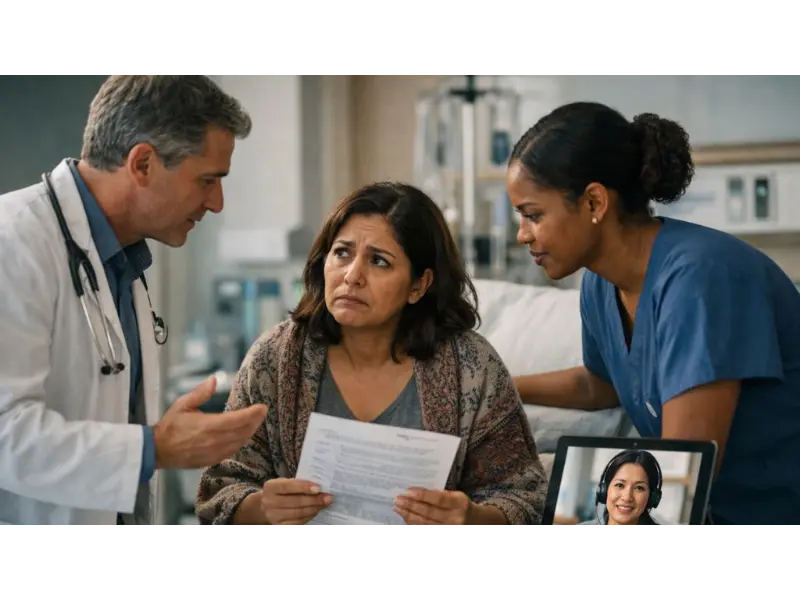
Language Barriers in Healthcare: Imagine that you are lying in a hospital bed, terrified, in unbearable pain, and unable to tell the doctor what’s wrong because you don’t speak the same language. For millions of people with limited English proficiency (LEP), this isn’t imagination—it’s a heartbreaking reality. These true stories reveal the deep human cost of language barriers in healthcare: fear, isolation, preventable suffering, and sometimes irreversible loss. They remind us that behind every statistic is a person pleading to be heard.
Effects of Language Barriers in Healthcare
Language barriers in healthcare can cause serious problems. When patients and doctors cannot understand each other, mistakes happen. Miscommunication can lead to wrong diagnoses and incorrect treatments. Many patients misunderstand how to take their medicines, which can cause dangerous errors or make them stop treatment early.
People with limited English proficiency face higher risks of medical harm. They often stay longer in hospitals and are more likely to be readmitted.
These barriers also affect emotions. Patients may feel scared, isolated, or ignored by healthcare providers. This weakens trust in the healthcare system. Families feel stressed when they have to translate and may share incorrect information. Children who interpret for their parents face higher risks of medical complications.
Healthcare costs increase because of avoidable problems and repeat visits. Doctors and nurses feel frustrated and burned out. Cultural meanings are often missed without proper interpreters, which increases health inequalities for immigrants and refugees. Overall, language barriers can turn normal medical care into a serious danger and increase preventable suffering.
People Who Faced Language Barriers in Healthcare Stories
Over 25 million U.S. adults struggle with English, and globally, countless immigrants, refugees, and travelers face the same fear. When words fail, so can medicine. Misdiagnosis, wrong treatments, and emotional trauma follow. These emotional accounts—from real patients and families—show the urgent need for change.
Must Read: Living Near Power Lines and Major Health Risks
Story 1: “Intoxicado” – One Word That Changed a Young Life Forever
Willie Ramirez, an 18-year-old Cuban American, collapsed at home in 1980 Florida. His family, speaking little English, told paramedics he was “intoxicado”—meaning nauseated from something he ate. The non-Spanish-speaking staff heard “intoxicated” and assumed drug overdose. For hours, doctors treated him for that instead of the real cause: a brain hemorrhage.
By the time they realized the mistake, irreversible damage had occurred. Willie became quadriplegic. His family won a $71 million settlement, but no money restored his life. His mother later wept: “If they had only understood us, my son would walk today.”
Story 2: The Haitian Mother’s Unspoken Guilt
Marie, a young Haitian immigrant, suffered severe back pain after childbirth. In Creole through a phone interpreter, she confided she believed it was divine punishment for her past hysterectomy—seen as unnatural in her culture. The English-speaking doctor never heard this spiritual anguish. He treated only the physical symptoms.
Marie left feeling unheard and ashamed, delaying follow-up care. Her pain worsened, and depression set in. “I felt alone in a room full of people,” she later shared through tears. “No one saw my whole suffering.”
Story 3: The Brazilian Worker Who Almost Lost Everything
João, a Portuguese-speaking construction worker, woke after hip surgery confused about pain meds. Instructions were given quickly in English; his daughter translated imperfectly. He took triple the dose, nearly causing kidney failure. A bilingual medical student caught the error just in time. João cried in relief: “I thought I was dying and couldn’t even tell them why.” Doctors had dismissed him as “non-compliant” without proper interpretation—turning fear into blame.
Story 4: The Elderly Chinese Grandmother’s Silent Struggle
Mrs. Li, 78, with diabetes, couldn’t explain her worsening vision and fatigue to her doctor. Her son interpreted, but missed medical terms. Her blood sugar spiraled uncontrolled. One night, she collapsed at home. In the ER, a professional Mandarin interpreter finally uncovered months of misunderstood symptoms. Mrs. Li held her granddaughter’s hand and whispered, “I was so scared no one would listen.” Her family still wonders how much suffering could have been prevented.
Story 5: The Refugee Child Who Paid the Price
A Syrian refugee family fled war only to face new terror in a U.S. hospital. Their toddler had a high fever, but the parents’ broken English couldn’t convey the full symptoms. Doctors sent them home with basic advice. The child developed sepsis and spent weeks in ICU. The mother sobbed to a later interpreter: “I begged them to understand. I felt like I failed my baby because I couldn’t speak their language.”
Story 6: The Latina Mother’s Preventable Loss
Maria, pregnant and Spanish-speaking, delayed prenatal visits fearing miscommunication. When complications arose, rushed instructions in English confused her about warning signs. She miscarried at home, alone and terrified. “I didn’t know what was happening,” she shared years later, voice breaking. “If someone had explained in my language, maybe my baby would be here.”
The Emotional Toll: Beyond Physical Harm
These stories share common threads: fear of not being understood, shame when labeled “difficult,” and grief over preventable pain. Families feel helpless watching loved ones suffer in silence. Providers feel frustration, knowing better care is possible. Patients lose trust, avoiding future visits—creating cycles of poorer health.
Hope and Solutions: Turning Tears into Change
Professional interpreters reduce errors by 50%+. Video/remote services and bilingual staff save lives. Translated materials and cultural training build trust. In 2025, AI tools emerge, but human connection remains irreplaceable.
Strategies for Overcoming Language Barriers in Healthcare
Language barriers lead to mistakes, longer hospital stays, and unhappy patients. They also reduce trust in doctors. New laws, like ACA Section 1557, require better language access in healthcare.
Professional Medical Interpreters
Professional interpreters are the safest option. In-person and video interpreters work better than phone calls for serious cases. Certified interpreters understand medical terms and patient privacy. They reduce errors and improve understanding. Hospitals should train staff to work with interpreters. Family members should not interpret because they can miss details or add bias.
Hiring and Training Bilingual Staff
Bilingual doctors and nurses help patients feel comfortable. Their language skills should be tested and certified. Paying extra for language skills encourages staff to help more. Cultural training also improves communication. Hiring from local communities helps match patient needs.
Translated Materials and Multilingual Resources
Written information should be available in many languages. This includes consent forms, medicine labels, and health guides. Certified translations prevent mistakes. Patient portals and websites should offer language options. Health apps in common languages reduce confusion.
Using Technology and AI Tools
Technology helps when interpreters are not available:
- Video Remote Interpreting (VRI): Quick access to certified interpreters
- Phone Interpretation: 24/7 support in many languages
- AI Translation Apps: Useful for simple questions
- AI Chatbots: Help with appointments and basic information
- Patient Apps: Share records in multiple languages
AI is helpful, but doctors should still review important medical decisions.
Creating a Language Access Plan
Healthcare organizations need clear plans:
- Identify common patient languages
- Assign language access coordinators
- Train staff every year
- Track problems and fix them
These plans must follow Title VI, CLAS standards, and Section 1557 rules.
Cultural Competency Training
Training helps staff understand different cultures. It reduces bias and improves care. Staff learn about customs, body language, and communication styles. Programs that include interpreters improve teamwork and accuracy.
Community Support and Patient Education
Healthcare providers should work with local groups. Patients should know they have the right to free interpreters. Teaching patients to speak up improves care quality.
Final Thought
Language barriers can be solved with effort and care. Interpreters, trained staff, and technology work best together. Clear communication saves lives.
These stories aren’t just statistics—they’re mothers, children, grandparents pleading for understanding. Share your experience or support interpreter programs. Together, we can ensure no one suffers in silence.
If you’ve faced language barriers in healthcare, you’re not alone. Seek free interpreter services—it’s your right. Healing starts with being heard.
Have you experienced language barriers in healthcare? Share your story below.