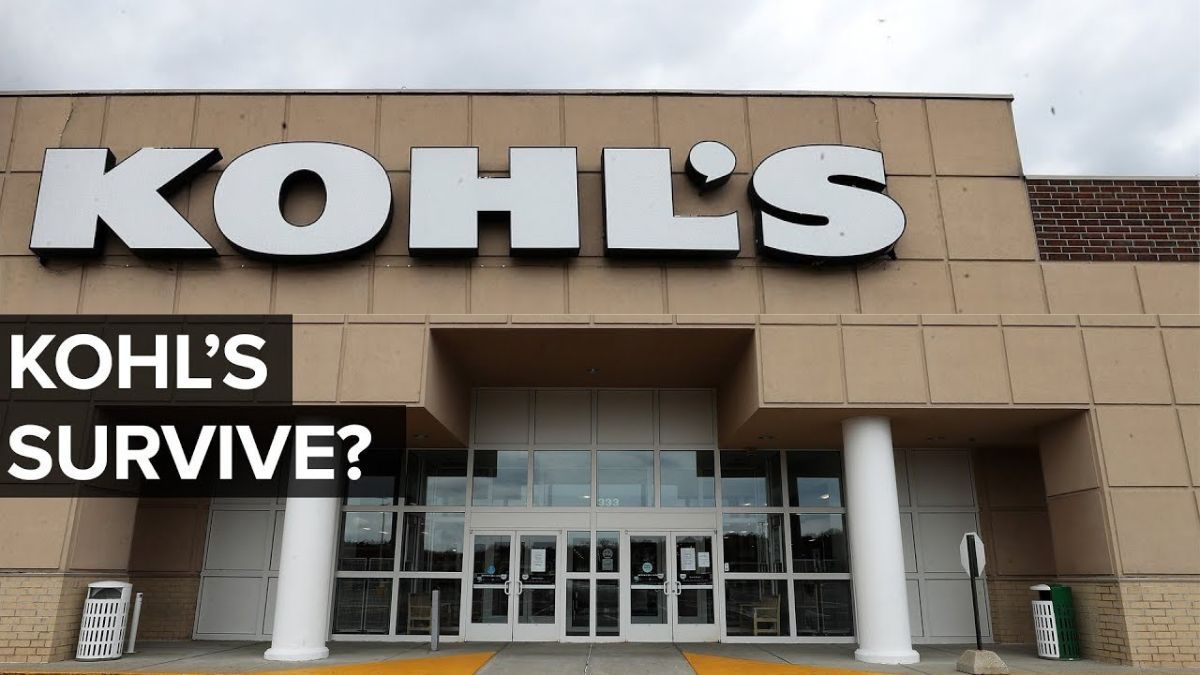
KOHL’S Pauses Store Closure In 2026: CEO Commitment to Stabilization and Optimization
For years, the story of Kohl’s and other traditional department stores has been one of decline: store closures, shrinking footprints, and growing competition from e-commerce. But on March 17, 2026, CEO Michael J. Bender made a surprising announcement that shifts this narrative entirely.
Kohl’s is not closing additional stores in 2026. Instead, the company is committing to optimization, profitability improvements, and operational excellence at its existing 1,150 locations.
This isn’t just corporate news—it’s a signal about the future of American retail and whether brick-and-mortar department stores can compete in 2026 and beyond.
KOHL’S Q4 2025 Earnings: Mixed Results But Beats On Profit
On March 10, 2026, Kohl’s released its fourth-quarter 2025 earnings report, revealing both challenges and unexpected wins:
Q4 2025 Financial Performance
Sales and Comparable Store Metrics:
- Net sales fell 3.9% to $5 billion
- Comparable store sales dropped 2.8%
- Full-year 2025: net sales down 4.0%, comparable sales down 3.1%
Profit Performance:
- Earnings per share (EPS) beat analyst expectations at $1.07 versus $0.85 estimate
- The company managed costs effectively despite declining sales
Why EPS Beat Despite Lower Sales
This paradox—declining sales but beating profit expectations—reveals something critical about Kohl’s strategy: the company is operating more efficiently, even if traffic remains weak.
The company focused on:
- Cost management and operational efficiency
- Inventory optimization
- Reduced promotional intensity where possible
The Traffic Problem: KOHL’S Admits Competitive Ground Loss
Despite beating on earnings, Kohl’s faces a fundamental challenge that worries investors: traffic is declining, and the company lost market share during the crucial holiday season.
CFO and CEO Comments on Traffic
CFO Jill Timm stated plainly on the earnings call: “Our issue continues to be traffic.”
CEO Michael Bender went further, admitting that Kohl’s “lost some competitive ground” during the critical holiday shopping windows—specifically Black Friday and Cyber Monday.
Why Holiday Season Weakness Matters
Black Friday and Cyber Monday represent the biggest shopping days of the year. When Kohl’s loses share to competitors during this period, it signals:
- The company is losing the value shopper to Walmart and Target
- Younger, digitally-native consumers are choosing Amazon and fast-fashion brands
- Kohl’s promotional strategy and marketing aren’t resonating as effectively as competitors
CEO MICHAEL BENDER’S March 17 Statment: No Closure, Focus On Optimization
One week after earnings, CEO Michael J. Bender made the company’s strategy unambiguously clear in an interview with the Milwaukee Journal Sentinel.
Direct CEO Quote on Store Closures
“I would not anticipate any sort of grand plan of saying we’re taking stores out or adding stores at this point. The focus for us is actually on optimizing what we already have and we’ll be focused on making sure that we continue to push the store’s productivity going forward.”
CEO Assessment of 2025 Performance
Bender emphasized progress despite headwinds: “We are ending 2025 in a stronger position than we started, with important work still ahead of us.”
The Broader Strategy: Resetting the Foundation
When describing the company’s plan, Bender used the language of stabilization and preparation: “Our broader plan is intended to stabilize the business and strengthen our operational ability to build for a stronger future.”
What This Language Reveals
Notice what CEO Bender is NOT saying:
- Not promising rapid growth
- Not predicting dramatic turnaround
- Not claiming market share recovery
What he IS saying:
- Company has stabilized operations
- Foundation is being “reset”
- Focus is on operational excellence and productivity
- Future growth will come from execution, not bold bets
This is the language of a company that has stopped the bleeding and is learning to walk again—not run.
THE KOHL’S Store Closure Timeline: From January Retreat To March Stabilization
Understanding Kohl’s current position requires knowing the timeline of recent announcements:
January 2025: The Store Closure Announcement
In January 2025, Kohl’s announced plans to close 27 stores across 15 states. This move signaled the company was still in retreat mode, following the traditional playbook: shrink the footprint, cut costs, optimize what remains.
March 2026: The Stabilization Pivot
Less than a year later, CEO Bender announced a complete shift: no additional closures, focus on optimization, and investment in existing locations.
What Changed in One Year?
The data showed that store closures weren’t the answer. Analysis likely revealed:
- Omnichannel Value: Even modest-performing stores provide value through online fulfillment, local pickup, and community presence
- 90% Store Profitability: More than 9 out of 10 Kohl’s stores are actually making money—the company wasn’t drowning in unprofitable locations
- Closure Costs: The true cost of closing stores (inventory disruption, customer loss, market abandonment) often exceeded savings
KOHL’S 2026 Financial Guidance: Realistic Expectations
For full-year 2026, Kohl’s provided guidance that reflects realistic, stabilization-focused planning:
2026 Sales Guidance
- Sales expected to range from flat to down 2%
- Not a growth story—a stabilization story
What Flat-to-Negative Sales Guidance Means
This guidance signals several things:
1. Management Isn’t Expecting Traffic Reversal Immediately
New initiatives like MAC cosmetics and impulse sales are designed to improve margins and profitability, not dramatically shift traffic in 2026. Management is being realistic.
2. The Real Focus Is Margin Expansion
If sales are flat but profitability is expected to improve, margins must expand. This comes from:
- Operational efficiency improvements
- Proprietary brand expansion (higher margins than third-party brands)
- Impulse sales conversion (higher margin per transaction)
- Better inventory management
3. Cost Discipline Remains Critical
Kohl’s proved it can manage costs effectively. For 2026, the company needs to balance cost discipline with maintaining customer experience and traffic.
KOHL’S New Initiatives: MAC Cosmetics, Impulse Sales, Aan Value Positioning
Rather than retreat, Kohl’s is launching three major strategic initiatives designed to drive traffic and margins in 2026.
Initiative #1: MAC Cosmetics at Sephora at Kohl’s
What’s Happening:
MAC cosmetics will debut in 850 Sephora at Kohl’s locations starting spring 2026.
Why This Matters:
MAC is a prestige beauty brand owned by Estée Lauder. Its inclusion in Sephora at Kohl’s serves multiple strategic purposes:
- Halo Effect: MAC attracts aspirational, higher-income shoppers who might not typically shop Kohl’s
- Traffic Driver: Beauty enthusiasts will visit Sephora specifically for MAC, browsing clothing, home goods, and other categories while there
- Brand Elevation: Associating with MAC improves Kohl’s brand perception
- Omnichannel Integration: Beauty products have high online penetration—MAC at Sephora at Kohl’s drives digital and in-store traffic
The Sephora at Kohl’s partnership has already proven successful, and MAC is a natural premium addition that addresses the “value plus prestige” positioning Kohl’s needs.
Initiative #2: Impulse Sales Expansion—40% Growth
What’s Happening:
Kohl’s rolled out 613 impulse queuing lines (checkout add-on merchandise displays) in Q4 2025 and saw impulse sales jump over 40% in the quarter following rollout.
Why This Matters:
Impulse items represent some of the highest-margin transactions in retail. Getting customers to add $5-15 of impulse purchases at checkout dramatically improves profitability without requiring more traffic. The company is rolling this out chain-wide.
Key impulse items include:
- Seasonal accessories
- Candles and home fragrance
- Jewelry and small gifts
- Self-care products
- Snacks and beverages
Initiative #3: Proprietary Brands and Under-$10 Value Items
What’s Happening:
Kohl’s is aggressively expanding its private-label brands and rolling out more impulse items under $10 price point.
Why This Matters:
In an inflationary environment, consumers are increasingly price-conscious. Kohl’s is positioning itself as THE place for quality basics at extreme value. This strategy:
- Drives Frequency: Under-$10 items encourage more frequent shopping
- Improves Margins: Proprietary brands have better margins than third-party brands
- Differentiates from Competitors: Kohl’s private labels are exclusive—you can’t find them elsewhere
- Addresses Consumer Behavior: Shoppers trading down from premium brands to value alternatives
KOHL’S Store Performance: 90% Profitability Is a Hidden Strength
One of the most important but underreported data points in Kohl’s story is this: more than 90% of the company’s 1,150 stores are currently profitable.
What 90% Store Profitability Means
This fundamentally changes the narrative. Kohl’s doesn’t have a dysfunctional store network. It has a largely profitable network with specific underperformers.
Retail context:
- Most traditional retailers would celebrate 80% store profitability
- 90% profitability suggests the business model fundamentally works
- The problem isn’t the model—it’s optimization and execution
The Strategic Implication
With 90% of stores profitable, closing more stores becomes less attractive. The focus shifts from “which stores to close” to “how do we improve the 10% that underperform and optimize the 90% that work.”
This explains why CEO Bender announced no store closures—the company has already identified and closed the worst performers (27 stores in January 2025). The remaining network is largely viable.
Is KOHL’S Recovering?
The question investors, shoppers, and retail analysts ask is simple: Can Kohl’s actually recover? The answer is more complex than yes or no.
The Optimistic Case for Kohl’s Recovery
Positive Signal #1: Clear Strategic Plan
The MAC cosmetics partnership, impulse expansion, and value positioning aren’t random. They’re strategic initiatives addressing specific problems:
- MAC addresses brand perception and traffic attraction
- Impulse sales address margin improvement
- Value pricing addresses consumer behavior and competitive positioning
Positive Signal #2: Cost Discipline Works
Kohl’s proved in Q4 2025 that it can maintain profitability despite lower sales. This demonstrates operational competence that many retailers lack.
Positive Signal #3: Strong Store Base Foundation
90% store profitability provides a strong foundation. The company isn’t fighting a losing battle—it’s optimizing a fundamentally sound business.
Positive Signal #4: CEO Leadership and Candor
CEO Michael Bender is being realistic and specific about plans. No hype, no false promises—just clear strategy and transparent communication about challenges.
The Concerning Case: Real Headwinds Remain
Challenge #1: Traffic Remains Weak
Lost competitive ground during the crucial holiday season is a red flag. New initiatives may help, but reversing traffic trends takes time and execution.
Challenge #2: Economic Sensitivity
Kohl’s is a discretionary retailer selling clothing and home goods. If consumer spending weakens in 2026, Kohl’s would be vulnerable. The company has limited pricing power and can’t force traffic.
Challenge #3: Intense Competition
Walmart and Target compete on value and traffic. Amazon competes on convenience and selection. Fast-fashion brands like Shein capture younger shoppers. Kohl’s is squeezed in the middle.
Challenge #4: Thin Retail Margins
Even with 90% store profitability, individual store margins are likely modest. Rising labor costs, supply chain disruptions, and inflation all threaten profitability.
Challenge #5: The Holiday Season Missed Opportunity
Holiday shopping is when department stores make money. Losing share during Black Friday and Cyber Monday is a significant missed opportunity that won’t be easily recovered.
The Verdict: Show Me, Don’t Tell Me
Kohl’s is a “show me” story. Management has a plan. Now it must execute:
Q1 and Q2 2026 Will Be Critical
Investors will watch these metrics closely:
- Comparable Store Sales: Is the company returning to positive comparable store sales? MAC and impulse initiatives should start showing results
- Traffic Trends: Are store visits increasing?
- Margin Expansion: Are margins actually expanding as management predicted?
- Customer Response to MAC: Is MAC cosmetics driving incremental traffic and basket size?
If these metrics improve in Q1 and Q2 2026, Kohl’s stock could see investor interest as a turnaround play. If metrics stagnate, pressure will build for more aggressive action—potentially including store closures after all.
What This Means For KOHL’S Shoppers
If you live near a Kohl’s, the March 17 announcement means your store is not likely to close in 2026. More importantly, Kohl’s is committed to improving your shopping experience.
Expect These Changes in 2026
Better Store Experience
- Refreshed store layouts and merchandise displays
- Improved inventory availability
- Enhanced checkout experience with more impulse options
- New MAC cosmetics section at Sephora at Kohl’s
More Value and Selection
- Expanded under-$10 product selection
- More proprietary brands exclusive to Kohl’s
- Better alignment of merchandise with local shopper preferences
- Expanded seasonal and impulse items
Improved Omnichannel Integration
- Easier online ordering for local store pickup
- Better inventory visibility across channels
- Simplified returns process
- Faster fulfillment of online orders at local stores
More Aggressive Loyalty Rewards
- Kohl’s Cash program remains central strategy
- Expect more personalized offers based on shopping history
- Digital promotions and app-based deals
What This Means For KOHL’S Investors
The Q4 2025 earnings and March 17 CEO statement send a specific message to Wall Street: Kohl’s management is confident the company can return to profitability and modest growth through execution excellence.
Key Investment Metrics to Watch in 2026
Metric #1: Comparable Store Sales Growth
This is the ultimate test. If Kohl’s can show positive comparable store sales growth in Q1 and Q2 2026, it validates the new initiatives. If comparable sales remain negative, doubts about management’s plan will grow.
Metric #2: Operating Margin Expansion
The company beat on earnings despite lower sales in Q4. Can it expand operating margins in 2026? This is critical. If margins expand, the company is on the right track. If margins compress despite cost discipline, the model is under pressure.
Metric #3: Impulse Sales Momentum
The 40% impulse sales growth is impressive, but is it sustainable? Can the company maintain impulse sales growth while rolling out impulse displays across all 1,150 stores?
Metric #4: MAC Cosmetics Performance
How quickly does MAC drive traffic and basket size? Sephora at Kohl’s has been successful, but MAC is a prestige brand. Will it attract the right customer demographic?
The Investment Thesis: Contrarian Bet on Retail Recovery
For contrarian investors, Kohl’s represents a bet that:
- Physical retail isn’t dead when properly executed
- A dense store network has value in an omnichannel world
- Operational excellence can drive profitability even with flat sales
- Department store customers will continue shopping with the right value and brand positioning
If this thesis proves correct over 2026, Kohl’s stock could see significant appreciation. If the thesis fails, the stock will likely decline further.
The Bigger Picture: What KOHL’S Strategy Reveals About 2026 Retail
Kohl’s pause on store closures and commitment to optimization tells a broader story about American retail in 2026.
The Retail Evolution: From Closure to Optimization
2015-2020: The Closure Era
When e-commerce exploded and the pandemic accelerated digital retail, the playbook was simple: close unprofitable stores, cut costs, shift online.
2021-2024: The Pivot
Retailers realized e-commerce wasn’t a silver bullet. Omnichannel integration was critical. Physical stores provided value even with modest individual profitability.
2026: The Optimization Era
Now, retailers are learning the real lesson: it’s not about number of stores (big vs. small). It’s about:
- Strategic store location and density
- Operational efficiency at each location
- Integration between online and physical
- Clear brand positioning (value, prestige, specialty, etc.)
- Customer experience excellence
Why Kohl’s Matters Beyond Kohl’s
Kohl’s decision to optimize rather than close sends a signal to the entire retail industry:
- Store-Based Retail Still Matters: Physical retail didn’t die. It evolved.
- Scale Remains Valuable: A network of 1,150 strategically located, profitable stores provides competitive advantage
- Omnichannel Integration Is Critical: Stores are fulfillment centers, not just sales locations
- Execution Beats Strategy: It’s not about bold transformation—it’s about doing the fundamentals right
KOHL’S 2026 Outlook: Stabilization With Opportunity
Looking ahead to 2026, Kohl’s faces a complex environment:
The Challenge
- Sales expected flat to down 2%
- Traffic remains weak
- Competition is intense
- Consumer spending is uncertain
- Holiday season proved challenging
The Opportunity
- 90% store profitability provides foundation
- New initiatives (MAC, impulse, value) create growth levers
- Operational excellence can drive margin expansion
- Omnichannel capabilities are improving
- Management has clear plan and is executing
The Question
Can Kohl’s management execute well enough to return to positive comparable store sales and margin expansion in 2026? If yes, the stock and the business face brighter prospects. If no, more aggressive action will likely be needed.
KEY TAKEAWAYS: KOHL’S PAUSES STORE CLOSURES AND COMMITS TO 2026 OPTIMIZATION
#1: Q4 2025 Earnings Tell a Mixed Story
Net sales fell 3.9% to $5 billion, comparable sales dropped 2.8%, but EPS beat expectations at $1.07 vs. $0.85 estimate. Full-year 2025 showed net sales down 4.0% and comparable sales down 3.1%.
#2: CEO Michael J. Bender Made Commitment Clear (March 17)
“I would not anticipate any sort of grand plan of saying we’re taking stores out or adding stores at this point. The focus for us is actually on optimizing what we already have.”
#3: From January Closures to March Stabilization
January 2025: Announced 27 store closures across 15 states. March 2026: Announced no additional closures and commitment to optimization. The data changed the strategy.
#4: Three Strategic Initiatives Drive 2026 Growth
- MAC cosmetics at 850 Sephora at Kohl’s locations (spring 2026)
- Impulse sales expansion (40% growth in Q4 impulse)
- Proprietary brand expansion with under-$10 value items
#5: 90% Store Profitability Is the Hidden Strength
More than 90% of 1,150 stores are profitable, suggesting the business model fundamentally works when properly executed.
#6: 2026 Guidance Is Realistic
Sales expected flat to down 2%—not a growth story, a stabilization story focused on margin expansion through operational excellence.
#7: Traffic Remains the Achilles Heel
Company lost competitive ground during Black Friday and Cyber Monday. New initiatives must prove they can reverse traffic declines.
#8: 2026 Will Be a Test of Retail Recovery Thesis
If Kohl’s can execute on its plan—driving positive comparable store sales and margin expansion—it proves that physical retail with proper omnichannel integration can still thrive.
FAQS
Q: Are Kohl’s stores closing in 2026?
A: No. CEO Michael Bender stated on March 17 that Kohl’s does not anticipate closing additional stores in 2026. After closing 27 stores across 15 states in January 2025, the company is shifting focus to optimizing existing locations.
Q: Is Kohl’s still profitable?
A: Yes. More than 90% of Kohl’s 1,150 stores are currently profitable. The company beat on earnings per share in Q4 2025 ($1.07 vs. $0.85 expected) despite declining sales.
Q: What is the MAC cosmetics partnership?
A: Beginning spring 2026, MAC cosmetics will be available in 850 Sephora at Kohl’s locations. This prestige beauty brand partnership is designed to attract higher-income shoppers and improve store traffic.
Q: Is Kohl’s expected to grow in 2026?
A: Kohl’s guided to flat-to-down sales of -2% to flat for 2026. The company expects margins to expand through operational efficiency and higher-margin impulse sales, rather than dramatic revenue growth.
Q: What is Kohl’s biggest challenge?
A: Traffic. The company explicitly stated it lost competitive ground during the holiday season. Reversing traffic trends is critical to executing the 2026 plan.
Conclusion
Kohl’s is at an inflection point. After a decade of challenges, store closures, and uncertainty, the company has announced a clear pivot: stabilize the business, optimize existing stores, and improve profitability through execution excellence.
CEO Michael J. Bender has been clear: no more store closures (for now), focus on operational improvement, and strategic investments in high-value initiatives like MAC cosmetics and impulse sales.
The data supports cautious optimism:
- 90% store profitability
- Cost discipline proven in Q4 2025
- Clear, executable strategy
- Management transparency about challenges
But challenges remain real:
- Traffic trends are concerning
- Competition is intense
- Consumer spending is uncertain
- Retail margins are notoriously thin
2026 will determine whether Kohl’s can actually execute this plan and return to growth.
For shoppers, the near-term message is positive: your local Kohl’s isn’t closing, and the company is investing in improving your experience. For investors, the message is clear: this is a “show me” story. Execution in Q1 and Q2 2026 will determine whether the turnaround narrative is real or just hope.
For the broader retail industry, Kohl’s represents an important test case: can traditional department stores thrive through operational excellence and strategic positioning, or has their time passed? The answer will emerge over the next 12 months.
Last Updated: March 18, 2026
Sources: Kohl’s Q4 2025 Earnings Report (March 10), CEO Statement (March 17), Milwaukee Journal Sentinel