
KC-135 Crash Reports Explained: Why the Military Refueling Aircraft Is Trending Today
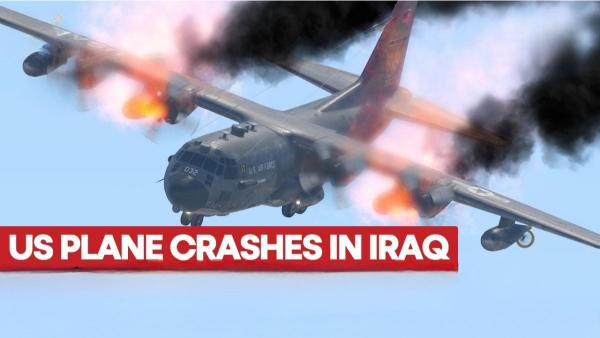
Four American service members are dead. Two more are still missing. A United States Air Force KC-135 Stratotanker — one of the most critical aircraft in the entire American military — went down over western Iraq on Thursday, March 12, 2026, while supporting ongoing combat operations against Iran.
Searches for “KC-135 crash,” “KC135 Iraq,” and “refueling plane crash” have surged across Google and social media since the news broke Thursday afternoon. Here is everything confirmed, everything disputed, and everything you need to understand about why the KC-135 is trending today.
What Is the KC-135 Stratotanker?
The KC-135 Stratotanker is the backbone of US Air Force aerial refueling operations — and it has been for nearly seven decades.
First introduced in 1957, the KC-135 is a large military tanker aircraft designed to refuel fighter jets, bombers, surveillance planes, and other military aircraft while all of them remain in the air simultaneously. This capability — called aerial refueling — is what allows the United States military to project power across vast distances without needing to land.
Without KC-135 tankers, a fighter jet departing from a base in Europe or the Pacific cannot reach targets in the Middle East and return safely. With them, American aircraft can fly virtually anywhere on earth.
Key Facts About the KC-135 Plane:
| Specification | Detail |
|---|---|
| Primary role | Aerial refueling aircraft |
| Operator | United States Air Force |
| First introduced | 1957 |
| Maximum speed | Approximately 530 mph |
| Range | Over 11,000 miles with refueling support |
| Cost | $39.6 million per aircraft |
| Crew | Typically 3 to 4 personnel |
| Ejection seats | None — crew cannot eject |
That last point is critical — and devastating. Unlike fighter jets, the KC-135 has no ejection seats. When a KC-135 goes down, the crew goes down with it. There is no ability to bail out.
What Does a Refueling Aircraft Do?
A refueling aircraft like the KC-135 Stratotanker carries enormous amounts of aviation fuel and transfers it to other aircraft during flight. This process — called aerial refueling — works like this:
- The tanker aircraft flies ahead of or above the receiving plane
- A boom or hose system extends from the KC-135
- Fuel is transferred while both aircraft remain flying at hundreds of miles per hour
- The receiving aircraft disconnects and continues its mission
This capability allows fighter jets to travel thousands of additional miles without landing — and is the reason the KC-135 is one of the most strategically valuable aircraft in the entire US military fleet.
Why Is the KC-135 Trending Today?
The KC-135 began trending after official confirmation of a crash in western Iraq on Thursday, March 12, 2026 — but search interest had already been building for days as Operation Epic Fury intensified across the Middle East.
Search terms that have surged across Google since Thursday afternoon include:
- kc-135 crash
- kc135 shot down
- kc-135 plane crash Iraq
- refueling plane crash
- kc135 Iraq
- kc-135 stratotanker
The answer to why it is trending is now confirmed — a KC-135 went down in an active combat zone, at least four Americans are dead, and the US military and an Iranian proxy group are telling two completely different stories about what caused it.
What Happened — The KC-135 Crash in Iraq
At approximately 2:00 PM Eastern Time on Thursday, March 12, 2026, a US Air Force KC-135 Stratotanker crashed in western Iraq.
US Central Command released an official statement confirming the loss:
“U.S. Central Command is aware of the loss of a U.S. KC-135 refueling aircraft. The incident occurred in friendly airspace during Operation Epic Fury, and rescue efforts are ongoing. Two aircraft were involved in the incident. One of the aircraft went down in western Iraq, and the second aircraft landed safely.”
CENTCOM was unambiguous on one critical point — the loss was not due to hostile fire or friendly fire. This means the crash was not caused by Iranian air defenses, enemy missiles, or a friendly fire incident.
At least five crew members were aboard the KC-135 that went down. As of Friday morning, four service members have been confirmed dead. Search and rescue operations are continuing for the remaining two missing crew members.
The identities of the service members have been withheld pending notification of their families — standard military protocol requiring a minimum 24-hour window before names are released publicly.
The second aircraft involved landed safely, CENTCOM confirmed.
Mid-Air Collision — What Investigators Believe Happened
CENTCOM’s statement that “two aircraft were involved” strongly suggests a mid-air collision or a catastrophic incident during an aerial refueling operation.
Aerial refueling is one of the most technically demanding and dangerous operations in military aviation. It requires a receiving aircraft to approach the tanker at precise speed and distance, connect to a refueling boom or drogue, and maintain exact formation while fuel is transferred — all while both aircraft are traveling at hundreds of miles per hour.
Aerospace Global News reported that a mid-air collision is suspected, with the second aircraft reportedly landing safely at Ben Gurion Airport in Israel after sustaining damage.
Breaking Defense noted this incident appears to be the first crash of a KC-135 since 2013, when three crew members died in a mishap shortly after takeoff.
“The circumstances of the incident are under investigation,” CENTCOM confirmed.
Iran-Backed Group Claims Responsibility — But US Denies It
Within hours of CENTCOM’s announcement, the Islamic Resistance in Iraq — an umbrella grouping of Iran-backed militias — claimed responsibility for shooting down the KC-135.
The group announced it shot down a US Army KC-135 aircraft in western Iraq “with the appropriate weapon.”
However, US Central Command directly contradicted this claim, stating unequivocally that the loss was not due to hostile or enemy fire.
Al Jazeera correspondent Rosiland Jordan noted from Washington: “The information shared by CENTCOM is still vague on exactly what happened, despite announcing that the aircraft was not shot down by allies or enemies. It looks as if this may have been a refueling attempt or operation, and then this air tanker went down.”
Both accounts cannot be true simultaneously. The investigation will need to resolve this contradiction definitively.
Are KC-135 Crashes Common?
Despite its long service history, the KC-135 Stratotanker is generally considered one of the most reliable aircraft in the US Air Force fleet.
However, like any military aircraft — particularly one operating in active combat zones — accidents have occurred over the decades due to:
- Mechanical failure
- Weather conditions
- Operational risks in high-tempo combat environments
- Complex aerial refueling maneuvers at altitude
- Combat situations and proximity to hostile airspace
Thursday’s crash is believed to be the first KC-135 loss since 2013 — a reflection of the aircraft’s strong safety record over its nearly 70-year service history. That record makes this crash all the more significant. When a KC-135 goes down, the world notices — because it almost never happens.
Operation Epic Fury — What Is It and Why Does It Matter?
The KC-135 crash occurred during Operation Epic Fury — the ongoing US-Israeli military campaign against Iran that began in early March 2026.
The operation launched after the United States and Israel jointly struck Iranian nuclear facilities, missile production sites, and military infrastructure. Iran responded with retaliatory strikes across the Middle East. The KC-135 fleet has been central to enabling the operation — providing the aerial refueling that allows fighter jets and bombers to reach Iranian targets and return safely.
The KC-135 that crashed on Thursday is the fourth manned US aircraft lost this month during Operation Epic Fury.
On March 1, 2026 — 11 days earlier — three US F-15E Strike Eagle fighter jets were shot down over Kuwait in a friendly fire incident involving a Kuwaiti F/A-18. All six F-15 crew members ejected safely and were recovered.
As of Tuesday, March 10 — two days before Thursday’s crash — the Pentagon had confirmed:
- 7 US service members killed in action
- Approximately 140 wounded — 8 severely
- 1 additional death from a health-related incident in Kuwait
Thursday’s crash adds at least 4 more deaths to that total, bringing confirmed American losses to at least 12 dead in the first 12 days of the operation.
KC-135 Operations in Iraq and the Middle East
The KC-135 Stratotanker has been central to every major US military operation in the Middle East for decades — including missions over Iraq, Syria, Afghanistan, and the Persian Gulf region.
These aircraft support fighter jets, reconnaissance planes, surveillance aircraft, and bombers involved in regional operations. Because tanker aircraft must fly near active conflict zones to position themselves for refueling, they are inherently exposed to risk in a way that aircraft operating from distant bases are not.
“Mobility platforms like the KC-135 Stratotanker have surged to the Middle East to support ongoing operations against Tehran,” Breaking Defense reported, “providing fuel to get aircraft across the Atlantic or extending time on station for jets striking Iranian targets.”
Losing even a single KC-135 has operational consequences that extend well beyond the aircraft itself — every fighter jet striking targets inside Iran requires aerial refueling to reach its target and return safely.
Iran’s Response and Ongoing Threats
Thursday’s crash occurred against a backdrop of escalating Iranian threats.
Iran’s security chief Ali Larijani warned: “Trump says he is looking for a speedy victory. While starting a war is easy, it cannot be won with a few tweets.” He stated Tehran would make the US “sorry” for starting the war.
Iran’s new supreme leader Mojtaba Khamenei made three specific public demands:
- The Strait of Hormuz should remain closed as “a tool to pressure the enemy”
- All US military bases in the Middle East should close immediately
- Those bases “will be attacked” if they do not close
The Strait of Hormuz threat is particularly significant — approximately 20% of the world’s oil supply transits through the Strait daily. More foreign ships were struck in the Persian Gulf on Thursday — the same day the KC-135 went down.
Latest Updates on the KC-135 Incident
As of Friday morning, March 13, 2026:
- Four US service members confirmed dead
- Two crew members still missing — search and rescue operations ongoing
- CENTCOM maintains crash was not caused by hostile or friendly fire
- Islamic Resistance in Iraq maintains it shot the aircraft down
- Investigation into exact circumstances officially underway
- Identities of victims withheld pending family notification
- Second aircraft involved in the incident confirmed to have landed safely
Authorities are investigating all aspects of the incident carefully. Updates are expected throughout Friday as rescue operations continue and investigators release findings.
FAQs About the KC-135 Crash
Q1: What is the KC-135 plane? The KC-135 Stratotanker is a military tanker aircraft used for aerial refueling by the United States Air Force. First introduced in 1957, it remains one of the most important and widely used support aircraft in the US military fleet.
Q2: What does a refueling aircraft do? A refueling aircraft like the KC-135 transfers fuel to other planes while both remain in flight, allowing fighter jets, bombers, and surveillance aircraft to stay in the air for thousands of additional miles without needing to land.
Q3: Why is KC-135 trending today? Searches surged after the US military confirmed a KC-135 Stratotanker crashed in western Iraq on March 12, 2026 during Operation Epic Fury. Four US service members were killed and two are missing. An Iran-backed group claimed to have shot it down — but CENTCOM confirmed it was not caused by hostile fire.
Q4: Was the KC-135 shot down? US Central Command stated the crash was not due to hostile or friendly fire. However, the Iran-backed Islamic Resistance in Iraq claimed responsibility for shooting it down “with the appropriate weapon.” A mid-air collision during an aerial refueling operation is suspected. The investigation is ongoing.
Q5: Does the KC-135 have ejection seats? No. Unlike fighter jets, the KC-135 has no ejection seats. When the aircraft went down, the crew had no ability to bail out — which is why the loss of a single KC-135 typically results in greater casualties than the loss of a smaller single-seat aircraft.
Q6: Where are KC-135 aircraft used? They are used worldwide in military missions including operations in the Middle East, Europe, the Pacific, and across the Atlantic. During Operation Epic Fury, dozens of KC-135s have been deployed to the Middle East to support ongoing strikes against Iranian targets.
Q7: Are KC-135 crashes common? No. The KC-135 has a strong safety record across nearly 70 years of service. Thursday’s crash is believed to be the first loss of a KC-135 since 2013. That rarity is part of what makes this incident so significant and why it is trending globally.
Conclusion
Four Americans are dead in the Iraqi desert. Two more are still missing. The aircraft at the center of this tragedy — the KC-135 Stratotanker, a plane that has served the United States military since 1957 — has fallen under circumstances that remain under investigation.
What is clear is this — Operation Epic Fury is no longer a conflict that can be described as clean, swift, or without cost. The KC-135 crash is the fourth aircraft America has lost in 12 days. The human toll is rising. And whether this was a catastrophic mid-air collision or something more sinister, the investigation into what happened over western Iraq on Thursday afternoon has only just begun.
Note: All information sourced directly from US Central Command official statement, CNN, Washington Post, CBS News, Military Times, Breaking Defense, Al Jazeera, and CNBC as of March 13, 2026 at 6:00 AM EDT. This is a developing story — updates will be added as rescue operations continue and investigators release findings.