
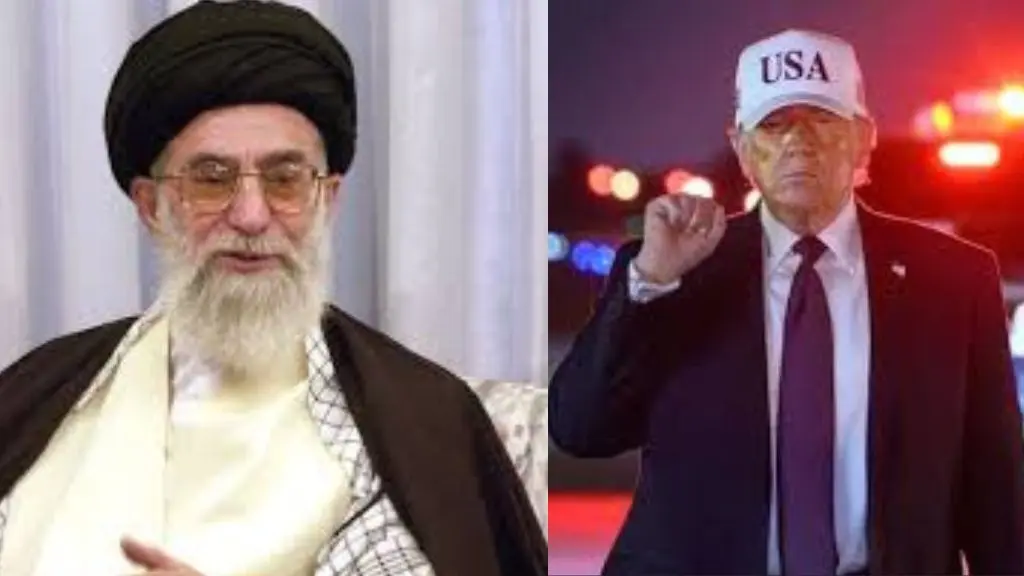
Iran’s Supreme Leader Ayatollah Ali Khamenei Killed: Everything You Need to Know About Operation Epic Fury, the Dubai Attacks, and What Happens Next
The world changed on February 28, 2026. Iran’s Supreme Leader — the most powerful theocrat on earth for nearly four decades — was killed in a joint American and Israeli military operation. Missiles rained on Dubai. Schools burned in southern Iran. Airports closed across the Middle East. And the question hanging over everything: what comes next?
This is the complete, definitive breakdown of everything happening — who Khamenei was, what Operation Epic Fury is, why Dubai was attacked, who is now leading Iran, and what the world is watching for in the hours and days ahead.
Is Khamenei alive or dead?
Iranian state media has confirmed that Supreme Leader Ayatollah Ali Khamenei was killed at his office in the Israeli-US attacks on Iran. A 40-day mourning period for the longtime Iranian leader has been announced.
Yes. Ali Khamenei is dead. Confirmed.
Ali Hosseini Khamenei, born April 19, 1939, was Iran’s Supreme Leader from 1989 until his death by assassination on February 28, 2026. He was the first Iranian head of state to be assassinated since Naser al-Din Shah Qajar in 1896.
What Just Happened: Short Summary
On February 28, 2026, the United States and Israel began conducting extensive strikes against a wide range of targets in Iran. The strikes were dubbed Operation Epic Fury by the United States and Operation Roaring Lion by Israel.
Iranian Supreme Leader Ali Khamenei was killed in an Israeli strike as part of a massive joint military operation between the U.S. and Israel, Iranian state media confirmed. The Iranian government announced 40 days of public mourning following the “martyrdom” of the 86-year-old ayatollah, who had ruled Iran for over 36 years.
Three U.S. service members have been killed in action and five are seriously wounded as part of Operation Epic Fury, CENTCOM announced Sunday morning. Iran launched counterattacks against multiple cities in the Middle East, including Jerusalem, and has struck U.S. military bases across the region.
On the morning of March 1, reports confirmed Iran launched missiles and drones on Israel, UAE, Qatar, Kuwait, Bahrain, Jordan, and Saudi Arabia. Witnesses saw smoke from missile intercepts over Dubai and dark plumes rising from the Port of Jebel Ali, United Arab Emirates.
The world is, as of this writing, in the middle of the most consequential military confrontation in the Middle East since the 2003 invasion of Iraq — and possibly since the Gulf War of 1991. Everything that follows is what you need to understand to make sense of it.
Who Was Ayatollah Ali Khamenei?
Quick Reference: Ali Khamenei Personal Life at a Glance
| Full Name | Ali Hosseini Khamenei |
| Born | April 19, 1939, Mashhad, Iran |
| Died | February 28, 2026 |
| Height | Approx. 5 ft 10 in (178 cm) |
| Father | Sayyid Javad Khamenei — Islamic scholar |
| Mother | Khadijah Mirdamadi — daughter of a cleric |
| Siblings | Mohammad, Badri, Hadi, Hassan + others |
| Wife | Mansoureh Khojasteh Bagherzadeh — married 1964 |
| Children | 6 — Mostafa, Mojtaba, Masoud, Meysam, Boshra, Hoda |
| Grandchildren | Estimated 7+ |
| Pseudonym as poet | Amin |
| Favorite novel | Les Misérables by Victor Hugo |
| Favorite authors | Sholokhov, Alexei Tolstoy, Balzac, Hugo |
| Sleep per night | 3–4 hours |
| Books read per week | 2–3 |
| Hobbies | Poetry, gardening, mountain climbing, reading |
| Health events | Prostate surgery 2014; bowel surgery 2022 |
| Times arrested | 6 times by the Shah’s regime |
| Years as Supreme Leader | 36 years (1989–2026) |
| Books written | Multiple — including autobiography Cell No. 14 |
Ali Hosseini Khamenei was an Iranian politician and Shia imam who served as the Supreme Leader of Iran from 1989 until his death. His tenure as supreme leader, spanning 36 years and six months, made him the longest-serving head of state in the Middle East at the time of his death and the longest-serving Iranian leader since Shah Mohammad Reza Pahlavi.
Born into the Khamenei family, he studied at a hawza in his hometown of Mashhad, later settling in Qom in 1958, where he attended the classes of Ruhollah Khomeini. Khamenei became involved in opposition to Mohammad Reza Pahlavi, the Shah of Iran, and was arrested six times before being exiled for three years by the Shah’s regime.
The Road to Power
Khamenei survived an assassination attempt in 1981 that cost him the use of his right arm. He served as Iran’s president before succeeding Khomeini as supreme leader in 1989.
Alex Vatanka, a senior fellow at the Middle East Institute in Washington, says Khamenei was an unlikely candidate. Then a midlevel cleric, Khamenei lacked religious credentials, which left him feeling vulnerable. “He knew himself. He didn’t have the prestige, the gravitas to be the successor to the founder of the Islamic Republic, Ayatollah Khomeini,” Vatanka says.
But Khamenei was cunning in ways his detractors consistently underestimated. He outmaneuvered rivals, consolidated power methodically, and over nearly four decades built one of the most centralized and personal systems of governance in the modern world.
LIVE – Al Jazeera English | Watch 24/7 Global News Coverage Online
What the Title “Supreme Leader” Actually Means
This is a critical distinction that many people in the West misunderstand. In Iran’s constitutional structure, the Supreme Leader is not equivalent to a president or prime minister. He is something altogether more powerful.
Within Iran, Khamenei was the most powerful political authority. He was the head of state of Iran, the commander-in-chief of its armed forces, and could issue decrees and make the final decisions on the main policies of the government in economy, the environment, foreign policy, and national planning in Iran.
Over time, the office of the supreme leader consolidated authority over Iran’s key institutions. While presidents changed through elections, Khamenei retained control over the military, judiciary, state broadcasting and major strategic decisions under Article 110.
In simple terms: Iran has had multiple presidents during Khamenei’s rule. He outranked every single one of them. The president of Iran is not the most powerful person in Iran. The Supreme Leader is. This is why Khamenei’s death — not the death of the president — is the event that has shaken the world.
Fox News Live Updates: Breaking News, Headlines & 24/7 Coverage Guide
What Is the Ayatollah? Understanding the Title
The word “Ayatollah” is an honorific title in Twelver Shia Islam meaning “Sign of God.” It denotes a senior cleric who has achieved the highest level of Islamic scholarship and is recognized as a religious authority — a “marja” — by a significant community of followers. Khamenei held this title, as did his predecessor Ruhollah Khomeini, the founder of the Islamic Republic.
Ayatollah Ruhollah Khomeini — the founder of the Islamic Republic of Iran and its first Supreme Leader — died on June 3, 1989. He has been dead for nearly 37 years.
Ayatollah Ali Khamenei — Iran’s second and most recent Supreme Leader — was killed on February 28, 2026 in the US-Israeli strikes described in this article.
They are two different men. Khomeini died in 1989. Khamenei was just killed in 2026.
Times Now Live – Watch Breaking News & US News Today Live
Khamenei Family Status (Post-February 28, 2026)
| Relationship | Name | Status (as of March 1, 2026) |
| Supreme Leader | Ali Khamenei | Deceased. Killed in airstrikes on his Tehran residence. |
| Spouse | Mansoureh Khojasteh | Unconfirmed. Likely in a secure location; no death report. |
| Son (Eldest) | Mostafa Khamenei | Reported Alive. Cleric; not confirmed to be at the compound. |
| Son (Second) | Mojtaba Khamenei | Status Disputed. Historically influential; current whereabouts unknown. |
| Daughter-in-Law | Zahra Haddad-Adel | Deceased. (Wife of Mojtaba) Reported killed in the Tehran strike. |
| Son (Third) | Masoud Khamenei | Reported Alive. Not reported among the casualties. |
| Son (Fourth) | Meysam Khamenei | Reported Alive. Not reported among the casualties. |
| Daughter | Boshra Khamenei | Status Disputed. Reports indicate one daughter was killed. |
| Daughter | Hoda Khamenei | Deceased. Reported killed alongside her husband in the strikes. |
| Son-in-Law | Mesbah al-Hoda Bagheri Kani | Deceased. (Husband of Hoda) Confirmed killed in the attack. |
| Grandchild | Unspecified | Deceased. At least one grandchild confirmed killed by Fars News. |
Khamenei’s Legacy of Repression and Regional Conflict
Iran killed thousands of its citizens under Khamenei’s rule, including more than 7,000 people killed during weeks of mass protests that started in late December 2025, according to the Human Rights Activists News Agency, a U.S.-based organization that closely tracks rights abuses in Iran.
Under Khamenei, Iran supported the “Axis of Resistance” coalition in the Syrian civil war, War in Iraq, Yemeni civil war and the Gaza war, as well as Russia during the Russo-Ukrainian war. A staunch critic of Israel and of Zionism, Khamenei supported the Palestinians in the Israeli–Palestinian conflict; his rhetoric included calls for Israel’s destruction.
By the time Khamenei died, Israel had decimated two key proxies — Hamas and Hezbollah — wiped out Iran’s air defenses and, with U.S. help, left Iran’s nuclear program in shambles. What remains is a robust ballistic missile program, the brainchild of Khamenei. His legacy is in tatters.
What Is Operation Epic Fury? The Military Operation Explained
How It Was Announced
The outset of the conflict was communicated unconventionally: President Trump announced the attacks in a Truth Social post at 2:00 AM EST on February 28. There was no address to the media or public briefing to Congress beyond a notification to the Gang of Eight shortly before strikes commenced. An eight-minute video concluded with a direct message from President Trump to Iranians, stating “the hour of your freedom is at hand.”
What the Operation Targeted
The operation targeted key officials, military commanders, and facilities. The attack included the assassination of Supreme Leader Ali Khamenei. Israel and Iranian proxies have been engaged in conflict since 1985, which escalated into two direct strikes in 2024, and in 2025 they fought a 12-day war that also saw US strikes aimed at destroying Iran’s nuclear facilities.
Iran’s retaliation campaign has included aiming ballistic missiles and drones at U.S. bases and Israel — and is spilling into neighboring Arab states that host American forces or sit under flight paths. Those include the United Arab Emirates, Qatar, Kuwait, Bahrain and Jordan.
The Nuclear Backstory
In the weeks before the 2026 attack, Iran and the US had been in indirect nuclear negotiations mediated by Oman, and a second round of nuclear talks had been scheduled to be held in Geneva. The attack was preceded by the largest US military buildup to have occurred in the Middle East since the 2003 invasion of Iraq.
The regional fallout follows President Trump’s 10-day ultimatum to Tehran to solidify a nuclear deal — and his decision to act after diplomatic talks failed. Trump had said that rejecting an agreement would bring about a military response, while the U.S. buildup in the area grew for weeks.
Trump’s Statement on Khamenei’s Death
Trump said on Truth Social: “Khamenei, one of the most evil people in History, is dead. This is not only Justice for the people of Iran, but for all Great Americans, and those people from many Countries throughout the World, that have been killed or mutilated by Khamenei and his gang of bloodthirsty THUGS. He was unable to avoid our Intelligence and Highly Sophisticated Tracking Systems and, working closely with Israel, there was not a thing he, or the other leaders that have been killed along with him, could do.”
Why Did Iran Attack Dubai? The Dubai Situation Explained
Is Dubai in Iran? No — Here Is Why It Was Attacked
Dubai is not in Iran. Dubai is one of the seven emirates of the United Arab Emirates (UAE) — a sovereign nation on the Arabian Peninsula, entirely separate from Iran. The two countries sit on opposite sides of the Persian Gulf. This is one of the most searched questions right now, and the answer is clear: Dubai is approximately 800 miles from Tehran.
So why was Dubai attacked?
Iran’s Retaliatory Strike Strategy
In retaliation for the US-Israeli strikes, Iran launched dozens of its drones and ballistic missiles throughout the Persian Gulf, targeting Israel as well as US military bases in Jordan, Kuwait, Bahrain, Qatar, Iraq, Saudi Arabia, and the United Arab Emirates. Iran has reportedly launched strikes on civilian aviation facilities, including international airports in Kuwait and the UAE
The UAE, Qatar, Bahrain, Kuwait, and Saudi Arabia all host American military bases and assets. Iran’s retaliatory strategy targeted not just Israel but every nation in the region that hosts American forces — a deliberate escalation designed to punish American allies and make US military operations in the region as costly as possible.
What Happened to Dubai Specifically
The UAE government sent texts to citizens to remain indoors in safe areas after Iran launched a missile attack on Dubai on February 28, 2026 in response to U.S./Israel attacks on Iran. Abu Dhabi residents received an emergency alert on their phones telling them to seek immediate shelter in the closest secure building, and to steer away from windows, doors and open areas.
Residential areas of Dubai in the proximity of the Dubai Marina and the Dubai Palm were hit by strikes, setting the Fairmont The Palm hotel on fire, causing four injuries, as well as a residential building on the outskirts of Doha. The UAE said that it had intercepted a “new wave” of Iranian missiles and that “fragments from the interceptions” had fallen in Abu Dhabi and Dubai, causing damage to Burj Al Arab.
One of the berths at Dubai’s Jebel Ali Port caught fire due to debris resulting from an aerial interception. Dubai Airports confirmed that a concourse at Dubai International Airport sustained minor damage in an incident, which was quickly contained. The UAE’s airspace remained closed and flights into Abu Dhabi via Etihad were suspended.
The School Strike That Shocked the World
One of the most horrifying moments in the entire crisis came when Iran’s counterattacks triggered air-defence interceptions in several countries and among the attacks, Israel struck two schools in Iran, killing at least 108 people at the Shajareh Tayyebeh girls’ elementary school in the southern city of Minab, and two others at a school east of the capital.
Saturday is the start of the Iranian school week. Children were in classrooms when the strikes began. The images that emerged from those school strikes — of rubble, of rescuers, of grief — became the most searing visual record of the human cost of the conflict on both sides.
Who Is Leading Iran Now? The Succession Crisis
The Immediate Constitutional Response
The interim leadership council of Iran has been formed following the death of Supreme Leader Ayatollah Ali Khamenei, Iranian state TV reported Sunday. According to the Islamic Republic’s constitution, the interim leadership council is comprised of the president, the head of the judiciary, and one of the members of the six “faghihs” — Islamic jurists who are scholars of Islamic law — of the Guardian Council.
Who Is Alireza Arafi?
Ayatollah Alireza Arafi from the Guardian Council, aged 67, was on Sunday appointed to the three-member temporary council. The council will lead the country until the Assembly of Experts formally picks the new Supreme Leader. That council includes President Masoud Pezeshkian, Supreme Court Chief Justice Gholam-Hossein Mohseni-Ejei, and Arafi.
Arafi is an established cleric and confidant of Khamenei. He currently serves as deputy chairman of the Assembly of Experts and has been a member of the powerful Guardian Council, which vets election candidates and laws passed by parliament. He is also head of Iran’s seminary system. Arafi isn’t known to be a political heavyweight and doesn’t have close ties to the security establishment.
Who Is the President of Iran?
Iran’s current president is Masoud Pezeshkian, who was elected in 2024 following the death of former president Ebrahim Raisi in a helicopter crash in May 2024. It is critically important to understand that the president of Iran is subordinate to the Supreme Leader in Iran’s constitutional structure. Pezeshkian now sits on the interim council but does not hold the supreme authority that Khamenei once wielded.
Who Might Be the Next Supreme Leader?
Iran’s clerical regime faces the prospect of trying to find a successor to Supreme Leader Ayatollah Ali Khamenei following his killing. The veteran leader does not have an officially declared heir. Instead, an elected body of 88 senior clerics known as the Assembly of Experts will select the next leader.
The leading candidates being discussed include:
Mojtaba Khamenei: Khamenei’s second son, Mojtaba, is among the top contenders to succeed his father as the next supreme leader. He is known to wield significant influence among the administrators and the IRGC, the most powerful military body. However, his lineage is also among the biggest barriers he faces. Father-to-son succession is frowned upon in Iran, particularly after the US-backed monarchy of Shah Mohammad Reza Pahlavi was toppled in 1979.
Alireza Arafi: Arafi, a senior cleric embedded in both the Assembly of Experts and the Guardian Council, represents doctrinal continuity from Qom’s seminary establishment. He is regarded as a safe insider but lacks an independent power base within the security sphere.
Ali Larijani: One senior official who survived is Ali Larijani — secretary of Iran’s supreme national security council, former parliament speaker and one of Khamenei’s closest confidants. With much of the leadership killed, Larijani has emerged as the most senior civilian official still standing. In a post on X Saturday, he vowed Iran would deliver Israel and the U.S. an “unforgettable lesson.”
Hassan Khomeini: Hassan Khomeini, grandson of Ruhollah Khomeini, could serve as a conciliatory figure if the regime seeks to defuse domestic anger or recalibrate internationally.
Because Ali Khamenei was killed in a foreign airstrike rather than dying in bed, the succession is unfolding under a different set of rules. Instead of a planned insider handover, Iran now faces a wartime power struggle. The IRGC can point to the assassination and the U.S.–Israeli attacks to argue for an overtly military system run under sweeping emergency powers.
Masih Alinejad: The Voice of Iran’s Opposition in This Moment
No single figure has come to represent the reaction of Iran’s diaspora and dissident community to these events more powerfully than Masih Alinejad — the Iranian-American journalist and activist who has spent years fighting the Islamic Republic from exile while the regime repeatedly tried to kill her.
Masih Alinejad, an Iranian American journalist who has advocated the overthrow of the Islamic regime since she fled to the U.S. in 2009, shed tears of joy upon learning that Iran’s leader, Ali Khamenei, was killed.
Alinejad took to the streets of New York City to celebrate. “Every morning I wake up reading that my people are being killed by Ali Khamenei, but this is the first morning in my life that I get the good news. I wanna run. I wanna run and shout and shout and shout out of joy,” Alinejad said. “If he’s really dead, this is a day of celebration. I call every Iranian, every American, if Ali Khamenei is gone, do not mourn. Do not even dare to mourn for the killing of a terrorist, because removing a terrorist is not tragedy. It’s a sign of justice.”
Alinejad, whose parents and siblings live in Iran, said that Iranians are experiencing both pain and hope after the attacks. “But in the street, people are just screaming out of joy because they believe this is going to be the beginning of a future, a future that we don’t have killers in power, a future that people can have a normal life,” she said.
Alinejad’s reaction carries particular weight because of her personal history with the regime. The Iranian government directed plots to assassinate her on American soil. She was targeted three times by Khamenei’s order. Her outspokenness about the Islamic Republic’s treatment of women — particularly the compulsory hijab laws — made her one of the regime’s most wanted critics. That a woman who had been marked for death by Khamenei’s government was dancing in the streets of New York on the day of his death is one of the defining images of this moment.
Celebrations and Mourning: A World Divided
The reaction to Khamenei’s death has been sharply divided — both internationally and within Iran itself.
“Khamenei is dead. This is the best day of my life,” one Iranian source told reporters, speaking anonymously for fear of reprisal.
Iranians who fled the regime to California celebrated. “We all want to say thank you to President Trump,” said Saghar Fanisalek, owner and chef of Taste of Tehran in Los Angeles. “This is the only person who supports us in the last 50 years. Every single person in Iran knew that the only way that this regime was going to go away is to attack them.”
An announcer appearing on Iranian television to deliver the news of Supreme Leader Ayatollah Ali Khamenei broke down in tears as he read the statement. Iran has announced 40 days of mourning following Khamenei’s death.
Meanwhile at the United Nations, Iran’s UN ambassador Amir Saeid Iravani said the US and Israel had “initiated an unprovoked and premeditated aggression,” attacking “civilian populated areas in multiple large cities of Iran, where millions of people reside.” “This is not only an act of aggression, it is a war crime, and a crime against humanity,” he said.
United Nations Secretary-General Antonio Guterres told an emergency meeting of the Security Council that he deeply regretted that an opportunity for diplomacy had been “squandered.” “Military action carries the risk of igniting a chain of events that no one can control in the most volatile region of the world,” he told the 15-member body.
The Regional Fallout: What Is Happening Across the Middle East
Airports and Flights Disrupted
Iran’s airspace was largely empty of civilian aircraft on Saturday following joint US and Israeli strikes. The United Arab Emirates, Qatar and Iraq were among countries that shut their airspace, while airlines suspended services to destinations across the Middle East amid escalating tensions. Germany’s Lufthansa suspended flights to and from Tel Aviv, Beirut and Amman and halted flights to and from Dubai on Saturday and Sunday. Dutch carrier KLM canceled its scheduled Amsterdam-Tel Aviv flight. Air France canceled flights to and from Tel Aviv and Beirut. Hungarian low-cost carrier Wizz Air suspended all flights to and from Israel, Dubai, Abu Dhabi and Amman until March 7.
Oil and Energy Markets
Closure of the Strait of Hormuz resulted in the disruption of global oil and gas shipment. As a result of the closure, 150 freight ships, including many oil tankers, are stalled behind the strait.
The Strait of Hormuz is the narrow waterway between Iran and the Arabian Peninsula through which roughly 20% of the world’s oil supply passes every day. Its closure — even briefly — is one of the most significant economic disruptions possible in the global energy market, and energy markets have already begun reacting.
Russia and Putin’s Position
Russia, which has maintained close ties with Iran and received Iranian-made Shahed drones for use in the Ukraine war, finds itself in a deeply complicated position. Under Khamenei, Iran had supported Russia during the Russo-Ukrainian war, supplying drones and other military equipment that became central to Moscow’s campaign. Russia’s official response has been to condemn the strikes — but Putin’s ability to intervene is severely constrained by the ongoing war in Ukraine and his own military and economic limitations.
What Happens Next: Three Possible Scenarios for Iran
Scenario 1 — Regime Continuity
In a continuity outcome — essentially “Khamenei-ism without Khamenei” — investors and households may still face uncertainty because a new leader would need to “learn on the job” while trying to shape economic policy with limited resources and intensifying strains.
Scenario 2 — Military Takeover
The IRGC went into this crisis already dug into the economy, the bureaucracy and provincial power structures, with its own intelligence and media networks. U.S.–Israeli strikes have damaged some IRGC assets but also handed commanders a pretext to centralize authority and claim that only a security-dominated state can defend the country.
Scenario 3 — Regime Collapse
“Leadership change in Iran could take three primary trajectories — regime continuity, military takeover, or regime collapse,” the Council on Foreign Relations reported. Some Iranians have expressed hope that a leadership change could ease repression and economic isolation. However, the most likely succession outcomes do not suggest meaningful political or economic liberalization in the immediate aftermath of a transition.
“Taking out Iranian Supreme Leader Ayatollah Ali Khamenei is not the same as regime change. The Islamic Revolutionary Guard Corps is the regime,” the Council on Foreign Relations noted following his passing, limiting the prospects for immediate political or economic transformation.
Key People and Terms —
| Name | Who / What They Are |
|---|---|
| Ayatollah Ali Khamenei | Iran’s Supreme Leader 1989–2026. Killed February 28, 2026. |
| Ayatollah Ruhollah Khomeini | Iran’s FIRST Supreme Leader. Died in 1989. Different person. |
| Masoud Pezeshkian | Current President of Iran. Subordinate to the Supreme Leader. |
| Mojtaba Khamenei | Khamenei’s son. Top potential successor. Controversial due to dynastic concerns. |
| Alireza Arafi | 67-year-old cleric. Member of interim leadership council. Possible successor. |
| Ali Larijani | Iran’s most senior surviving official. Security council chief. |
| Masih Alinejad | Iranian-American journalist and activist. Prominent anti-regime voice. |
| Operation Epic Fury | US name for the joint US-Israeli military operation against Iran. |
| Operation Roaring Lion | Israeli name for the same operation. |
| IRGC | Islamic Revolutionary Guard Corps. Iran’s most powerful military body. |
| Assembly of Experts | 88-member clerical body that selects Iran’s Supreme Leader. |
| Ayatollah | Islamic honorific title for a senior Shia cleric. Not a specific person. |
| Supreme Leader | Iran’s highest position of authority — above the president. |
FAQs
Is Dubai in Iran? No. Dubai is part of the United Arab Emirates, a separate country across the Persian Gulf from Iran.
Is Ayatollah Khomeini dead? Yes — Ruhollah Khomeini, the founder of the Islamic Republic, died in 1989.
Is Ali Khamenei dead? Yes — confirmed dead February 28, 2026, killed in US-Israeli strikes.
Is Iran’s Supreme Leader alive? No. The Supreme Leader Ali Khamenei has been killed. Iran currently has an interim leadership council, not a permanent Supreme Leader.
Who is the president of Iran? Masoud Pezeshkian — but the president is subordinate to the Supreme Leader in Iran’s system.
Does Iran have a prime minister? Iran abolished the position of Prime Minister in 1989. Iran has a president, not a prime minister.
The Bigger Picture: Why This Moment Is Historic
Khamenei was the first Iranian head of state to be assassinated since Naser al-Din Shah Qajar in 1896 — over 130 years ago. The implications of this moment for Iran, for the Middle East, and for the global order cannot be overstated.
For 47 years, the Islamic Republic of Iran — founded on the principles of Khomeini’s revolution and sustained by Khamenei’s iron grip — has been one of the defining geopolitical realities of the modern Middle East. It funded Hezbollah and Hamas. It developed ballistic missiles and nuclear capabilities that kept American presidents and Israeli prime ministers awake at night. It suppressed its own people with extraordinary brutality — killing thousands, imprisoning journalists, hanging dissidents, shooting schoolgirls, mandating the hijab, and executing gay men. It was, by any honest assessment, a regime of profound cruelty and regional destabilization.
That regime’s most powerful individual is now dead. What rises in his place — whether a reformed version of the Islamic Republic, a military junta, a chaotic succession struggle, or the beginning of a genuine democratic transition — is the question that will define the next era of Middle Eastern history.