
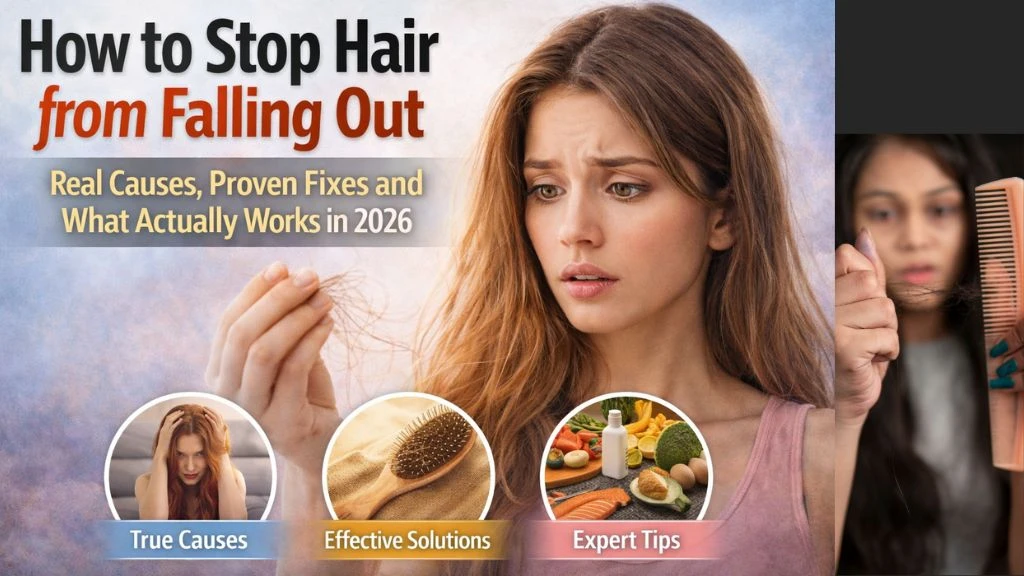
How to Stop Hair from Falling Out: Real Causes, Proven Fixes and What Actually Works in 2026
Stop Hair from Falling Out: If your hair feels like it’s everywhere—on your pillow, in the shower drain, on your clothes—you’re not alone. One of the most common questions I hear is: “How do I stop hair from falling out?”
The frustrating truth is that hair loss is rarely solved by a single product or quick fix. The reassuring truth is that most excessive shedding is reversible once you address the real cause.
Over years of working with clients—and through my own experience with hair shedding—I’ve learned that stopping hair loss isn’t about forcing regrowth. It’s about creating stability in the body so hair no longer needs to shed.
Let’s talk about what actually works.
First: Understand What “Stop Hair from Falling Out” Really Means
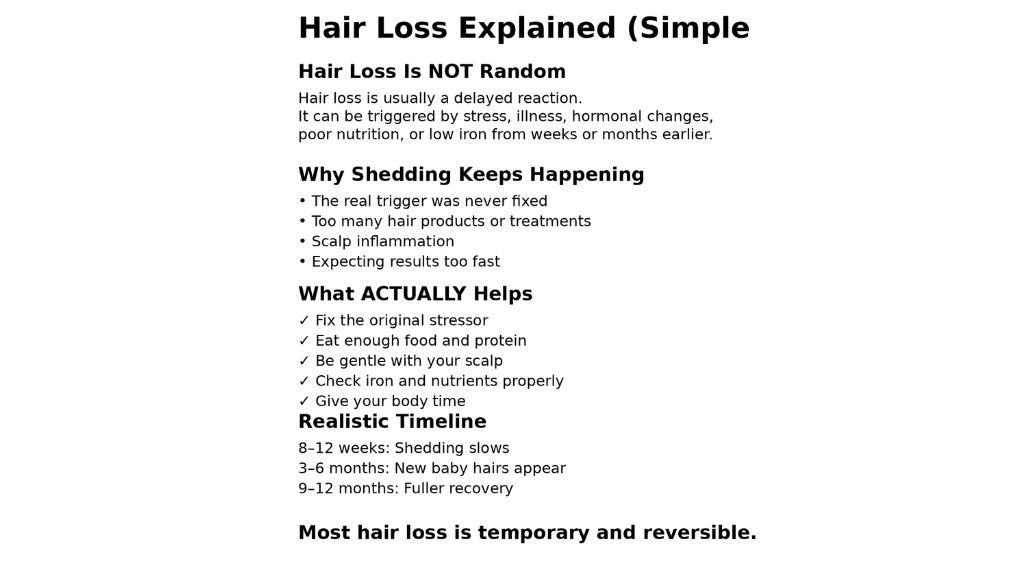
Hair doesn’t fall out randomly. Excessive shedding is usually a delayed response to something that happened weeks or months ago. This is why people often feel blindsided.
In many cases, the goal isn’t to immediately regrow hair—it’s to:
- Slow the shedding
- Remove the trigger
- Allow hair follicles to re-enter a growth phase naturally
When people skip this step and jump straight to treatments, they often make things worse.
Must Read: 12 Powerful Chia Seeds Health Benefits (Backed by Science + Extra Tips)
The Most Common Reasons Hair Keeps Falling Out
Across hundreds of conversations and cases, these are the top reasons hair loss continues despite “doing everything right”:
1. The trigger hasn’t been resolved
Hair commonly sheds after:
- chronic stress
- illness or COVID
- hormonal shifts (postpartum, stopping birth control, perimenopause)
- under-eating or low protein intake
- iron depletion
Until that trigger is addressed, no serum or supplement can override the biology.
Must Read: Rice Water for Hair and Skin: The Ancient Beauty Secret That Works
2. Too many interventions at once
I regularly see people using:
- multiple supplements
- scalp oils
- growth serums
- aggressive massage tools
This often creates scalp inflammation, which prolongs shedding.
3. Unrealistic timelines
Hair works slowly. Expecting results in 2–4 weeks leads people to abandon the very changes that would have worked if given time.
What Actually Helps Stop Hair From Falling Out
1. Identify and remove the original stressor
This is the most overlooked step—and the most important.
Case example:
A client came in with dramatic shedding and “normal” lab work. Digging deeper, we found a year of chronic stress combined with under-eating. Once she increased calories and addressed nervous system stress, her shedding slowed within 10 weeks—without adding supplements.
Hair loss often improves when the body feels safe again.
2. Eat enough—especially protein
Hair is not a survival priority. If the body senses scarcity, hair growth shuts down first.
Many people losing hair are unintentionally:
- under-eating
- skipping meals
- eating “clean” but not enough
For many clients, adequate calories and protein did more than any topical treatment.
Must Read: Egg Hair Mask: The Ultimate Natural Treatment for Strong, Shiny Hair
3. Stop irritating the scalp during active shedding
When hair is already shedding, the scalp is often sensitive.
Case example:
One client used multiple “growth oils” and noticed more hair loss. The issue wasn’t her follicles—it was inflammation. Once she simplified her routine and stopped aggressive treatments, shedding reduced within 8–10 weeks.
Sometimes the best intervention is doing less.
4. Check iron and nutrient status—properly
Low or borderline iron is a frequent contributor, especially postpartum or in menstruating women.
Important note:
“Normal” labs are not always optimal for hair regrowth. This is where individualized guidance matters.
5. Give it time (this part is non-negotiable)
Typical timelines I see:
- 8–12 weeks: noticeable reduction in shedding once the trigger is resolved
- 3–6 months: visible regrowth (baby hairs)
- 9–12 months: fuller recovery
If shedding is slowing, you’re on the right path—even if regrowth isn’t obvious yet.
Common Mistakes That Delay Recovery
- Panic-switching treatments every few weeks
- Comparing your timeline to someone else’s
- Treating normal postpartum or stress shedding as permanent
- Ignoring sleep, stress, and food while focusing only on products
Hair responds to consistency, not urgency.
When to Seek Extra Help
You should consider professional support if:
- shedding lasts longer than 6–9 months without improvement
- you see widening parts or progressive thinning
- you have autoimmune conditions or known hormonal issues
Hair loss is not something you have to figure out alone.
The Most Important Thing to Remember
Hair usually doesn’t fall out because something is “wrong” with your hair.
It falls out because something in the body needed attention first.
When you stop fighting the hair and start supporting the system, shedding often resolves on its own.
If you’re in the middle of this right now: you’re not broken, and this is very often temporary.