
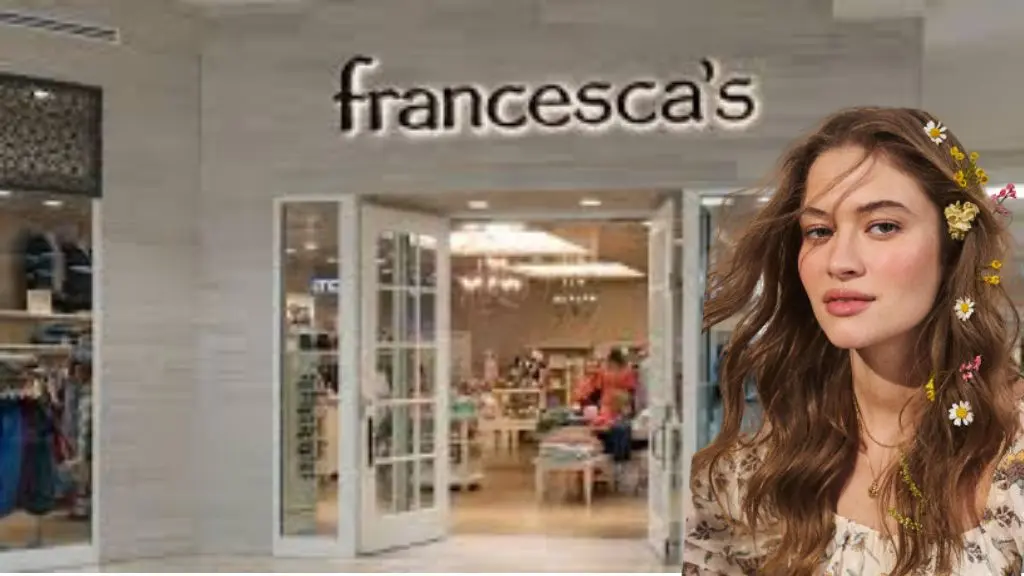
Once Everywhere, Now Almost Gone: Why is Francesca’s Closing After 26 Years?
After more than two decades of serving fashion-forward shoppers across America, Houston-based women’s specialty retailer Francesca’s is shutting down all of its operations. The announcement marks the end of a beloved boutique brand that became synonymous with free-spirited fashion, trendy jewelry, and unique gifts.
Breaking News: Francesca’s Complete Shutdown Confirmed
According to a Women’s Wear Daily report published Friday evening, January 17, 2026, Francesca’s has begun liquidating its inventory and plans to shut down operations completely. The company confirmed the closure through a customer service representative who stated in an email to Women’s Wear Daily: “We are liquidating our inventory and closing soon.”
The announcement affects what remains of the retailer’s store network. As of the closure announcement, Francesca’s operated more than 450 boutiques across 45 states, with significant presence in California, Florida, Pennsylvania, New Jersey, North Carolina, Ohio, Illinois, Virginia, and Michigan, in addition to its Houston home base. The exact timeline for when stores will close remains unclear.
10 Brilliant Ways to Organize Your Kid’s Closet Like a Celebrity
What Happened
Francesca’s collapse happened quickly, ending its long struggle to stay in business.
Even though the brand tried to make a comeback, it failed in the end.
The company could not survive because:
- Shopping malls are losing customers
- Online shopping has changed how people buy clothes
- Small specialty retailers face heavy competition in the digital age
So, despite its efforts, Francesca’s couldn’t adapt fast enough and had to shut down.
From Houston Boutique to National Chain
Francesca’s story began in 1999 when it opened its first boutique in Houston, Texas. What started as a single storefront selling hand-picked, free-spirited fashion quickly captured the hearts of young women across the country.
The brand’s growth was remarkable. By the time Francesca’s went public in July 2011, trading on the Nasdaq Global Select Market under the ticker symbol “FRAN,” it had already established itself as a formidable player in women’s specialty retail. At its peak, the company operated over 700 boutiques in 48 states and the District of Columbia.
Francesca’s carved out a unique niche in the market with its curated selection of apparel, jewelry, accessories, and gifts. The boutiques offered an intimate shopping experience that felt more like browsing a friend’s closet than a traditional retail store. This personal touch, combined with affordable prices and on-trend merchandise, made Francesca’s a go-to destination for young professionals, college students, and anyone seeking unique fashion finds.
10 Signs of Depression in Women You Should Not Ignore
Warning Signs Ignored
While the final collapse seems sudden, the warning signs have been flashing for years. The company’s troubles can be traced back through a series of leadership changes, financial struggles, and strategic missteps.
Early Struggles (2016-2019)
In May 2016, as Francesca’s shares began to plunge, then-CEO Michael Barnes announced his departure. The company acknowledged that its stock had hit its lowest point since going public in 2011. This marked the beginning of what would become a pattern of leadership turnover and declining performance.
By January 2019, Francesca’s announced it was exploring strategic options, including potential store closures and a sale of the company. CEO Steven P. Lawrence retired following this announcement, and Michael Prendergast took over. Just months later, in June 2019, the company announced plans to permanently close up to 30 stores as shares declined by approximately 13%.
Prendergast’s tenure was short-lived. He resigned in February 2020, with Andrew Clarke stepping in as President and CEO in March 2020—just as the COVID-19 pandemic was beginning to devastate retail.
10 Stunning Spring Home Decor Ideas to Welcome the Season
The First Bankruptcy (2020-2021)
The COVID-19 pandemic proved catastrophic for a company already struggling with declining mall traffic and online competition. When nonessential stores were forced to close as public health measures were implemented, Francesca’s was hit particularly hard.
In November 2020, Francesca’s warned it might be forced to file for Chapter 11 bankruptcy and announced plans to close 140 stores by the end of January 2021. By December 2020, after years of struggling to compete with online retailers, the company filed for Chapter 11 bankruptcy protection.
The bankruptcy process moved quickly. In 2021, the chain was sold to an affiliate of TerraMar Capital and Tiger Capital for $18 million—a fraction of what the publicly traded company had once been worth. The company changed ownership and hundreds of stores were shut down as part of the restructuring.
The Failed Comeback Attempt (2021-2026)
After completing its bankruptcy reorganization in 2021, Francesca’s attempted to reinvent itself. Despite the financial struggles that led to bankruptcy, the brand continued to expand as it sought out more locations and launched new initiatives.
The company opened new stores and launched “Franki by Francesca’s,” a tween-focused clothing line that represented a strategic effort to capture a younger demographic. This expansion effort seemed ambitious for a company that had just emerged from bankruptcy, but reflected management’s belief that the brand could still grow.
However, fundamental problems persisted. The shift in consumer shopping habits to online retailers and the ongoing challenges of operating mall-based stores in a digital-first era continued to pressure the business model. Despite attempts to modernize and expand, Francesca’s could not overcome the structural challenges facing specialty retailers.
100+ Heartfelt Happy New Year Wishes for 2026: Messages, Quotes, Family Greetings & Beautiful Images
What This Means for Shoppers
For loyal Francesca’s customers, the closure brings both opportunities and challenges.
Liquidation Sales and Bargains
As the liquidation process begins, shoppers may find opportunities for discounts at remaining open locations. However, as liquidation progresses across physical stores, shoppers can expect selection to diminish rapidly.
Shoppers should be aware that liquidation sales typically come with restrictions. Most items will likely be marked as “final sale,” meaning no returns or exchanges. Those who made recent online purchases should check their order confirmations for return windows and act quickly.
Gift Cards and Store Credit
Anyone holding Francesca’s gift cards or store credits should use them immediately. During liquidation, there are no guarantees these will be honored, and once stores close completely, they will become worthless.
The Emotional Impact
For many shoppers, Francesca’s closure represents more than just losing a store—it’s the end of a place that was part of their shopping routines and style journeys. The nostalgic connection many people felt to the brand makes this closure particularly poignant for longtime customers.
Broader Industry Implications
Francesca’s demise is part of a larger story about the struggles facing specialty retail, particularly mall-based chains.
The Mall Crisis Continues
Mall landlords now face fresh vacancy risk, as inline tenants like Francesca’s are hard to replace at the same rent. The closure of several hundred Francesca’s locations will create significant holes in shopping centers across the country, potentially triggering co-tenancy clauses that allow remaining tenants to negotiate lower rents.
12 Outdated Things People Over 40 Should NEVER Have in Their Homes
The Shift to Online Retailers
Consumer shopping habits have fundamentally changed, with online retailers increasingly capturing market share from traditional brick-and-mortar stores. The COVID-19 pandemic accelerated this shift, and mall-based specialty retailers have struggled to compete. At the same time, rising costs for rent, wages, and operations have squeezed margins for physical stores.
The closure of Francesca’s highlights the ongoing challenges facing retailers that built their business models around physical locations, particularly in shopping malls where foot traffic has declined significantly over the past decade.
Lessons for Retail
Francesca’s story offers several cautionary lessons for the retail industry:
- Digital Transformation is Non-Negotiable: Companies that fail to build robust e-commerce operations and omnichannel capabilities are increasingly vulnerable.
- Financial Discipline Matters: Companies must carefully balance growth ambitions with financial realities. Expanding operations while emerging from bankruptcy proved unsustainable.
- Adaptation is Essential: The fundamental shift to online shopping requires retailers to evolve their business models, not just add e-commerce as a supplement to physical stores.
- Consumer Loyalty Has Limits: Even beloved brands can fail when they cannot meet changing consumer expectations around convenience, price, and shopping experience.
What Happens Next
The timeline for complete closure remains unclear, with specific dates yet to be announced. Some locations may close within weeks, while others might remain open longer as inventory is sold off.
Employees face an uncertain future as the company winds down operations. The closure will eliminate hundreds of retail jobs across the 45 states where Francesca’s maintained a presence.
Remembering Francesca’s
Despite the disappointing ending, it’s worth remembering what Francesca’s represented during its 26-year run. The brand provided a unique shopping experience that celebrated individuality and self-expression, with its mission to offer free-spirited fashion resonating with millions of women who found joy in discovering unexpected treasures in its boutiques.
From its humble beginnings as a single Houston storefront in 1999 to a nationwide chain that grew to more than 450 boutiques across 45 states, Francesca’s built a meaningful presence in communities across America. Shoppers found homecoming dresses, wedding guest outfits, graduation gifts, and everyday accessories that helped them express their personal style.
The company’s eventual failure doesn’t erase the positive memories or the role it played in communities across America. It does, however, serve as a reminder that in retail, past success offers no guarantee of future survival. Even beloved brands can fail when they lose touch with changing consumer preferences, overextend financially, and fail to adapt to new market realities.
Final Thoughts
The closure of Francesca’s marks the end of an era for specialty retail. What began as an entrepreneurial success story—a Houston storefront in 1999 that grew into a national chain—ends in liquidation and hundreds of shuttered stores after failing to survive the shift to online retail and the impact of the COVID-19 pandemic.
For those who loved Francesca’s, the coming weeks offer one last chance to visit the boutiques and perhaps find a final treasure. But once the liquidation sales end and the stores go dark, all that will remain are memories of a brand that, for a time, captured the spirit of a generation of young women seeking to express their unique style.
As the retail landscape continues to evolve, Francesca’s joins a growing list of once-vibrant chains that couldn’t survive the transition to a digital-first, value-conscious shopping environment. Its story serves as both a cautionary tale and a bittersweet reminder that in business, as in fashion, nothing lasts forever.
15 Beautiful Diwali Home Decoration Ideas to Brighten Your Festival of Lights