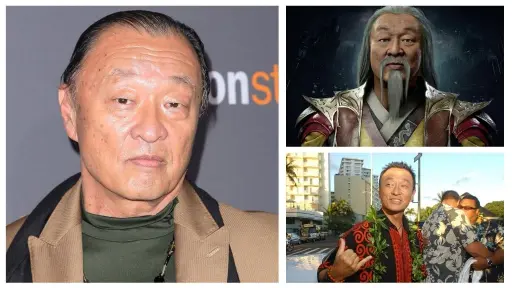
Cary Hiroyuki Tagawa, ‘Mortal Kombat’ Star Dies at 75: Career, Net Worth, Iconic Roles, Legacy, and Tributes
Cary Hiroyuki Tagawa passed away peacefully on December 4, 2025, at the age of 75. He died at his home in Santa Barbara, California, from complications of a stroke. His children and loved ones were by his side, as confirmed by his publicist Penny Vizcarra and manager Margie Weiner.
In his final years, Tagawa stayed active in acting. He voiced Shang Tsung in the 2019 video game Mortal Kombat 11. He appeared in films like The Man from Toronto (2022) and Bullet Train (2022). He also had a recurring role on the TV series Reacher (2022–present).
Tagawa deepened his Russian Orthodox faith and spent part of his time in Moscow. There, he acted in local productions and worked as a cultural ambassador. He even learned Russian to help build understanding between East and West.
His death shocked fans and colleagues worldwide. Media outlets like Deadline, the Los Angeles Times, The Times of India, and Hindustan Times reported on his passing. Social media was filled with tributes. Christopher Lambert, his co-star in Mortal Kombat, called him “a brother in arms and a true artist.” Director Rob Marshall praised his “elegant menace and warm soul.”
Tagawa was a trailblazing Asian-American actor. His line “Your soul is mine!” became iconic. He left a lasting mark on action movies, video games, and cultural representation around the world.
Who is Cary Hiroyuki Tagawa? Early Life and Background
| Category | Detail |
|---|---|
| Full Name | Cary-Hiroyuki Tagawa |
| Other / Alternate Names | Cary Tagawa, Panteleimon Tagawa (after Russian Orthodox conversion) |
| Date of Birth | September 27, 1950 |
| Place of Birth | Higashi-Azabu, Tokyo, Japan |
| Date of Death | December 4, 2025 |
| Place of Death | Santa Barbara, California, U.S. |
| Age at Death | 75 years |
| Parents / Family Background | Mother: Japanese stage actress; Father: Japanese-American, U.S. Army serviceman from Hawaii |
| Siblings | One brother |
| Childhood & Upbringing | Grew up moving around U.S. Army bases; later settled in Southern California |
| Citizenship / Nationalities | American; later acquired Russian citizenship |
| Education | High school in Southern California; attended University of Southern California; exchange student in Japan |
| Martial Arts / Training | Trained in Kendo, Karate, and other martial arts; developed own system “Chuu-Shin” combining martial arts, energy work, and healing |
| Career / Profession | Actor and film producer |
| Years Active | 1985–2023 |
| Marital Status / Spouse(s) | Married Sally Phillips (1984–2014, divorced) |
| Children | Three: Calen, Brynne, and Cana Tagawa |
| Grandchildren | Two: River and Thea Clayton |
| Languages Spoken | English, Japanese, Russian, some Korean and Spanish |
| Religion / Spirituality | Converted to Eastern Orthodox (Russian Orthodox) faith in 2015 |
| Height | 5 ft 11 in (1.80 m) |
| Net Worth | Approximately $20 million |
| Hobbies / Interests / Personal Philosophy | Martial arts, healing, philosophy, mentoring, cultural advocacy, energy and breathwork |
| Notable Challenges / Controversies | 2008 misdemeanor harassment charge with ex-girlfriend; resolved legally |
Cary Hiroyuki Tagawa was born on September 27, 1950, in Azabu, Tokyo, Japan. His mother, Hiromi Tagawa, was an actress and former Miss Tokyo. His father was a Japanese-American U.S. Army sergeant and interpreter. This gave Cary a unique dual heritage.
Because of his father’s military career, the family moved often. They lived on U.S. bases in Louisiana, Texas, and finally Southern California. Cary went to high school in San Antonio and later studied theater at the University of Southern California.
Growing up as a third-generation Japanese-American in the 1960s and 1970s, he faced identity struggles. Hollywood had very few meaningful roles for Asian actors. This made him determined to break stereotypes.
From a young age, he trained in martial arts. He studied kendo and Shotokan karate with masters like Fumio Demura and Takayuki Kubota. These skills gave him a strong physical presence. They became a key part of his action roles, turning a challenge into one of his greatest strengths.
Breakthrough and Early Career
Cary Hiroyuki Tagawa got his big break in 1987. Italian director Bernardo Bertolucci cast him as Eunuch Chang in The Last Emperor. He was 37 and mostly unknown. His role as the cunning imperial attendant brought him global recognition. He starred alongside John Lone and Peter O’Toole and impressed audiences with his regal presence and precise physicality.
The success of The Last Emperor opened Hollywood doors. In the late 1980s and early 1990s, he built a strong résumé. He played a samurai sword-master in Licence to Kill (1989) with Timothy Dalton, a yakuza boss in Showdown in Little Tokyo (1991) with Dolph Lundgren and Brandon Lee, and a martial-arts instructor in Kickboxer 2 (1991). He also appeared on TV shows like MacGyver, Star Trek: The Next Generation, Miami Vice, and Baywatch.
Tagawa’s real martial-arts skills, from Shotokan karate and kendo, set him apart. He could perform his own fight scenes when many actors used stunt doubles. His fluid and intimidating combat style made him a standout in both period dramas and action films. He became one of the most respected and recognizable Asian-American character actors of his time.
Rise to Fame: Iconic Roles and Defining Performances
Cary Hiroyuki Tagawa became a pop-culture icon in the mid-1990s. He was famous for playing unforgettable villains. His most famous role came in 1995 as Shang Tsung in Mortal Kombat. His line “Your soul is mine!” became legendary. He stole every scene with his strong presence and martial-arts skill. He reprised Shang Tsung in the 2013 web series Mortal Kombat: Legacy and voiced him in the 2019 game Mortal Kombat 11. For many fans, he became the definitive face of the character.
In the same period, he played other memorable roles. He was yakuza enforcer Eddie Sakamura in Rising Sun (1993) with Sean Connery and Wesley Snipes. He played Heihachiro Togo in Pearl Harbor (2001). He portrayed the dictator Nobusuke Tagomi in Amazon’s The Man in the High Castle (2015–2019).
Tagawa also appeared in Planet of the Apes (2001), Tekken (2010), and voiced in Kubo and the Two Strings (2016). He turned typical “Asian villain” roles into complex and magnetic characters. His martial arts, strong acting, and intensity made him recognizable and memorable across movies, TV, and video games for more than 30 years.
Off‑Screen Life: Martial Arts, Influence and Personal Journey
Cary Hiroyuki Tagawa’s life off-screen was full of purpose. He was a lifelong martial artist and earned black belts in Shotokan karate and kendo under masters like Fumio Demura and Takayuki Kubota. For him, martial arts was more than fighting—it was a spiritual path. In the 1990s, he founded the Chun Do Sun Bup martial-arts system. It combined Korean, Japanese, and Russian techniques with breathing exercises and philosophy for inner peace and healing.
In 2004, after exploring Shinto, Buddhism, and Christianity, he had a spiritual awakening and converted to Russian Orthodoxy. He took the name Panteleimon. He spoke openly about faith, forgiveness, and personal growth. He shared how it helped him reconcile his violent movie roles with his pacifist beliefs.
Tagawa lived part-time in Russia, learned the language, acted in local films, and served as a cultural ambassador. He also fought for real Asian representation in Hollywood, mentoring younger actors and speaking against yellowface and stereotypes.
He is survived by his son, Bryson Tagawa, a musician and actor. Cary-Hiroyuki Tagawa’s legacy goes beyond movies—he turned the intensity that made him a great villain into a lifelong pursuit of peace, wisdom, and cultural connection.
Legacy and Impact
On Pop Culture and Genre Film
Cary-Hiroyuki Tagawa’s role as Shang Tsung in the 1995 Mortal Kombat movie became a benchmark for video-game villains. His mix of martial arts skill, dramatic flair, and menacing charm made lines like “Your soul is mine!” unforgettable. Fans and critics still call him the best Shang Tsung, even after the 2021 reboot. His performance showed that video-game movies could work when actors had real martial arts skill and strong presence. This helped open doors for later hits like Detective Pikachu and The Super Mario Bros. Movie.
Representation and Breaking Stereotypes
In Hollywood, Asian actors were often limited to side roles or stereotypes. Tagawa built a 40-year career by embracing villain roles and making them complex and memorable. He never hid his heritage or softened his intensity. He proved that Asian actors could lead films with strength and dignity. His work inspired a new generation and helped change the conversation about representation long before it became common.
Mentorship, Martial Arts and Off-Screen Influence
Tagawa was more than an actor—he was a teacher and guide. He coached many actors in martial arts and founded the Chun-Shin system, which blends combat, breathwork, and philosophy. He mentored young performers on discipline and authenticity. Many credit him for their own success. His legacy includes passing on knowledge and spirit, not just memorable performances.
Fan Reverence and Cultural Memory
For fans of the ’90s and 2000s, Tagawa was unforgettable—Shang Tsung, Heihachiro Togo, Nobusuke Tagomi. His death in December 2025 sparked global tributes. Fans shared fight scenes and iconic lines, showing his work remains part of pop culture across generations and countries.
Wider Significance: What His Passing Represents
Tagawa’s death marks the end of the golden era of ’90s martial arts stars and early video-game movies. These roles required real physical skill and stage presence, unlike today’s CGI-heavy films. His life reminds us to honor trailblazing actors from underrepresented backgrounds while they are alive. From fighting stereotypes to mentoring others, from Tokyo to spiritual rebirth in Russia, Tagawa’s journey shows a full and inspiring life.
Conclusion
From Tokyo to Southern California, from kendo swords to movie sets, Cary-Hiroyuki Tagawa had a life of transformation. Martial-arts student became iconic villain. Feared on screen, gentle off screen. Seeker found peace in Orthodox faith. His life shows perseverance, authenticity, and using one’s platform for good. He will be remembered not just for his on-screen roles, but for the hearts he touched. Rest in peace, Panteleimon. Your soul and your legacy are eternal.
FAQs
At what age did Cary-Hiroyuki Tagawa start his acting career?
Tagawa began his acting career at age 36, after working many different jobs, including celery farmer, limo driver, pizza supply truck driver, and photojournali
What martial arts system did Tagawa create, and why?
He created a system called Ninjah Sportz, which used martial arts for training and healing, not fighting or competition. He also trained professional athletes, including boxer Brian Viloria and members of the University of Hawaii football team.
What were some important facts about his early life and family background?
Tagawa grew up mostly in the U.S. South while his father served in the U.S. Army. His parents named him after Cary Grant, and his brother after Gregory Peck. His mother, Ayako, was a Japanese stage actress who discouraged him from acting due to the lack of good roles for Asians.
What was Cary-Hiroyuki Tagawa’s final major acting role?
His final major role was in 2015 on the Amazon sci-fi series The Man in the High Castle, where he played Nobusuke Tagomi, the Trade Minister of the Pacific States of America.
Where did Tagawa develop his martial arts skills?
He studied traditional Japanese karate at the University of Southern California and later trained at the Japan Karate Association in Japan. He eventually created his own martial arts system called Chun-Shin, which he taught.
Where did Cary-Hiroyuki Tagawa raise his family?
Alongside his wife Sally, he lived in Hawaii, raising their three children — Calen, Brynne, and Cana — on the island of Kauai. He is also survived by two grandchildren, River and Thea Clayton.