Do Pads Expire? Everything You Need to Know About Sanitary Pad Shelf Life, Safety, and Storage
You are digging through your bathroom cabinet, preparing for your period, and you come across a pack of sanitary pads you bought a while ago. Maybe it was a year ago. Maybe two. Maybe longer. You stare at the packaging and ask yourself the question millions of women have asked before you — do pads actually expire? Is it still safe to use these? What even happens if I do?
If you have ever stood in that exact moment of uncertainty, this post is written entirely for you. We are going to cover everything — what pads are made of, whether they expire, how long they actually last, what happens to your body if you use an old one, how to store them properly, and much more. By the end, you will never have to guess again.
Do Sanitary Pads Expire? The Short Answer
Yes — sanitary pads do expire. Not in the same dramatic way that food goes off or medicine becomes toxic, but they do have a definite shelf life after which their quality, safety, and effectiveness can no longer be guaranteed.
Most major sanitary pad manufacturers recommend using their products within 2 to 3 years from the date of manufacture. Some brands extend this recommendation to up to 5 years for unopened, properly stored pads. However, the key word in all of this is recommended — because unlike a carton of milk, a pad will not sprout visible mold the moment it crosses its expiry date. The deterioration is gradual, subtle, and invisible to the naked eye. And that is precisely what makes it dangerous.
What Are Sanitary Pads Made Of?
To understand why pads expire, you first need to understand what they are made of — because every single material inside a pad is subject to aging.
A standard disposable sanitary pad is constructed from several distinct layers, each serving a specific purpose:
The Top Sheet is the soft layer that sits directly against your skin. It is typically made from non-woven synthetic fabric, sometimes blended with cotton. This layer is designed to feel gentle and allow fluid to pass through quickly. Over time, the fibers in this layer can break down, become rough, and lose their softness — directly affecting your comfort.
The Absorbent Core is the heart of the pad. This is the thick middle layer responsible for soaking up menstrual flow. It is usually made from a combination of wood pulp and superabsorbent polymer (SAP) particles — the same technology used in diapers. When these materials degrade over time, the SAP particles can clump, harden, or lose their ability to hold moisture effectively. The result is a pad that absorbs less and leaks more.
The Back Sheet is the waterproof bottom layer that prevents leaks from seeping through to your underwear or clothing. This layer is most commonly made from polyethylene plastic film. With age and exposure to heat or light, this film can become brittle and develop micro-cracks, compromising the leak-proof barrier entirely.
The Adhesive Strip is what keeps the pad firmly attached to the inside of your underwear. This glue-based adhesive is one of the first components to degrade. As pads age, the adhesive dries out, loses its tackiness, and stops bonding properly — causing the pad to slide, shift, and bunch during use.
Wings (if present) are extensions of the back sheet that fold over the sides of underwear for extra security. They are also held in place by adhesive strips and are therefore equally vulnerable to adhesive degradation over time.
Fragrance or Deodorizing Agents (in scented pads) are volatile compounds that naturally evaporate or chemically change over time. An old scented pad may smell stale, altered, or even unpleasant — the exact opposite of its intended purpose.
Understanding these materials makes one thing very clear: every part of a sanitary pad is organic, chemical, or adhesive in nature — and all three categories deteriorate with time.
How Long Do Sanitary Pads Actually Last?
The shelf life of a sanitary pad depends on three key variables: the type of pad, how it is packaged, and where and how it is stored.
Regular Disposable Pads — the most common type — generally have a shelf life of 3 to 5 years from the manufacture date when stored correctly in their original, unopened packaging. However, most manufacturers conservatively recommend using them within 2 to 3 years to guarantee optimal performance.
Organic or Biodegradable Pads — made from natural materials like bamboo fiber, organic cotton, or plant-based cellulose — have a noticeably shorter shelf life of approximately 1 to 2 years. The very qualities that make them eco-friendly also make them more vulnerable to environmental degradation. Natural fibers break down faster than synthetic ones, meaning these pads age more quickly.
Individually Wrapped Pads last longer than pads stored loose in a bulk bag, because the individual wrapping creates an additional barrier against moisture, air, and contamination. If the individual wrapper is damaged, torn, or compromised in any way, the shelf life is dramatically shortened regardless of the manufacture date.
Reusable Cloth Pads operate on completely different rules. With proper washing and storage, high-quality reusable cloth pads can last anywhere from 2 to 5 years or longer. Their lifespan depends on wash frequency, detergent type, drying method, and fabric quality rather than a printed expiry date.
Menstrual Cups, for comparison, have the longest lifespan of any period product — up to 10 years with proper care and cleaning, making them the most reliable long-term option for women seeking to avoid expiry-related concerns altogether.
Real Stories of People Facing Language Barriers in Healthcare
Where Is the Expiry Date on a Pad Packet?
This is one of the most common sources of confusion around pad expiry. Unlike food or medicine, not all sanitary pad brands print a visible expiry date on their packaging. What you are more likely to find is one of the following:
- A manufacture date printed on the bottom or side of the packaging — in which case you count 2 to 3 years forward from that date to estimate your safe use window
- A batch number or lot number, which can sometimes be decoded through the brand’s customer service or website
- A “best before” or “use by” date, which some international brands include explicitly
- In some cases, no date at all — particularly on budget or unbranded products, which is itself a red flag about manufacturing transparency
If you cannot find any date on your pad packaging and you cannot remember when you bought them, the safest course of action is to apply a simple judgment test based on appearance, texture, smell, and packaging condition — all of which we cover below.
12 Powerful Chia Seeds Health Benefits (Backed by Science + Extra Tips)
Signs Your Pads Have Expired or Gone Bad
Even without a clear expiry date, your pads will often tell you when something is wrong. Here are the key warning signs to look for before you use any pad you are uncertain about:
Discoloration is one of the most obvious signs. A fresh pad should be uniformly white. Any yellowing, brown spotting, or grey tinting is a sign of material oxidation or contamination and the pad should be discarded immediately.
Unusual or Unpleasant Odor is another clear indicator. Fresh pads have either a neutral or very faint scent. If your pad smells musty, moldy, sour, or chemically altered, it has been compromised — either by moisture, biological growth, or chemical breakdown.
Clumping or Hardening of the Absorbent Core can be felt by gently pressing the pad. A healthy pad feels uniformly soft and flexible throughout. If you feel lumps, hard patches, or uneven sections, the superabsorbent polymer particles have degraded and the pad will not absorb properly.
Damaged or Brittle Packaging matters because the wrapper is the pad’s first line of defense. A torn, punctured, or deteriorated wrapper — even a small hole — means the pad inside has been exposed to air, moisture, and potential contaminants.
Weak or Non-Existent Adhesive can be tested by carefully peeling back the protective strip. If the adhesive feels dry, barely sticky, or comes away easily without resistance, the pad will not stay in place during use.
Visible Mold or Mildew — while less common with properly stored pads — is an absolute non-starter. Any visible spots of green, black, or grey growth on the pad surface means it has been exposed to significant moisture and must be thrown away.
What Happens If You Use an Expired Sanitary Pad?
Using a pad that has passed its recommended shelf life or shows any of the above warning signs is not simply a matter of inconvenience. There are real health consequences to be aware of:
Bacterial Infections are the most serious risk. As pads age, particularly those stored in humid environments, bacteria and mold can colonize the pad materials even before you use them. Placing a contaminated pad against sensitive skin and mucous membranes for several hours creates conditions where bacterial vaginosis, urinary tract infections, and vaginal yeast infections become more likely.
Skin Irritation and Rashes are extremely common with degraded pads. The breakdown of synthetic materials in the top sheet and back sheet can cause those materials to become rough, abrasive, or chemically irritating against the delicate skin of the vulval area. The result is redness, itching, burning sensations, and rashes — all of which are uncomfortable and potentially recurring if the cause is not identified.
Leaks and Inadequate Protection occur when the absorbent core has degraded and can no longer hold fluid effectively. A pad that fails to do its job causes not only physical discomfort and the risk of staining but also significant emotional stress and loss of confidence — particularly in public or professional settings.
Allergic Reactions become more likely as pad materials break down. Some individuals are already sensitive to certain chemicals or synthetic fibers used in pad manufacturing. When those materials degrade, they can release fragmented compounds that trigger immune responses — manifesting as localized allergic reactions, swelling, or persistent irritation.
Odor Control Failure happens when the deodorizing agents in scented pads have either evaporated or chemically changed. An expired scented pad can actually smell worse than no pad at all, creating odors rather than masking them.
How to Store Sanitary Pads Properly to Maximize Their Life
Proper storage is the single most effective way to extend the safe usable life of your pads and protect your health. Follow these guidelines consistently:
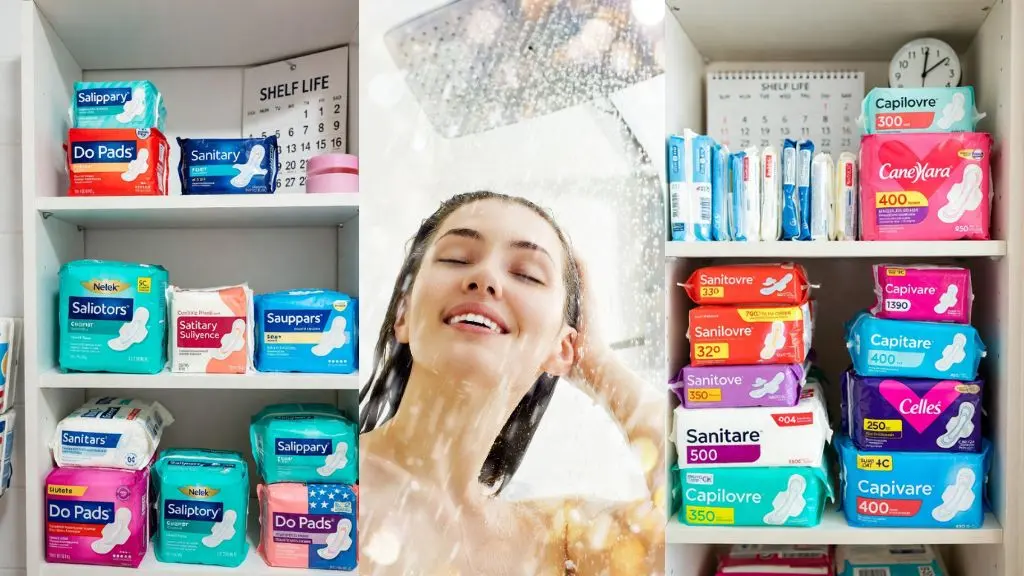
Store in a Cool, Dry Place away from direct sunlight, heat sources, and humidity. A bedroom drawer, a linen closet, or a sealed box under the bed are all ideal locations. Avoid windowsills, car glove compartments, or any space that experiences significant temperature fluctuation.
Do Not Store in the Bathroom if you can avoid it. The bathroom is typically the most humid room in any home, and that humidity — even without direct water contact — accelerates the degradation of every material in your pads. If the bathroom is your only storage option, use an airtight sealed container to create a moisture barrier.
Keep Pads in Their Original Packaging for as long as possible. The outer packaging and individual wrappers are specifically designed to protect pad integrity. Removing pads from their wrappers before use strips away that protective barrier and exposes them to the environment prematurely.
Use a Breathable Storage Container if you buy in bulk and need to organize your supply. Completely airtight containers can actually trap moisture, so opt for containers with some ventilation while still offering protection from dust and light.
Practice First In, First Out — always use your oldest packs first and place new purchases behind existing stock. This simple rotation habit ensures you are always using the freshest product available and never inadvertently reaching for pads that have been sitting forgotten at the back of a shelf.
Label Your Packs with the purchase date using a marker if there is no manufacture date on the packaging. This takes five seconds and removes all future uncertainty.
Check Before Every Use — a quick visual and tactile check of any pad you are about to use costs you nothing and could protect you from irritation, infection, or embarrassment.
Expired Pads vs. Other Period Products — A Quick Comparison
| Product | Typical Shelf Life | Key Degradation Factor |
|---|---|---|
| Disposable Pads | 2–5 years | Adhesive + absorbent core |
| Organic/Biodegradable Pads | 1–2 years | Natural fiber breakdown |
| Tampons | 3–5 years | Cotton degradation + string integrity |
| Panty Liners | 2–3 years | Thinner layers degrade faster |
| Reusable Cloth Pads | 2–5 years | Fabric wear + washing frequency |
| Menstrual Cups | Up to 10 years | Silicone/rubber integrity |
| Intimate Wipes | 1–3 years | Preservative breakdown |
Frequently Asked Questions (FAQs)
Q1: Do unopened sanitary pads expire? Yes, they do — even if the packaging is completely intact and has never been opened. The materials inside still age and degrade over time through exposure to air, light, and ambient moisture that passes through the packaging at a microscopic level. Unopened pads simply expire more slowly than opened ones.
Q2: Is there an expiry date printed on pads? Not always. Some brands print a manufacture date, some print a “best before” date, and some print nothing at all. If your packaging shows a manufacture date, add 2 to 3 years to determine your safe use window. If there is no date, assess the pad’s condition visually and by touch before using it.
Q3: What happens if I use an expired pad just once? Using an expired pad one time is unlikely to cause severe harm if the pad has been stored well and shows no visible signs of degradation. However, even a single use of a contaminated or degraded pad can cause skin irritation, a rash, or introduce bacteria to a sensitive area. The risk is simply not worth taking when fresh pads are available.
Q4: Can expired pads cause a yeast infection? Yes, they can. If an expired pad has been stored in humid conditions and bacteria or fungal spores have colonized the pad material, using it for several hours against warm, moist skin creates ideal conditions for a yeast infection or bacterial vaginosis to develop. Women who experience recurring unexplained infections should check whether their period products might be a contributing factor.
Q5: Do organic pads expire faster than regular pads? Yes. Organic and biodegradable pads made from natural materials like bamboo fiber or organic cotton have shorter shelf lives — typically around 1 to 2 years — compared to 3 to 5 years for conventional synthetic pads. Their eco-friendly composition accelerates natural breakdown. Always check the specific brand’s guidance.
Q6: How do I know if my pad is expired if there is no date? Trust your senses and your hands. Check for yellowing or discoloration, unusual or musty odors, hardened or lumpy absorbent core, weak adhesive, and damaged individual wrapping. If any of these signs are present, discard the pad regardless of whether you know the purchase date.
Q7: Can I use pads that have been in my bag for months? It depends on how they have been stored within the bag. A pad that has been sitting in a hot car, a gym bag, or a humid environment for months may have degraded significantly even if it appears intact. If the individual wrapper is undamaged and the pad looks and feels normal, it is likely fine for occasional emergency use. However, for daily use, fresh pads from proper storage are always the better choice.
Q8: Do period pads expire faster in hot climates? Absolutely. Heat and humidity are the two biggest enemies of pad longevity. In hot or tropical climates, the adhesive degrades faster, the absorbent materials break down more quickly, and the risk of bacterial growth on the pad surface increases. Women in hot climates should be especially diligent about cool, dry storage and should aim to use pads well within the 2-year window rather than pushing to the 5-year maximum.
Q9: Is it safe to donate old pads to charity? Only if the pads are within their recommended shelf life, in original unopened packaging, and have been stored correctly. Donating expired or poorly stored pads — however well-intentioned — can cause harm to the people receiving them. Always check dates and condition before donating.
Q10: What is the safest long-term alternative to disposable pads? Menstrual cups made from medical-grade silicone last up to 10 years with proper care and have no adhesive, absorbent cores, or chemicals that degrade over time. High-quality reusable cloth pads are another excellent option. Both alternatives eliminate expiry concerns almost entirely and are significantly more sustainable.
The Bottom Line
Sanitary pads do expire — and the consequences of using expired ones range from minor irritation to serious infection. The good news is that with proper storage, a little organization, and the habit of checking before you use, this is entirely avoidable.
Always know your manufacture date. Store your pads in a cool, dry place away from the bathroom. Use your oldest packs first. Check every pad before you use it. And when in doubt — throw it out. Your health is always worth more than the cost of a new pack of pads.
This article is intended for informational purposes only and does not constitute medical advice. If you experience persistent irritation, infection, or unusual symptoms during your period, please consult a licensed healthcare professional.