
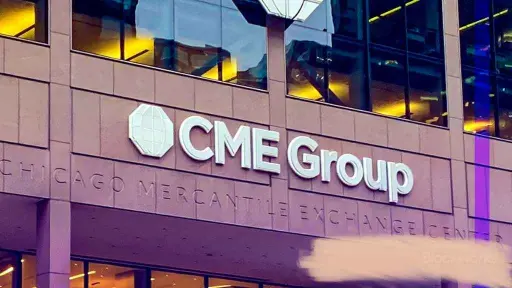
CME Group: The World’s Largest Derivatives Exchange – Overview, Recent Outage, Trading Halts, and What Traders Need to Know
CME Group, based in Chicago, is one of the biggest players in global finance. It runs the world’s largest derivatives market, where people trade contracts for things like interest rates, stocks, currencies, energy, metals, crops, and even cryptocurrencies. The company was built through major mergers, including the 2007 joining of the Chicago Mercantile Exchange (CME) and Chicago Board of Trade (CBOT), and later acquisitions like NYMEX and the Kansas City Board of Trade.
CME’s electronic platform, Globex, handles nearly 25 million contracts every day, helping big institutions, companies, and individual investors manage risk, lock in prices, and trade quickly.
On November 28, 2025, CME faced a serious problem: a cooling system failure at its Chicago data center caused trading across currencies, commodities, Treasuries, and stock futures to stop for several hours—the longest outage in over ten years. This caused market volatility and raised questions about how prepared such important systems are for emergencies.
This guide looks at CME’s history, how it works, the recent outage, and why it matters to traders in today’s digital markets.
The Origins of CME Group: From Butter and Eggs to Global Powerhouse
CME Group started in 1898 as the Chicago Butter and Egg Board, a small exchange where farmers could protect themselves from price changes in dairy and poultry. In 1919, it became the Chicago Mercantile Exchange (CME), offering futures contracts for things like frozen pork bellies and onions (until onion futures were banned in 1958).
In the 1960s, CME introduced financial futures: currency contracts in 1961 and interest rate products in 1972, after the U.S. moved to floating exchange rates. Electronic trading arrived in 1992 with Globex, making trading faster and easier. By 2000, CME went public, becoming the first exchange owned by shareholders.
The 2007 merger with CBOT created CME Group, combining the modern exchange with the world’s oldest futures market (founded in 1848 for grain). Later, CME added NYMEX/COMEX in 2008 for energy and metals, and the Kansas City Board of Trade in 2012 for wheat futures.
Today, CME Group is headquartered in Chicago’s Loop at 20 S. Wacker Drive, with a $78 billion market cap (November 2025) and about 3,800 employees in offices including New York, Houston, London, and Singapore. CEO Terrence A. Duffy has led the company since 2012. Its goal: “Connecting communities to protect and prosper from the ever-changing risks of the world.”
How CME Group Operates: Exchanges, Products, and Clearing
CME Group is not just one exchange—it’s made up of four main exchanges:
- CME: Handles equity indexes like S&P 500 E-mini, interest rates like Eurodollars and SOFR, and currencies like Euro and Yen. Daily volume is huge—over $200 billion for equities.
- CBOT: Focuses on agriculture (corn, soybeans) and Treasury bonds, with $50–500 billion daily volume.
- NYMEX: Specializes in energy, including crude oil and natural gas, plus environmental products like carbon credits.
- COMEX: Deals in metals like gold, silver, platinum, and palladium.
Most trading happens on Globex, CME’s electronic platform, which runs nearly 24/7 (only one-hour downtime Sunday). It supports algorithmic trading via APIs.
CME Clearing acts as the middleman for every trade, reducing risk with over $200 billion in collateral and keeping systems reliable (99.99% uptime before the recent outage).
CME Group offers over 5,000 futures and options, including Bitcoin and even weather contracts. Its revenue comes mainly from:
- Clearing/matching fees: 60%
- Market data sales: 25%
- Access fees: 15%
In 2024, CME Group earned $5.6 billion.
| Exchange | Key Products | Daily Volume (Notional, 2025 Avg.) | Notable Milestone |
|---|---|---|---|
| CME | Equity Indexes, FX, Interest Rates | $400B+ | First Bitcoin futures (2017) |
| CBOT | Agriculture, Treasuries | $600B+ | World’s oldest futures exchange (1848) |
| NYMEX | Energy (Oil, Gas) | $300B+ | Largest energy exchange globally |
| COMEX | Metals (Gold, Silver) | $150B+ | 24-hour gold trading pioneer |
The CME Outage of November 28, 2025: What Happened and Why It Mattered
On November 28, 2025, just a few hours into Asian trading, CME’s main data center in Chicago (CHI1) had a serious cooling failure. This caused their electronic trading system, Globex, to stop working—the longest outage in over 10 years. Trading for currencies, commodities, Treasuries, and stock futures stopped at 2:40 a.m. ET and only partly came back by 11:20 a.m., with full service restored at 1:00 p.m. The problem happened because the air conditioning couldn’t handle the unusually warm Chicago weather (68°F), overheating servers and breaking the system. This froze major markets, including FX trading ($60B daily), crude oil, S&P 500 E-mini futures, and 10-Year Treasuries.
The impact was felt worldwide. Traders in Singapore and Tokyo saw wider spreads on EUR/USD and brokers like Saxo Bank and eToro had to pause U.S. index and commodity CFDs. In London, FX desks moved to alternative venues, while U.S. pre-market futures froze, delaying the S&P 500 open by 30 minutes and pushing the VIX “fear gauge” up 5% during the day. Commodities also stalled: WTI crude stayed at $72.50 per barrel, gold at $2,650 per ounce, and corn at $4.20 per bushel, with price updates delayed even after the system restarted.
CME responded quickly. They tweeted about a “technical issue” at 2:40 a.m., updating at 4:00 a.m. that it was a cooling problem. CyrusOne confirmed they were fixing the HVAC failure, with no data lost, but Globex, EBS, and BMD platforms were paused. Partial trading returned at 11:20 a.m. (BrokerTec EU first), and full Globex service resumed by 1:00 p.m., though some contracts saw 1–2% swings after reopening. CME shares dipped 0.7% before the market opened but recovered by the close. This was CME’s worst outage since 2014 and 2019, raising concerns about system reliability amid growing cyber and technical risks.
CME Trading Halts: Mechanisms, Triggers, and Historical Context
CME halts are usually automatic or manual pauses to protect markets from big price swings. But the November 28, 2025 event was different—it was a technical blackout, not a normal circuit breaker. Here’s how CME normally controls volatility:
- Circuit Breakers: Stop trading when the S&P 500 drops sharply. Level 1 (7% drop) pauses 15 minutes, Level 2 (13%) another 15 minutes, and Level 3 (20%) shuts trading for the day. These were used during the 2020 COVID crash.
- Price Limits: Daily caps on commodities (like corn ±20%, crude ±10%) prevent extreme speculation.
- Dynamic Circuit Breakers: Specific to Globex, pausing a contract if it moves 5–10% quickly.
- Market-Wide Halts: Rare, like the 2010 Flash Crash (9-minute pause).
The 2025 outage ignored all these safeguards because it was caused by a cooling failure at CyrusOne’s CHI1 data center, affecting 90% of CME’s electronic trading. Similar past events include:
- 2014: Agricultural trading halted for three hours due to a technical glitch.
- 2019: Globex froze for two hours because of a software bug.
- 2021: Knight Capital error caused a few minutes of disruption and $44M loss.
After the 2025 outage, CME promised to improve system backups and redundancy, but critics, including Senator Elizabeth Warren, urged the CFTC to investigate potential “systemic risks.”
Impact of the Outage: Market Ripples and Trader Frustrations
The outage caused problems worldwide. In Asia, currency traders saw bigger gaps in EUR/USD prices and had to switch to other platforms. London commodity traders lost around $500 million in hedging. In the U.S., pre-market S&P futures froze, delaying $200 billion in trades. Brokers like Saxo and XTB stopped CFD trading, and eToro warned of low liquidity.
When trading restarted, prices jumped: WTI crude rose 2% to $74.10, gold went to $2,670, and S&P E-mini futures gained 1.5%. Retail traders using Robinhood or Interactive Brokers experienced delays, losing over $10 million in trade slippage. The outage highlighted the need for more trading options since CME controls about 90% of FX trading.
CME Group Today: Innovation, Challenges, and Future Outlook
CME Group has 3,800 employees and made $5.6 billion in 2024, up 8% from the previous year. Its business is spread across interest rates (40%), equities (30%), energy (20%), and agriculture/FX (10%). Innovations like Bitcoin futures (2017, $100B+ daily volume) and carbon credits (2023) keep it competitive. Challenges include regulatory oversight from the CFTC, rivals like Eurex and ICE, and cyber risks (a 2024 DDoS attack was stopped). CEO Terrence Duffy in 2025 focuses on AI-powered risk tools and expanding into Asia via Singapore. The outlook is positive: Q3 2025 saw 25 million contracts traded daily, with shares at $216 and a P/E of 24×.
| Metric (2025) | Value | YoY Change |
|---|---|---|
| Daily Volume | 25M contracts | +12% |
| Revenue | $5.6B (proj.) | +8% |
| Market Cap | $78B | +15% |
| Key Product | S&P E-mini | $400B daily |
Conclusion
On November 28, 2025, a cooling problem at CME’s CyrusOne data center caused a major outage, stopping over $1 trillion in daily trades. This reminded everyone of past glitches in 2014 and 2019. The system recovered in under 11 hours, showing CME’s strength. As trading goes more digital, the exchange will add extra safeguards. For traders, spreading risk across markets is important. CME Group isn’t just an exchange—it drives global finance.