Carolyn Bessette Kennedy: A Complete Life Story — The Woman Who Was More Than a Kennedy
Born January 7, 1966, White Plains, New York — Died July 16, 1999, Atlantic Ocean
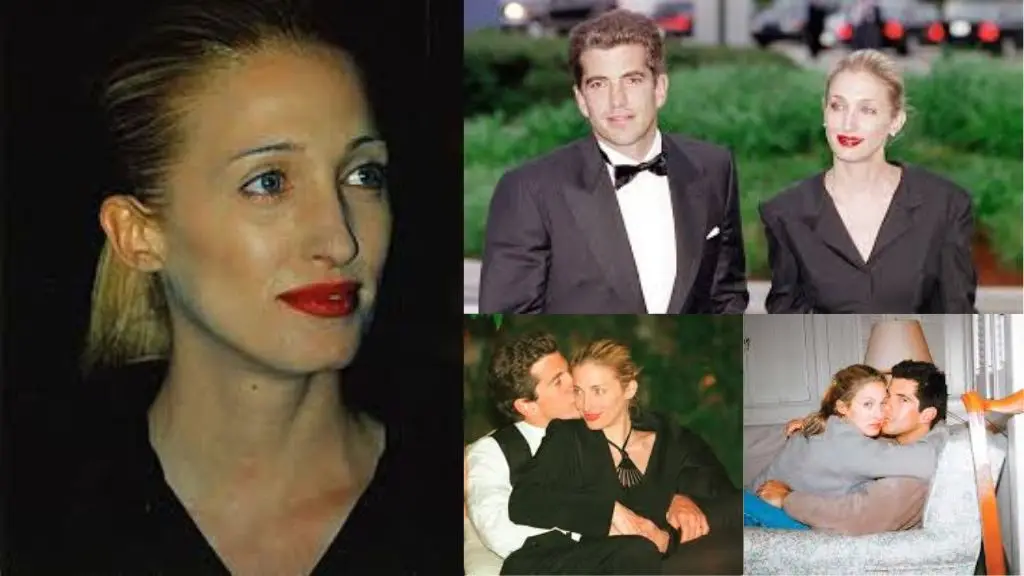
She never gave a single interview. She declined every magazine cover offer. She asked photographers to leave her alone and they didn’t. She walked through Manhattan alongside the most famous bachelor in America and tried, with everything she had, to hold onto the private self she had built before the world decided to consume her. She failed to hold the paparazzi back. She succeeded, against all odds, at being herself anyway.
Carolyn Bessette Kennedy was 33 years old when she died. She had been a public figure, against her will, for five years. In those five years she transformed the way an entire generation thought about elegance, simplicity, and what it means to dress with intention rather than performance. She became a style icon without trying to become one, which is precisely why the influence endures. Decades after her death, her image fills Pinterest boards tagged “quiet luxury.” Her haircut is still being copied. Her Narciso Rodriguez wedding dress is still considered one of the most significant bridal moments of the 20th century. A nine-episode FX limited series produced by Ryan Murphy debuted two days ago — on February 12, 2026 — exploring her love story with John F. Kennedy Jr.
Her story is not just a love story, and it is not just a fashion story, though it is both of those things. It is the story of a private woman who became public property, a working professional who was reduced to a supporting character in someone else’s mythology, and a human being of remarkable warmth, intelligence, and complexity whose true self has always been just out of frame.
This is everything about Carolyn Bessette Kennedy — from the beginning.
Carolyn Bessette Kennedy Early Life: White Plains, New York, and a Girl Called Carolyn
Carolyn Jeanne Bessette was born on January 7, 1966, in White Plains, New York — a suburb of New York City in Westchester County, with all the particular texture of a place that is near the center of everything and quietly removed from it. She was the youngest child of William Joseph Bessette — born 1942, an architectural engineer who later became a cabinet-maker — and Ann Marie Bessette (née Messina; born 1939), an administrator in the New York City public school system. She also had Italian heritage through her mother’s side.
She had two older sisters: Lauren and Lisa — twins, born before Carolyn, who together formed the older half of the Bessette daughters. Lauren Bessette would grow up to become a vice president at Morgan Stanley Dean Witter — a high-achieving professional woman who died alongside her younger sister that July night in 1999.
Carolyn’s paternal family had deep French Canadian roots. The Bessette line was a direct descendant of Jean Besset, who had arrived in Quebec in the 17th century — making Carolyn’s ice-blonde, Nordic-seeming elegance one of the more quietly ironic things about her: she looked like a Scandinavian myth and was descended from French Canadian settlers.
When Carolyn was eight years old, her parents divorced. It was 1974. Her father, William, remained in White Plains. Her mother remarried — a man named Richard Freeman, an orthopedic surgeon — and the three Bessette daughters moved with their mother to Old Greenwich, Connecticut, one of the wealthiest and most aesthetically polished communities in New England.
Old Greenwich was the kind of town where you learned, growing up, the grammar of a certain kind of American elite life: the correct posture, the appropriate restraint, the precise calibration between confidence and modesty. Carolyn absorbed all of it — and later, in New York, she would use it as the scaffolding for her own far more original aesthetic vision.
St. Mary’s High School: “The Ultimate Beautiful Person”
Carolyn initially attended Greenwich High School, but her parents transferred her to St. Mary’s High School in Greenwich, feeling she was not taking her studies seriously at Greenwich. It was at St. Mary’s — a Catholic school, reflecting the family’s Roman Catholic faith — that she found her social footing.
Her classmates at St. Mary’s voted her “The Ultimate Beautiful Person” — a designation that sounds both obvious and insufficient when you look at what she would become. She was part of the “in crowd.” She attended, as a contemporary put it, “all the right parties.” But she was also, by the accounts of people who knew her then, genuinely funny, warm, and inclined toward real friendship rather than social performance.
She had, even at 17 and 18, the kind of presence that made people feel simultaneously more and less visible — drawn in, slightly uncertain of themselves, wanting her attention. It was not cruelty. It was simply the effect of being around someone whose natural confidence is so complete that it rearranges the air in a room.
She graduated from St. Mary’s in 1984.
Boston University: Education Degree, Waitress, and the Girl Who Appeared on a Calendar
In 1984, Carolyn enrolled at Boston University’s School of Education, studying for a degree in elementary education — a choice that surprised some people who knew her and makes more sense in context. Education, as a field, rewards people with emotional intelligence, patience, genuine interest in other people’s inner lives, and the ability to communicate clearly and warmly. Carolyn had all of those qualities in abundance.
She worked as a waitress while in school — a practical necessity and, presumably, good training for managing rooms full of demanding people with grace. She was popular, known for her laugh — described by classmate Colleen Curtis as “unforgettable, contagious, a belly laugh” — and for greeting friends with a big hug and making you feel her sincerity. “You never doubted her sincerity,” Curtis recalled.
In her final year at BU, she appeared on the cover of the “Girls of B.U.” calendar — a production that was, by any assessment, cheesy, and that she apparently treated with appropriate self-awareness and humor. Friends noted that the shots reflected her sense of fun rather than any particular ambition for that kind of attention.
She graduated from Boston University in 1988 with her degree in elementary education.
After graduation, she stayed on in Boston. She worked as an events organizer for a nightclub management company — another room-management role, requiring her to navigate crowds, personalities, competing demands, and the particular social physics of nightlife. She was building a professional toolkit without realizing that’s what she was doing.
Then came Calvin Klein, and everything changed.
Calvin Klein: The Saleswoman Who Became the Director of Publicity
In 1989, Carolyn Bessette took a job as a saleswoman at a Calvin Klein store at the Chestnut Hill Mall in Newton, Massachusetts — a location near the Boston University campus where she had spent the previous four years. She was 23. She had a degree in elementary education and no fashion industry credentials. What she had was an extraordinary natural sense of style, an effortless ability to communicate with high-end clients without obsequiousness or awkwardness, and the kind of confidence that reads as competence because it is competence.
She was noticed quickly. A traveling sales coordinator for Calvin Klein, visiting the Boston store, was so impressed that she recommended Carolyn to Susan Sokol, the president of Calvin Klein Collection in New York. Sokol met Carolyn, was immediately struck by her grace, poise, and intelligence, and offered her a position in New York handling Klein’s high-profile clients.
Carolyn said yes. She moved to Manhattan.
In the early 1990s, she worked in what was effectively a celebrity dressing role — the person at Calvin Klein who handled the brand’s most prominent clients, including Annette Bening and Diane Sawyer. It required discretion, aesthetic judgment, physical ease with people, and the ability to project warmth without familiarity. She was, by every account, magnificent at it.
She impressed Calvin Klein himself — a man not easily impressed, a designer whose entire aesthetic vision was predicated on the kind of pared-back, architectural, quietly confident elegance that Carolyn embodied naturally. He liked her. He trusted her. He brought her further into the inner circle of his brand.
Over the course of the early 1990s, Carolyn Bessette climbed from showroom handler to Director of Publicity for Calvin Klein’s flagship Manhattan store — and later to Director of Show Productions, a title that reflects the breadth and seniority of her role. By the time she left the company at her marriage in 1996, she was earning a salary in the low six figures — remarkable for someone in their late 20s with a background in education who had started as a retail saleswoman seven years earlier.
She had built, entirely on her own merit, a significant professional identity in one of the most competitive industries in the world. That story tends to get swallowed by what came next, but it deserves to stand on its own: Carolyn Bessette, before she was ever Carolyn Bessette Kennedy, was an accomplished working woman who had made herself into something through intelligence, charm, and the willingness to outwork the room.
Before John: Michael Bergin and the Relationships Nobody Discusses
Before JFK Jr., Carolyn had a significant romantic life that existed entirely outside the media spotlight — as all of her life had, until she met him.
Her most notable relationship before John was with Michael Bergin, a Calvin Klein model whose chiseled looks made him one of the brand’s most recognizable faces in the early 1990s. Bergin and Carolyn had a genuine relationship during the same years she was developing her professional identity at the brand. He later published a memoir, The Other Man: John F. Kennedy Jr., Carolyn Bessette, and Me (2004), which described the relationship and its intersection with the Kennedy affair. The book’s reception was mixed, with those close to Carolyn feeling it exploited a woman who could no longer defend or contextualize herself.
What the pre-Kennedy relationships clarify is that Carolyn was not someone who fell easily into famous men’s orbits. She was not a woman who pursued proximity to power. She had her own professional world, her own social world, her own sense of who she was. When John Kennedy entered that world, she met him as an equal — and that, by most accounts, is precisely what made her irresistible to him.
Meeting JFK Jr.: The Fitting Room, the Park, and the Long Road to Love
The exact circumstances of Carolyn Bessette and John F. Kennedy Jr.’s first meeting remain genuinely contested — a fact that says something about both the era’s lack of documentation and the couple’s successful, if temporary, management of their own narrative.
The most credible account, supported by Elizabeth Beller’s 2024 biography Once Upon a Time: The Captivating Life of Carolyn Bessette-Kennedy and corroborated by multiple sources, is that they met at Calvin Klein’s VIP fitting room in Manhattan in 1992, when John — who was both a personal friend of Calvin Klein and a longtime wearer of the brand — came in for a fitting. Calvin and his wife Kelly reportedly selected Carolyn specifically to manage the appointment. John and Carolyn were both 26 and 32 respectively. They were immediately drawn to each other. She reportedly gave him her phone number.
Other accounts place the first meeting in Central Park, where both Carolyn and John were regular joggers — a more romantic origin story that has the advantage of being plausible and the disadvantage of being unverifiable.
A few sources suggest the meeting in 1992 was casual and that serious dating didn’t begin until 1994 — a timeline that aligns with the fact that John’s mother, Jackie Kennedy Onassis, died on May 19, 1994, just as his serious relationship with Carolyn was beginning. He never introduced them. He later said he deeply regretted it. Carolyn, by most accounts, also regretted never knowing the woman she was so frequently compared to.
The comparison to Jackie — the Catholic background, the cautiousness toward publicity, the impeccable and restrained style, the position as the wife of a man so famous that her own identity became permanently subordinated to his — is one of the defining notes of Carolyn’s story. It is also, in some ways, unfair to both women. Jackie’s elegance was deployed, at least partly, in service of a political and dynastic project. Carolyn’s was entirely her own. She had arrived at it independently, long before she had any reason to perform for a public.
When news of the romance became public in 1994, it happened the way most celebrity news becomes public: someone talked to a tabloid and suddenly it was everywhere. Carolyn Bessette became, essentially overnight, the most famous unknown woman in America. She had done nothing public. She had granted no interviews. She had not sought the spotlight. She was simply seen with John Kennedy, and that was enough.
She loathed it from the start. She loathed it at the end. Nothing in between changed that.
The Engagement and The Park Altercation (1994–1995)
Their relationship was not without turbulence. In early 1994, paparazzi footage emerged of John and Carolyn in a heated argument in Central Park — footage that was sold to a tabloid and played widely across entertainment media. The fight, which appeared to show John trying to take back a ring that Carolyn was wearing while she tried to walk away from him, was replayed endlessly and analyzed with the intimacy-violating thoroughness of the tabloid press at its most aggressive.
Both parties were deeply unhappy about the footage. The incident is now understood as a moment of private conflict that was filmed without consent and used as content — a dynamic that would define their entire public existence, and that Carolyn found particularly, viscerally intolerable.
They became engaged in 1995. John proposed, reportedly, with a ring featuring a diamond flanked by two smaller stones — a design both simple and specific.
The engagement was kept secret, as was the wedding that followed.
The Wedding: Cumberland Island, September 21, 1996
On September 21, 1996, Carolyn Bessette and John F. Kennedy Jr. were married in one of the most celebrated and deliberately private wedding ceremonies of the 20th century — a feat of logistical secrecy that required both planning and luck and would, within days, be known to the entire world.
The location was Cumberland Island, Georgia — a remote, largely undeveloped barrier island off the Georgia coast, accessible only by ferry, with no commercial services to speak of. The ceremony took place in the First African Baptist Church, a tiny, weathered wooden chapel built in 1893. It seated roughly 30 people. By candlelight.
The guest list was tiny: close family and a handful of friends. Caroline Kennedy was matron of honor. Anthony Radziwill — the son of Jackie’s sister Lee Radziwill, John’s cousin and one of his closest friends, who would die of cancer less than three years later — was best man. Caroline’s daughters Rose and Tatiana Schlossberg were flower girls. Her son Jack Schlossberg was ring bearer.
Carolyn’s dress was designed by Narciso Rodriguez — then a young, relatively unknown designer working at the house of Cerruti in Paris. The gown was a bias-cut slip in pearl-white silk crêpe — minimal, structural, and radically different from the puffed-sleeved, embellished, maximalist bridal gowns that dominated wedding fashion in the mid-1990s. It had thin straps, no embellishments, no beading, no train to speak of. She accessorized with sheer white tulle gloves, Manolo Blahnik sandals, and a delicate veil. She wore her hair in a low chignon adorned with a vintage pin that had belonged to Jackie Kennedy. Her makeup was barely there.
The dress was, by any measure, a radical statement. In refusing extravagance at the single most-watched wedding of the decade, Carolyn Bessette invented the visual grammar of bridal minimalism. The dress immediately became iconic. Today, decades later, it continues to be cited as the single most influential bridal design of the 20th century’s final quarter, and its DNA can be traced in a direct line through the slinky, minimal wedding gowns worn by everyone from Meghan Markle — who, by Markle’s own account, considered Carolyn’s Narciso Rodriguez slip “everything” — to the brides filling social media feeds today.
The couple honeymooned in Turkey.
The Price of Being Mrs. Kennedy: Media, Privacy, and the Loss of Self
When John and Carolyn returned from their honeymoon, a mass of reporters was waiting on the doorstep of their Tribeca loft. John made a direct appeal: “Getting married is a big adjustment for us, and for a private citizen like Carolyn even more so. I ask you to give her all the privacy and room you can.”
They gave her none.
The years from 1996 to 1999 were defined, for Carolyn, by the relentless and dehumanizing experience of becoming public property while remaining a private person. She refused every interview — not once, not sometimes, not with careful conditions. She gave zero interviews across the entirety of her public life. She refused every magazine cover offer. She refused to be photographed at promotional events, to attend most public functions, to give the media the staged access that would have allowed her to manage her own image.
This refusal, which was principled and entirely coherent, was interpreted by the tabloid press as coldness, arrogance, unavailability. It was reported as distance. It was described, with the particular cruelty that celebrity culture reserves for women who won’t perform warmth on demand, as being “difficult.” Her occasional visible discomfort at public events — the natural response of a private person to being swarmed by cameras — was photographed and presented as evidence of a character flaw rather than an entirely rational response to an entirely intrusive situation.
The comparison to Princess Diana was frequently made — and accepted by Carolyn herself. Diana’s death in August 1997 in a Paris tunnel, being chased by paparazzi, hit Carolyn profoundly. According to sources close to her, she was devastated — not just as a person watching a tragedy unfold but as a woman who understood viscerally, from the inside, what Diana’s daily life felt like. “It could have been me,” she reportedly said.
The paparazzi had made Diana’s life a nightmare. They were making hers a nightmare. The difference, she knew, was that John flew small planes.
The Private Carolyn: Who She Actually Was
The Carolyn Bessette Kennedy that emerges from the testimonies of people who actually knew her is a woman almost entirely at odds with the tabloid caricature.
She was warm. Carole Radziwill — wife of John’s cousin Anthony, one of Carolyn’s closest friends, who was with her in the final days before the crash — wrote in her memoir that Carolyn made people feel as though they were “the only person in the room.” That is a specific and unusual gift, and it was noted by multiple people who knew her. She remembered birthdays. She showed up for friends during illness and grief without seeking attention for the gesture. She offered comfort without conditions.
She was funny. Her college classmate’s description of an “unforgettable, contagious belly laugh” is echoed in the accounts of adult friends who knew her in New York. She was ready with a wisecrack. She had a sharp eye for social pretension and the confidence to skewer it. People who knew her well say she would have been wonderful company in a way that had nothing to do with how she looked.
She was well-read and intellectually curious. She loved books. She was interested in astrology. She had long conversations. She enjoyed quiet evenings with close friends far more than the evenings the public imagined she was having.
She was professional and capable in ways that the coverage of her life almost entirely ignored. She had built a real career. She had managed high-profile client relationships. She had risen through the ranks of one of the most demanding fashion houses in New York on the strength of her own intelligence and work ethic.
She was also, by most accounts, struggling. The media attention was not just unpleasant — it was psychologically destabilizing. She had been a private person for 30 years. She had built an identity, a professional self, a social world, all entirely on her own terms. Marriage to John Kennedy had ended all of that, overnight, permanently. “Fame had taken those simple pleasures away,” as a profile of her put it. And unlike John, who had been raised in public from the day his father was assassinated, she had no preparation for what it meant to be that visible.
Kennedy biographer Edward Klein made various allegations about Carolyn — cocaine use, infidelity — in his book The Kennedy Curse. Those closest to her rejected the characterizations as tabloid-sourced and unsubstantiated, and John himself dismissed Klein as unreliable. Elizabeth Beller’s 2024 biography, Once Upon a Time: The Captivating Life of Carolyn Bessette-Kennedy, which is the basis of the current FX series, portrays her as empathetic, nurturing, and far more complex than the tabloid shorthand allowed.
The Marriage: Love, Difficulty, and the Contested Narrative
Carolyn and John’s marriage was, like most marriages, a complicated thing. They lived in a Tribeca loft. They attended White House dinners — Bill Clinton gave them a private tour in March 1998. Carolyn acted as hostess at parties for John’s political magazine George, where he had become a publisher and editor of genuine ambition. She became more involved in charity work as the marriage progressed. She was, in public, elegant and contained. In private, she was apparently both those things and more.
Reports published after their deaths alleged marital strain — disagreements about having children (Kennedy reportedly wanted them urgently; Carolyn was more reluctant), friction over John’s work on George magazine, and the strain that constant media attention puts on any relationship. Robert Littell, John’s close friend who spent a weekend with the couple just one week before the crash, firmly rejected the divorce rumors that circulated in the press afterward.
The truth is that only two people knew the full reality of the marriage, and both of them died on July 16, 1999.
What is not in dispute is that in their final months, they were working through their difficulties. The fact that Carolyn agreed to fly with John to his cousin Rory Kennedy‘s wedding in Martha’s Vineyard — despite her reportedly expressed reservations about his flying ability — has been interpreted in various ways, all of them necessarily speculative. She loved him. She was going to be with him. She got on the plane.
July 16, 1999: The Crash
On the evening of July 16, 1999, John F. Kennedy Jr. piloted his Piper Saratoga II HP light aircraft out of Essex County Airport in Fairfield, New Jersey, with Carolyn in the passenger seat and her older sister Lauren Bessette in the rear seat. Their destination was Martha’s Vineyard, Massachusetts — first to drop Lauren off at the Vineyard, then to continue to the island of Hyannis Port for the wedding of Rory Kennedy, John’s cousin.
It was approximately 8:38 PM when the plane took off. The night was hazy. John was flying under Visual Flight Rules — meaning he was navigating by sight rather than instruments — a method that requires visible reference to the horizon. In the haze over the Atlantic, horizon visibility degraded. John, who held a private pilot’s license but had relatively limited experience flying at night and in poor visibility conditions, lost his spatial orientation.
At approximately 9:40 PM, the aircraft entered a rapid descent over the Atlantic Ocean near the coast of Martha’s Vineyard. It struck the water at high speed. There were no survivors.
Carolyn Bessette Kennedy was 33 years old. Lauren Bessette was 35 years old. John F. Kennedy Jr. was 38 years old.
The United States Coast Guard launched a search. Over the following days, a naval dive operation recovered the wreckage and the bodies of all three from the ocean floor approximately 116 feet below the surface. They were buried at sea, as per the Kennedy family’s wishes, on July 22, 1999 — John and Carolyn’s ashes scattered from the deck of the USS Briscoe into the Atlantic.
The crash was front-page news across the entire world for days. In America, it produced a specific quality of public grief — not quite the shattering devastation of JFK’s assassination or the disbelief of Princess Diana’s death, but something particular to the Kennedy story: the sense that tragedy was again claiming the family that had already given so much to tragedy, and that two people — this man and this woman — had been taken before they were finished.
The New York Times described John Kennedy Jr.’s death as the loss of “the last prince of Camelot.” Carolyn, as so often happened, was subordinate in even the language of mourning. But she was mourned — by her friends, her family, and, in time, by generations of women who saw in her story something of their own complicated relationship with visibility, privacy, and the right to be oneself.
The Style Legacy: Quiet Luxury Before It Had a Name
Carolyn Bessette Kennedy’s influence on fashion is not a matter of debate among people who work in the industry. It is one of the most clearly documented cases of a single person’s aesthetic choices establishing a cultural template that outlasts the individual by decades.
Her style principles were simple, rigorous, and almost entirely countercultural for the mid-1990s:
Neutral palette. Almost exclusively black, white, navy, and beige — with occasional forays into camel, grey, and ivory. Rarely, if ever, color.
Clean silhouette. Slip dresses, column gowns, bootcut jeans, cigarette pants, structured coats. Nothing with fussiness. Nothing with embellishment. Nothing that competed with the body wearing it.
Minimal jewelry. Unusual for a woman of her social position. She wore it rarely, and when she did, it was small and specific.
Minimal makeup. A sweep of mascara. Bold red lipstick for evenings. Pared-back skin. No contouring, no dramatic eye, no performance.
Hair. Loose in an Alice band for the day. A chignon for evenings. Blonde highlights hand-painted by her colorist Brad Johns in a specific warm-to-cool gradient — not the icy, high-contrast blonde of fashion in 2024, but something more natural and deliberate.
Her favorite labels were Narciso Rodriguez (her closest ally in fashion), Jil Sander, and, naturally, Calvin Klein — all brands built on the same philosophy of architecture over decoration, restraint over extravagance.
She rejected designer gifts and freebies. She bought what she loved with her own money and wore it until it was finished. She dressed for herself, or at most for John, and never for the cameras she despised.
The result was a body of photographic work — most of it paparazzi photography she hated — that has become one of the most referenced style archives in fashion history. Her looks have inspired spring/summer 2019 collections at Burberry, Chanel, and Maryam Nassir Zadeh. She is regularly cited by fashion editors as the defining embodiment of 1990s minimalism. The @carolynbessette Instagram account, curated by Jack Sehnert (design director of handbags at Steve Madden), has over 130,000 followers. In December 2024, items from her personal wardrobe sold at auction for significant sums.
The term “quiet luxury” — the dominant aesthetic conversation of the 2020s — is, in its essential DNA, Carolyn Bessette’s wardrobe. She invented it before it had a name, wore it without seeking credit, and left it as an accidental legacy.
The Books, Films, and Cultural Afterlife
Carolyn’s story has been told and retold with varying degrees of fidelity and care:
Fairy Tale Interrupted (2012) by RoseMarie Terenzio — a memoir by John Kennedy’s devoted personal assistant, who knew Carolyn well and provides one of the more nuanced close-quarters portraits of both of them.
What Remains: A Memoir of Fate, Friendship and Love (2005) by Carole Radziwill — a beautiful, grief-saturated memoir by one of Carolyn’s closest friends, written in the aftermath of two losses: Carolyn’s death in July 1999 and her own husband Anthony Radziwill’s death from cancer just weeks later.
The Other Man: John F. Kennedy Jr., Carolyn Bessette, and Me (2004) by Michael Bergin — Carolyn’s ex-boyfriend’s account, received with ambivalence by those who cared about her.
CBK: Carolyn Bessette Kennedy, A Life in Fashion (2023) by Sunita Kumar Nair — a coffee-table book exploring her fashion legacy with archival photography and cultural commentary.
Once Upon a Time: The Captivating Life of Carolyn Bessette-Kennedy (2024) by Elizabeth Beller — the most sympathetic and thorough biographical treatment of Carolyn yet published, which formed the basis of the current FX series. Beller portrays her as “empathetic, nurturing, and a revelation” — a deliberate corrective to the tabloid record.
Love Story: John F. Kennedy Jr. & Carolyn Bessette (FX/Hulu, premiered February 12, 2026 — two days ago) — Ryan Murphy’s nine-episode limited series, with Sarah Pidgeon as Carolyn and Paul Anthony Kelly as John. The supporting cast includes Naomi Watts as Jackie Kennedy Onassis, Grace Gummer as Caroline Kennedy, and Alessandro Nivola as Calvin Klein. The series is the first installment in Murphy’s Love Story anthology and has already generated significant cultural conversation — both about the story itself and about the decision to fictionalize the lives of people whose family members are still alive. John’s nephew Jack Schlossberg noted publicly that the Kennedy family was not consulted. His cousin Rory Kennedy, speaking at the 2026 Sundance Film Festival in January, said she was not sure she would watch it.
The costume design of the FX series has generated its own controversy among Carolyn’s devoted fashion community — many of whom argue, with considerable specificity and evident affection, that the production did not do justice to the precise, intentional nature of her style.
It is a mark of how deeply people feel about her that they are still getting the details of her wardrobe wrong — and that her fans will not accept it.
“She Crafted Herself”: The Rosamund Pike Connection
In a detail that deserves its own paragraph, filmmaker David Fincher — director of Gone Girl (2014) — reportedly encouraged actress Rosamund Pike to base her performance as Amy Dunne, the manipulative, controlled, brilliantly self-constructed anti-heroine of that film, on Carolyn Bessette Kennedy.
Fincher’s observation: “She crafted herself, she re-invented herself, and invented that persona.”
It is a strange compliment — using a dead woman whose most defining quality was her refusal to perform for the public as the inspiration for one of cinema’s most calculating performers. But it captures something real about the quality of intentionality that everyone who saw Carolyn felt. She wasn’t performing minimalism. She was building a self, carefully and deliberately, from the materials of her own taste, intelligence, and will. The persona was not calculated — but it was made.
Legacy: The Woman Behind the Icon
Carolyn Bessette Kennedy lived for 33 years. She was famous for five of them. She spent those five years trying to remain herself inside an existence that was constantly trying to flatten her into a symbol — the trophy wife, the fashion plate, the Grace Kelly of the 1990s, the new Jackie, the difficult one, the private one, the beautiful one.
She was all of those and none of them.
She was a woman who had built something real and professional before the cameras found her. She was a woman who made people feel seen and loved and special in the particular way that only people of genuine emotional intelligence can do. She was a woman who dressed herself with the rigorous self-knowledge of someone who understood her own proportions, her own coloring, her own presence, and had no interest in competing with anyone else’s vision of how she should look.
She was also, by the end of her short life, a woman in pain — struggling with the loss of privacy, the strain of a marriage under permanent public observation, the grief of no longer owning her own story. She had wanted to be a teacher. She had become, instead, one of the most photographed women in the world. The distance between those two things was enormous.
She deserves to be remembered for more than a dress. She deserves to be remembered as a person who was fully, originally, and stubbornly herself in circumstances that made that very difficult — and who managed it, for the most part, with a grace that was entirely her own.
The gold ladybug of Carolyn Bessette Kennedy’s legacy is this: she showed an entire generation of women that beauty and restraint are not the same thing as emptiness — that the most powerful thing you can wear is a sense of self so complete it needs no decoration.
She was 33. She had more to say. She never got to say it.
Carolyn Bessette Kennedy (January 7, 1966 – July 16, 1999) was an American fashion executive and the wife of John F. Kennedy Jr. She died alongside him and her sister Lauren Bessette in a plane crash off the coast of Martha’s Vineyard. She was 33 years old.
Love Story: John F. Kennedy Jr. & Carolyn Bessette is currently streaming on Hulu, with new episodes airing weekly on FX through March 26, 2026. The series is based on Elizabeth Beller’s biography Once Upon a Time: The Captivating Life of Carolyn Bessette-Kennedy (2024, Viking Press).