A Quiet Shift Is Reshaping the U.S. Housing Market: Why Single Women Are Buying Homes at Record Rates
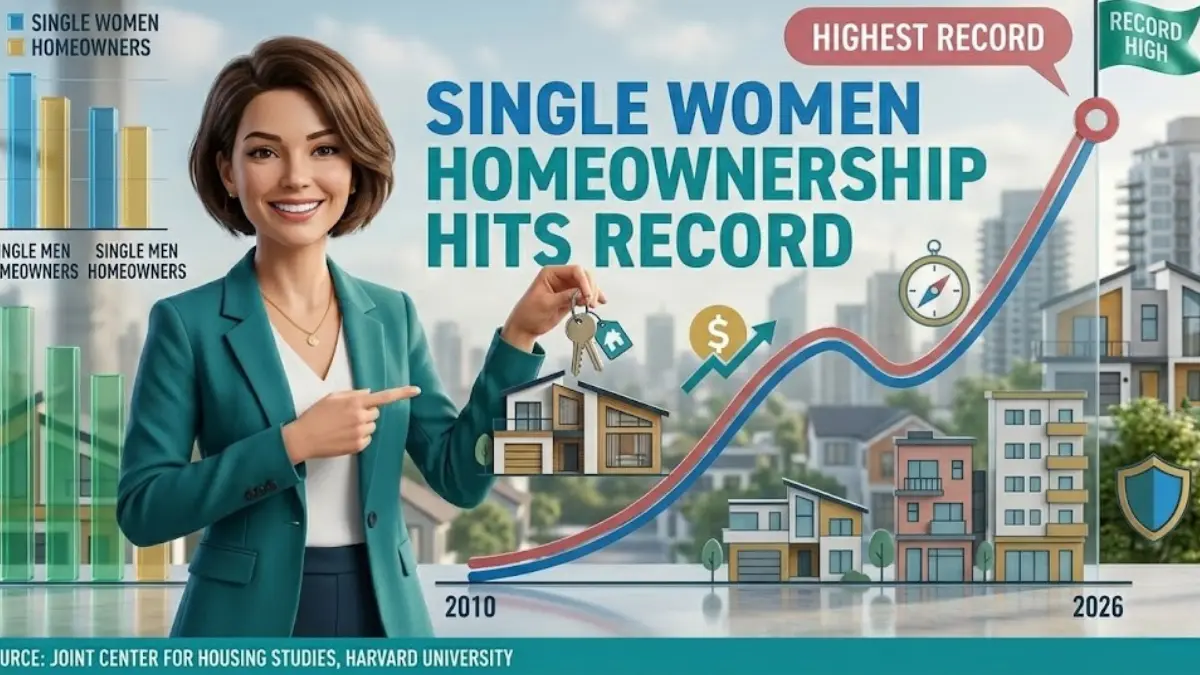
Over 20 million single women now own homes in the United States—a historic milestone that marks them as one of the fastest-growing groups in real estate. Reports consistently show single women outpacing single men in both homeownership numbers and buyer activity, fueled by greater financial independence, career advancement, and evolving life priorities.
For many, homeownership transcends bricks and mortar. It symbolizes stability, personal control, and liberation from outdated societal expectations. Even amid soaring prices, elevated interest rates, and a persistently challenging market, single women are doubling down on long-term security—on their own terms.
This isn’t just a statistic. It’s a cultural transformation, where female independence is quietly rewriting the American Dream and reshaping neighborhoods, buyer demographics, and the broader housing landscape.
Single Women Homeownership Hits Record
The surge is undeniable. In 2025, more than 20 million single women owned homes in the U.S.—a record high, according to First American Financial analysis. While the homeownership rate for single women dipped slightly from 51.9% to 50.9%, the absolute number of owners still climbed. This happened because more women are forming independent households faster than ownership can keep pace, yet they continue to buy.
Single women now own roughly 2.72 million more homes than single men nationwide, holding the lead in 47 out of 50 states. Among all homebuyers, single women represent 21%, compared to just 9% for single men. The gap widens among first-time buyers: single women make up 25%, while single men account for only 10%.
This trend has deep roots. Go back to 1981, when the National Association of Realtors (NAR) first tracked buyer profiles: single women were 11% of buyers and single men 10%. Married couples dominated at 73%. Fast-forward to today, and married couples are down to 61%, while single women have nearly doubled their share to 21%—and single men have actually declined to 9%.
Even more striking: among first-time buyers, single women have jumped from 11% in 1985 to 25% today. Single men edged up only to 10%.
A notable recent shift? For the first time in NAR’s latest data (covering mid-2024 to mid-2025 transactions), single women first-time buyers report a higher median household income ($73,000) than single men ($66,400). This reverses long-standing patterns and reflects women’s growing economic clout.

source:nar.realtor

source:nar.realtor
What’s Driving This Quiet Revolution?
Several powerful forces are converging:
1. Education and Income Gains The share of single women with a bachelor’s degree or higher has skyrocketed—from 20% in 2000 to 35% in 2025. Real median household income for single women rose from about $42,000 (in 2025 dollars) in 2000 to $51,000 today. These gains expand the pool of financially qualified buyers and build the confidence to invest in real estate.
2. Changing Life Priorities and Social Norms Fewer Americans are marrying (the never-married share hit 34.8% in 2025, up from 23% in 1950), and people are delaying marriage longer. Divorce, widowhood, and the choice to remain single have created more female-headed households. Women are prioritizing stability—especially single moms or those caring for aging relatives. NAR data shows single women buyers are more likely to have children under 18 at home (16% vs. 11% for single men) and to buy multigenerational homes (14% vs. 13%).
3. The Pursuit of Independence and Security Homeownership represents autonomy. Many single women view it as freedom from traditional expectations or unreliable partnerships. NAR research highlights that single women are more likely than single men to buy for proximity to friends and family. They also make bigger financial sacrifices—41% cut discretionary spending, delay vacations, or take second jobs to afford a down payment, compared to 31% of single men.
This resilience shone through even during the pandemic “she-cession,” when women faced disproportionate job losses yet still pushed into homeownership.
4. Historical Breakthroughs Remember: until the Equal Credit Opportunity Act of 1974, single women often needed a male co-signer for a mortgage. Today, just over 50 years later, they’re leading the market.
More Than Property: Stability, Control, and Freedom
For countless single women, a home isn’t just an asset—it’s empowerment. It offers a stable base for raising children, a safe space for personal growth, and a hedge against uncertainty. Equity building becomes a primary wealth vehicle, especially since homeownership remains the largest asset for most American families.
Expert analysis from First American underscores this: “The rising number of single women homeowners underscores resilience in the face of affordability pressures and confidence in homeownership as a pathway to long-term wealth.”

Navigating the Challenges
None of this is happening in a vacuum. The U.S. housing market remains one of the toughest in years: high mortgage rates, limited inventory, and elevated prices have sidelined many would-be buyers. Single women still face a lingering wage gap in some sectors and, historically, higher denial rates or interest costs on loans.
Yet they persist. Many opt for smaller homes, condos, or suburban properties that fit single incomes. Others pool resources creatively or target emerging affordability improvements. The slight dip in the 2025 homeownership rate wasn’t from retreat—it was from rapid household formation outpacing purchases.
How This Shift Is Reshaping the Housing Market
Single women’s rise is influencing everything from home design to neighborhood dynamics:
- Buyer Preferences: Demand for homes suitable for single occupants or multigenerational living—think open layouts, low-maintenance yards, and proximity to schools, family, and amenities.
- Market Power: As the second-largest buyer group after married couples, single women help sustain demand in a high-rate environment.
- Wealth Building: Their equity gains narrow some gender wealth gaps over time.
- Broader Society: This trend reinforces independence, delays traditional family timelines, and normalizes solo homeownership as a mainstream choice.
NAR Deputy Chief Economist Jessica Lautz notes the opportunity: single women are already building wealth through housing, and the market could do more to support single men in catching up.
Looking Ahead: A New Chapter in the American Dream
As education levels continue rising and cultural attitudes evolve further, single women’s influence on housing is likely to grow. Improving affordability (already the best since 2022 in some metrics) could accelerate the trend.
This quiet shift isn’t just about real estate—it’s about redefining success on individual terms. Over 20 million single women aren’t waiting for the “right” moment or partner. They’re claiming stability, control, and freedom today.
In a world that once required a man’s signature for a mortgage, single women are now signing their own futures—one home at a time.
What do you think? Is this trend empowering, or does it highlight deeper challenges in modern relationships and economics? Share your thoughts in the comments.
FAQs
1. How many single women own homes in the U.S. right now, and is it still a record?
Yes — as of the latest First American analysis released March 5, 2026, more than 20 million single women owned homes in 2025, the highest number ever recorded. Even though the homeownership rate dipped slightly from 51.9% to 50.9%, the absolute number of single female homeowners continued to climb. The rate decline happened because single-women households grew faster than new purchases, not because fewer women are buying.
2. Why are single women still outpacing single men in the housing market despite high prices and rates?
Single women now make up 21% of all home buyers and 25% of first-time buyers, compared to just 9% and 10% for single men (NAR 2025 Profile). They own roughly 2.72 million more homes than single men nationwide and lead in 47 out of 50 states. Key drivers include rising education and income levels, a strong focus on stability and long-term wealth, and a willingness to make financial trade-offs (41% of single women cut spending or took extra work vs. 31% of single men).
3. Have single women’s incomes now surpassed single men’s among first-time homebuyers?
Yes — this is a historic first. According to the NAR’s 2025 Profile (released late 2025/early 2026 data), single women first-time buyers report a median household income of $73,000, compared to $66,400 for single men. This reverses the long-standing trend where single male buyers earned more. It reflects women’s faster gains in education and career advancement.
4. Which generation is leading the single-women homebuying surge?
Gen Z women are the most active, representing 30% of all single female buyers — the highest share of any generation (NAR 2025 Generational Trends Report). Even though Gen Z is only 3% of the overall market, their single-female share is dramatically higher than Millennials, Gen X, or Boomers. This shows younger women are prioritizing homeownership earlier and on their own terms.
5. Does this trend signal a lasting cultural shift in the U.S. housing market?
Absolutely. Married couples have dropped from 73% of buyers in 1981 to 61% today, while single women have nearly doubled their share to 21%. Experts from NAR and First American describe single women as “a force in the market” and “the most resilient segment,” even in the toughest affordability environment in years. The trend is fueled by delayed marriage, greater financial independence, and the view of homeownership as personal security rather than something tied to a partner.
Sources: National Association of Realtors (2025 Profile of Home Buyers and Sellers), First American Financial, Pew Research Center (historical context), and related reporting from Realtor.com, Fortune, and CNBC.