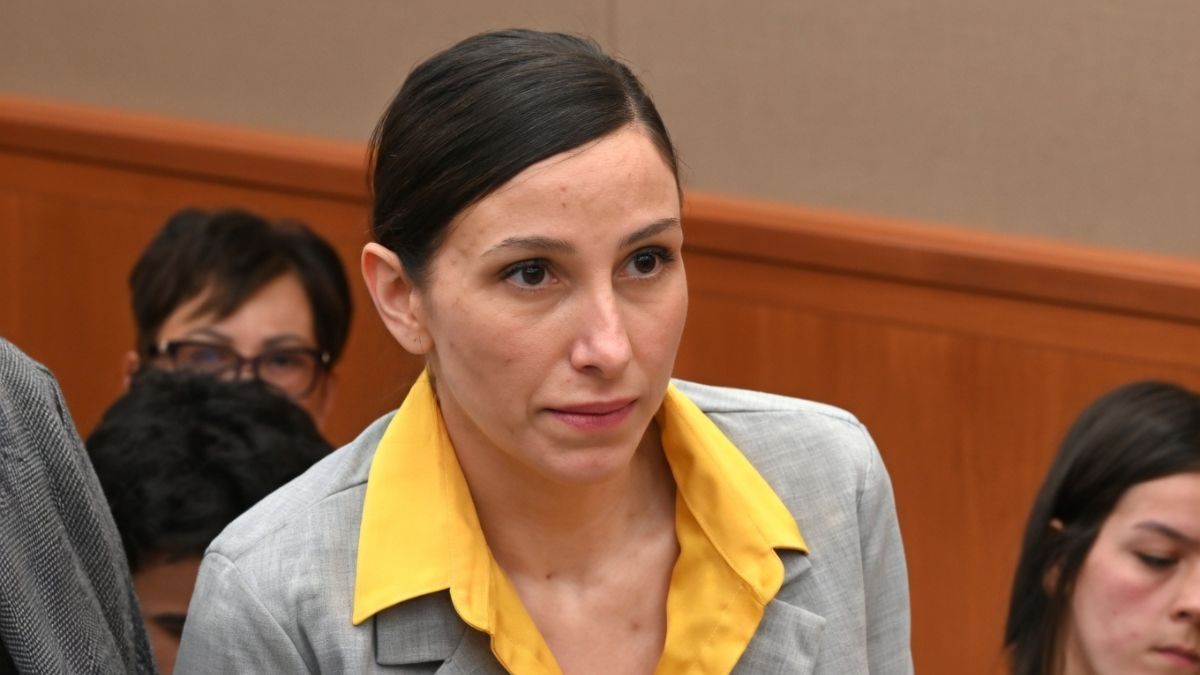
Jury Found Utah Mother Kouri Richins Guilty of Fatally Poisoning His Husband with Fentanyl-
A Utah mother has been found guilty of one of the most shocking crimes in recent memory: fatally poisoning her husband with fentanyl. The verdict in the Kouri Richins case marks the conclusion of a trial that captivated the nation and raised disturbing questions about deception, ambition, and the darkest secrets hidden behind closed doors.
This case is unlike anything you’ve seen on Court TV or in true crime documentaries. It involves a children’s book author, a wealthy marriage, and a calculated murder that nearly went undetected.
Here’s everything you need to know about this landmark case.
Who Is Kouri Richins? Woman at the Center of the Case
Kouri Richins is a 33-year-old Utah resident who, on the surface, appeared to have it all. She was a mother of three, a children’s book author, and married to Eric Richins, a successful tech entrepreneur and business owner.
But behind the carefully curated image was a woman capable of unimaginable cruelty.
Before her conviction, Richins presented herself as a devoted mother and emerging author. She had written and self-published a children’s book titled “Unexplainable Joy,” which dealt with grief and loss—a detail that would later take on sinister meaning once her crimes came to light.
She moved in affluent circles in Utah’s tech and business community. Her social media presence portrayed a woman living a dream life: a loving family, successful career, and bright future ahead.
None of it was what it seemed.
The investigation and subsequent trial revealed that Richins harbored dark motivations beneath her polished exterior. She was allegedly unhappy in her marriage, had financial concerns despite her husband’s wealth, and may have been interested in pursuing relationships with other men.
According to prosecutors, these factors combined to create the motive for one of the most premeditated murders in Utah’s recent history.
Eric Richins: The Victim
Eric Richins was a 39-year-old entrepreneur and technology professional. By all accounts, he was a devoted father to his three children and a man of significant accomplishment and wealth.
He made his mark in the technology sector and accumulated considerable assets, making him a man of considerable financial means. He was involved in various business ventures and was respected in Utah’s business community.
In March 2022, Eric Richins fell suddenly and mysteriously ill. He suffered from what appeared to be flu-like symptoms and was hospitalized. During his hospitalization, he deteriorated rapidly and tragically died.
His death was initially considered suspicious but not immediately flagged as a homicide. Doctors attributed his death to various causes, but questions lingered about the exact nature of his illness.
It wasn’t until a subsequent autopsy and toxicology report that the horrifying truth emerged: Eric Richins had been poisoned with fentanyl—a powerful synthetic opioid that, in high doses, is lethal.
The investigation that followed would reveal that his wife had deliberately administered the fatal dose.
How Did Kouri Richins Poison Her Husband? The Evidence Against Her
The evidence presented during the trial painted a damning picture of premeditation and calculated malice.
Prosecutors alleged that Kouri Richins purchased fentanyl (a highly controlled substance) through illicit channels. She then administered it to her husband, initially in smaller doses that made him ill but didn’t kill him. When those doses didn’t result in his death, she increased the amount to a lethal level.
Key pieces of evidence included:
Toxicology Reports: The autopsy clearly showed fentanyl in Eric Richins’ system at levels consistent with a fatal overdose. The presence of the drug in his body, combined with his lack of any prescription for fentanyl, was crucial evidence.
Financial Records: Investigators found evidence suggesting Kouri had researched ways to obtain fentanyl. Her online activity and communications were scrutinized, revealing a pattern of searching for information about poisons and lethal substances.
Behavioral Evidence: Testimony from friends, family, and associates painted a picture of a woman who was unhappy in her marriage, had expressed dissatisfaction with her husband, and stood to gain financially from his death through life insurance policies and his substantial estate.
Text Messages and Communications: Digital evidence, including messages and communications, suggested Kouri’s state of mind and her intentions. Some communications allegedly contained references to her unhappiness and financial concerns.
Witness Testimony: Multiple witnesses testified about Kouri’s demeanor, her marriage troubles, and her behavior both before and after Eric’s death. Some witnesses reported that she seemed relieved or even celebratory after his passing.
The prosecution’s theory was straightforward and damning: Kouri Richins deliberately murdered her husband by poisoning him with fentanyl, and she did so with full knowledge of the consequences.
The Kouri Richins Trial: A Case Examined in Court TV Detail
The trial of Kouri Richins has been extensively covered by legal media outlets, including Court TV, which has documented every significant development in the case.
The Charges
Kouri Richins was charged with:
- Murder (first-degree)
- Aggravated murder
- Possession of a controlled substance with intent to distribute
The severity of these charges reflected prosecutors’ confidence in their case.
The Defense Strategy
Kouri Richins’ defense team mounted a vigorous defense, challenging the evidence and the prosecution’s narrative. They argued that the evidence was circumstantial, that other explanations existed for Eric’s death, and that their client was being wrongfully accused of a heinous crime she did not commit.
However, the defense struggled against the mounting evidence of premeditation and the toxicology findings that clearly indicated fentanyl poisoning.
Key Testimony
The trial featured testimony from:
- Medical examiners who described the fentanyl found in Eric’s system
- Forensic experts who analyzed digital evidence and communications
- Friends and family members who testified about the state of Kouri and Eric’s marriage
- Financial experts who outlined Kouri’s potential financial motive
- Investigators who described how they uncovered the evidence of fentanyl poisoning
The testimony was often graphic and disturbing, with details about Eric’s symptoms, his deterioration, and the circumstances surrounding his death.
Media Coverage
Court TV and other legal analysis programs provided extensive coverage of the trial proceedings. Legal experts analyzed the evidence, questioned witnesses, and discussed the implications of the case for law enforcement and the legal system.
The case captured public attention because it defied the typical narrative of crime. This wasn’t a crime of passion or desperation. It was calculated, premeditated, and perpetrated by someone who maintained a facade of respectability and normalcy while planning her husband’s death.
The Verdict: Guilty on All Counts
After extensive deliberation, the jury delivered its verdict: Kouri Richins was found guilty of murdering her husband.
The guilty verdict came after a trial lasting several weeks and jury deliberations that took several days. The jury found sufficient evidence to convict her beyond a reasonable doubt of the charges against her.
This verdict represents a major victory for prosecutors and the investigation team who worked to uncover the truth about Eric Richins’ death. It also represents vindication for Eric’s family members, who had sought justice for his murder.
What Happens Next?
Following the guilty verdict, Kouri Richins faces sentencing. Depending on the specific charges and Utah’s sentencing guidelines, she could face significant prison time, potentially including a lengthy prison sentence or life imprisonment.
Sentencing will likely occur in the coming weeks or months. During sentencing, the judge will consider aggravating and mitigating factors, victim impact statements from Eric’s family, and the nature of the crimes committed.
The “Unexplainable Joy” Connection: The Irony That Haunts This Case
One of the most haunting details in this case involves Kouri Richins’ children’s book titled “Unexplainable Joy.”
The book, which was self-published, deals with themes of grief, loss, and finding happiness after tragedy. In the story, a character deals with the death of a loved one and must find ways to move forward and find joy in life despite their loss.
The dark irony is impossible to ignore: Kouri Richins wrote a book about processing grief and loss while actively planning and executing her husband’s murder. She published a book about finding “unexplainable joy” after death while orchestrating a poisoning that would make her a widow and devastate her children.
This connection has not been lost on the public or the media. It suggests a level of calculated cynicism and compartmentalization that is deeply disturbing. Some have speculated that the book may have even been written with knowledge of her intentions or as a way to position herself as a grieving widow after Eric’s death.
The publication of this book and its timing relative to Eric’s death is another factor that influenced public perception of the case and, likely, the jury’s verdict.
The Broader Context: Fentanyl Poisoning as a Murder Method
The Kouri Richins case has brought renewed attention to the use of fentanyl in criminal poisonings.
Fentanyl is a synthetic opioid that is roughly 50-100 times more potent than morphine. It’s used legitimately in medical contexts for pain management and other therapeutic purposes. However, it’s also a major component of the opioid crisis that has devastated communities across America.
What makes fentanyl particularly dangerous as a poison is its potency. A dose of just a few micrograms can be lethal. This makes it extremely difficult to detect in casual administration and gives it an almost invisible quality as a murder weapon.
Law enforcement agencies have become increasingly aware of fentanyl poisonings as a method of murder. The case of Kouri Richins has added another chapter to this grim reality.
Impact on Utah’s Legal System and Beyond
The Kouri Richins verdict has significant implications for the Utah legal system and criminal justice more broadly.
First, it demonstrates that even carefully planned murders can be solved through thorough investigation, autopsy procedures, and forensic analysis. The case shows the importance of not accepting suspicious deaths at face value and pursuing toxicology testing even when initial causes seem unclear.
Second, it highlights the role of digital evidence and communications in modern criminal cases. Kouri’s online activity, messages, and digital footprint played a crucial role in establishing her guilt.
Third, the case has renewed discussions about the dangers of fentanyl and the need for better regulation and tracking of the substance.
Finally, it serves as a stark reminder that murderers don’t always fit a particular profile or stereotype. They can be mothers, writers, members of affluent communities, and people who maintain a veneer of respectability while committing unthinkable acts.
The Children and the Aftermath
Perhaps the most tragic aspect of this case is its impact on the three children involved. They lost their father to murder, and now they must process the reality that their mother is a murderer serving time in prison.
The emotional trauma for these children is immeasurable. They will grow up knowing that their family’s tragedy was not an accident or an act of nature, but a deliberate, calculated murder committed by the one person meant to protect them.
Child psychologists and family counselors have noted the long-term impacts of such revelations on children. The case raises important questions about how society cares for the innocent victims of crime—the family members left behind to pick up the pieces.
Media Coverage and Public Fascination
The Kouri Richins case has captured the imagination of true crime enthusiasts, legal analysts, and the general public.
News outlets including CNN, The New York Times, ABC News, and others have provided extensive coverage. Legal commentary on Court TV and similar platforms has analyzed every aspect of the trial.
The case has all the elements that draw public attention:
- A shocking crime (poisoning with a rare method)
- An unexpected perpetrator (a successful mother and author)
- A motive that is comprehensible but horrifying (unhappiness, financial gain, desire for freedom)
- A dramatic trial with compelling evidence
- A clear resolution with a guilty verdict
True crime podcasts and documentaries will undoubtedly feature this case. It will likely become the subject of books, streaming series, and extensive legal analysis for years to come.
What We Know Now vs. What Remains Unknown
What We Know:
- Kouri Richins was found guilty of murdering her husband with fentanyl
- Eric Richins died from fentanyl poisoning in March 2022
- The jury found sufficient evidence to convict her beyond a reasonable doubt
- She faces significant prison time upon sentencing
- Her book “Unexplainable Joy” adds an ironic dimension to the case
What Remains to Be Seen:
- The length of her sentence
- Whether she will appeal her conviction
- The long-term impact on her children
- How this case will influence future fentanyl-related crimes and prosecutions
- The full extent of her premeditation and planning
Lessons from the Kouri Richins Case
Several important lessons emerge from this case:
On Detection: Suspicious deaths deserve thorough investigation. Toxicology testing and autopsy procedures, even when initial causes seem apparent, can uncover hidden crimes.
On Motive: Financial gain and unhappiness in relationships remain powerful motives for murder. The desire for freedom from an unsatisfying marriage can drive people to extreme actions.
On Digital Evidence: In the modern age, digital footprints are nearly impossible to erase. Searches, messages, communications, and online activity can provide damning evidence of criminal intent.
On Perception vs. Reality: People who commit terrible crimes often maintain normal social appearances. Kouri Richins was a published author, a mother, and a member of her community while planning murder.
On Parenting: The case raises difficult questions about how parents’ actions affect their children and how society should support children whose parents have committed crimes.
Conclusion: Justice for Eric Richins
The guilty verdict in the case of Kouri Richins represents a significant moment of justice for her husband Eric, his family, and the broader Utah community.
After a thorough trial, extensive evidence presentation, and careful jury deliberation, the legal system has determined that Kouri Richins deliberately murdered her husband by poisoning him with fentanyl.
This verdict brings a measure of closure to a case that shocked the nation and raised disturbing questions about deception, ambition, and human capacity for cruelty.
As the case moves toward sentencing and as the full story is told in books, documentaries, and media analysis, it will serve as a stark reminder that crimes can hide behind ordinary appearances and that justice, while sometimes slow, can ultimately prevail.
Eric Richins deserved better. His three children deserve better. But at least, through the legal system, his death has been properly investigated and his killer has been held accountable.
KEY FACTS SUMMARY:
✓ Kouri Richins was found guilty of fatally poisoning her husband Eric Richins with fentanyl
✓ Eric Richins died in March 2022 from a fentanyl overdose administered by his wife
✓ The trial was extensively covered by Court TV and major news outlets including CNN, NYT, and ABC News
✓ Kouri Richins is a children’s book author who wrote “Unexplainable Joy” about grief and loss
✓ Evidence included toxicology reports, digital communications, financial records, and witness testimony
✓ She was convicted on charges including first-degree murder and aggravated murder
✓ Sentencing will determine her prison sentence
✓ The case highlights the dangers of fentanyl and the importance of thorough death investigations
✓ Three children are now left without both parents due to this tragedy