Car Insurance Claim Process: Step-by-Step Guide After an Accident (2026)
You did not plan for this morning. Nobody ever does.
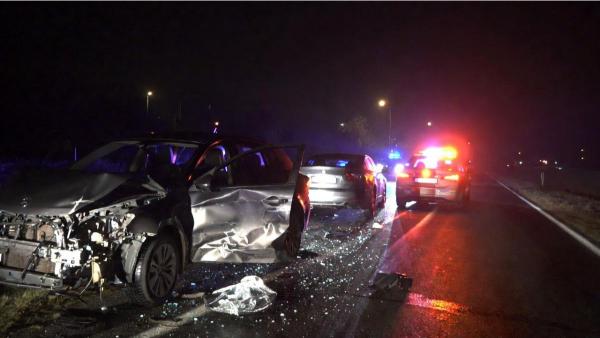
One moment you were driving to work, dropping your kids at school, or heading home after a long day. The next — the sound of impact. Broken glass. A deployed airbag. The smell of burnt rubber. Your hands shaking as you reach for your phone.
And then comes the part nobody teaches you — the part that happens after the accident itself. The calls. The forms. The adjusters. The waiting. The moment the insurance company offers you a number and you have no idea whether to accept it or fight back.
This guide exists for that moment. Every step of the car insurance claim process — explained clearly, honestly, and completely so that you never walk away with less than you deserve.
What the Insurance Company Does Not Want You to Know
Before we walk through the car insurance claim steps — you need to understand one thing that most guides leave out.
Insurance companies are not your friend after an accident. They are a business. Their job is to pay you as little as possible while settling your claim as quickly as possible. The faster they close your case, the better it is for their bottom line. The more you know about the process, the more you can fight for what you are actually owed.
A 2024 study found that claimants who understood the full accident insurance claim guide process received an average of 42% more in their final settlement than those who accepted the first offer.
That number is not a coincidence. It is the result of knowledge. And after reading this guide, you will have it.
Step 1 — Make Sure Everyone Is Safe First
This sounds obvious. In the chaos and adrenaline of an accident, it is easy to focus on the wrong things first.
Before you think about your car, your insurance, or your claim — check yourself and every other person involved for injuries. Call 911 immediately if anyone is hurt, if airbags have deployed, if vehicles are blocking traffic, or if there is any possibility of serious injury.
Do not move injured people unless they are in immediate danger from fire or traffic. Moving someone with a spinal injury without proper training can turn a survivable accident into a permanent disability.
Move vehicles to the side of the road only if it is safe to do so and only if the vehicles are drivable. Turn on hazard lights immediately. If it is dark — stay inside your vehicle if possible or stand well away from traffic behind a guard rail or barrier.
What to do right now at the scene:
- Check yourself for injuries — adrenaline masks pain. You may be hurt without feeling it immediately.
- Check all passengers
- Call 911
- Turn on hazard lights
- Move to safety away from traffic
Step 2 — Call the Police and Get a Report
One of the most important steps in the entire car insurance claim process is one that too many people skip — especially in minor accidents.
Always call the police. Always get a police report.
Here is why this matters so much. When you file your claim, the insurance company will ask for documentation. A police report is the single most powerful piece of documentation that exists — it records the time, location, parties involved, witness statements, and in many cases the officer’s initial assessment of fault.
Without a police report, your claim becomes a situation of your word against the other driver’s word. With a police report that names the other driver as at fault — your claim becomes dramatically stronger.
Even in states where police do not respond to minor accidents, you can visit your local police station and file an accident report yourself. Do it within 24 hours while details are fresh.
Get the police report number before you leave. You will need it when you call your insurance company.
Step 3 — Document Everything at the Scene
Pull out your phone. Start photographing.
The documentation you collect at the scene of the accident is often the difference between a fair settlement and an insulting one. Take more photos than you think you need. You can always delete. You cannot go back.
Photograph every single one of these:
Every angle of your vehicle’s damage — front, back, both sides, interior, deployed airbags, broken glass. Every angle of the other vehicle’s damage. The overall accident scene from multiple positions. Skid marks, debris, fluid spills. The road surface, traffic signs, traffic lights, road markings. Weather conditions — rain, fog, glare, snow. Your own visible injuries — bruising, cuts, swelling.
Exchange information with the other driver:
- Full legal name
- Phone number and address
- Driver’s license number
- License plate number
- Insurance company name and policy number
Talk to witnesses immediately. People leave accident scenes quickly. If anyone stopped to help or witnessed the collision — get their name and phone number before they leave. A witness who saw the other driver run a red light can completely change the outcome of your claim.
Write down your own account of exactly what happened while it is still fresh in your memory — including the direction you were traveling, the speed you were going, what you saw immediately before impact, and exactly what the other driver said to you at the scene.
Step 4 — Seek Medical Attention Immediately — Even if You Feel Fine
This is the step that costs people thousands of dollars — and sometimes their health — when they skip it.
Adrenaline is a powerful painkiller. After a car accident, your body floods with it. Many people walk away from serious accidents feeling completely fine — only to develop severe neck pain, back pain, headaches, or other symptoms 24 to 72 hours later.
Whiplash — the most common car accident injury — frequently does not present symptoms until the day after the crash. Traumatic brain injuries can develop over hours or days. Internal injuries can be entirely invisible until they become life-threatening.
Go to the emergency room or urgent care on the same day as the accident — regardless of how you feel. A same-day medical record connecting your injuries to the accident is one of the most powerful documents in your entire claim file. A gap of even 48 hours between the accident and your first medical visit gives insurance adjusters grounds to argue your injuries were not caused by the collision.
Keep every medical record, every prescription, every receipt for medication, every physical therapy appointment, every follow-up visit. Medical documentation is the foundation of your compensation claim.
Step 5 — How to File a Car Insurance Claim — The Call That Changes Everything
Now you are ready to contact your insurance company and officially begin the car insurance claim process.
Call your insurance company — not the other driver’s insurance company first.
This surprises many people. Even if the accident was entirely the other driver’s fault, you report first to your own insurer. They will coordinate with the other insurance company on your behalf and protect your interests during the process.
When you make that call, have these ready:
- Your policy number
- The police report number
- The date, time, and location of the accident
- The other driver’s information and insurance details
- A clear, factual description of what happened
- A list of all injuries and symptoms you are experiencing
What to say — and what not to say.
Describe the facts clearly and calmly. Do not speculate about fault. Do not say “I think I was going a little fast” or “I may have been partially distracted.” Do not apologize. Do not minimize your injuries by saying “I’m fine” or “it’s probably nothing.” Everything you say to the insurance company is documented and can be used to reduce your payout.
Stick to facts: where you were going, what you observed, what happened, what injuries you have, and what damage your vehicle sustained.
Most insurance companies require you to report the accident within 24 hours — and many policies have strict reporting deadlines. Check your policy. Do not wait.
Step 6 — The Insurance Adjuster — Understanding Their Role
After you file your claim, the insurance company will assign a claims adjuster to your case. Understanding what an adjuster actually does — and what their real objective is — is essential to protecting yourself.
The adjuster’s job is to investigate your claim and determine the value of your losses. They will contact you to discuss the accident, review your documentation, and inspect your vehicle. They seem helpful. They often are friendly. And their job is to resolve your claim for as little money as possible.
When the adjuster contacts you:
- Be polite but be careful
- Do not give a recorded statement without first consulting an attorney if your injuries are serious
- Do not accept blame or share opinions — only facts
- Do not settle quickly if you are still receiving medical treatment
The adjuster will inspect your vehicle — either at your home, at a repair shop, or at an insurance-approved facility — and produce a damage estimate. This estimate is often lower than the actual cost of repair. You have the right to get your own independent repair estimate from a shop of your choosing.
Step 7 — Car Insurance Payout Process — How Compensation Is Calculated
This is the part most people are least prepared for — and the part where the most money is lost.
The car insurance payout process involves calculating two categories of damages.
Economic damages — these are the concrete, documented financial losses from your accident:
- Vehicle repair or replacement cost
- Medical expenses — all current and projected future costs
- Lost wages — the income you lost while recovering
- Transportation costs while your vehicle is being repaired
- Out-of-pocket expenses directly caused by the accident
Non-economic damages — these are real losses that are harder to put a number on:
- Pain and suffering
- Emotional distress
- Loss of enjoyment of activities you can no longer participate in
- Impact on relationships and quality of life
Insurance companies calculate economic damages relatively straightforwardly from your documentation. Non-economic damages — particularly pain and suffering — are where the most negotiation happens and where the biggest gap between the first offer and the fair settlement typically exists.
The first offer is almost never the fair offer. It is a starting point. Adjusters are trained to open with a low number and gauge your response. If you accept immediately, they save money. If you push back with documentation — medical records, repair estimates, evidence of lost wages — the number almost always moves.
How Long Does an Insurance Claim Take?
One of the most common questions people have — and one of the most frustrating realities of the process.
Timeline varies significantly by state, severity, and insurer — but here is a realistic guide:
| Stage | Typical Timeframe |
|---|---|
| Acknowledge your claim | Within 10 to 15 days of filing |
| Investigate and inspect vehicle | 1 to 2 weeks |
| Accept or deny liability | 15 to 40 days in most states |
| Vehicle repair or total loss payment | 2 to 4 weeks after liability confirmed |
| Medical settlement — minor injuries | 1 to 3 months |
| Medical settlement — serious injuries | 6 to 18 months |
| Legal dispute or litigation | 1 to 3 years |
California, Florida, and New York have specific state laws requiring insurers to acknowledge claims within 10 days and make coverage decisions within 40 days — with financial penalties for violators.
Do not rush your settlement if you are still treating injuries. Once you accept a settlement, you typically sign a release that prevents you from ever claiming additional compensation for that accident — even if your injuries turn out to be more serious than initially diagnosed. Always wait until your doctors confirm you have reached maximum medical improvement before settling your injury claim.
What to Do if Your Car Insurance Claim Is Denied
A denied claim is not the end of the road. It is the beginning of a fight that many people win.
Insurance companies deny claims for a variety of reasons — some legitimate, some not. The most common reasons for denial include:
- Lapsed coverage at the time of the accident
- The type of damage is excluded from your specific policy
- The company believes you were at fault or substantially at fault
- Insufficient documentation provided
- The company suspects fraud
If your claim is denied:
First, get the denial in writing. The insurance company is legally required to provide a written explanation of why your claim was denied.
Second, review the denial carefully against your actual policy language. Insurance adjusters sometimes misapply policy terms. What they tell you is not covered and what your policy actually says are not always the same thing.
Third, file a formal appeal with the insurance company. Include every piece of additional documentation that addresses the reason for denial.
Fourth, file a complaint with your state’s Department of Insurance. This is free, creates an official record, and puts pressure on the insurance company to reconsider.
Fifth — and most importantly for significant denials — consult a personal injury attorney. Most work on contingency, meaning you pay nothing unless they win. An attorney can often recover significantly more than you would achieve on your own, particularly when a claim has been wrongly denied.
When to Hire an Attorney for Your Car Insurance Claim
Not every accident requires a lawyer. A minor fender bender with no injuries and clear-cut liability can typically be handled directly. But there are specific situations where having an attorney on your side is not just helpful — it is essential.
Always consult an attorney if:
- You sustained any significant injuries requiring medical treatment
- You missed work due to the accident
- The other driver’s insurance company contacts you directly and asks for a recorded statement
- Your claim has been denied or significantly undervalued
- The accident involved a commercial vehicle — truck, delivery van, rideshare
- There is any dispute about who was at fault
- You are being held partially responsible for an accident that was not your fault
- Your injuries have not fully resolved and the insurance company is pressuring you to settle
The insurance company has an army of adjusters, lawyers, and data analysts working to minimize your payout. Having an attorney means you have a professional advocate who knows how to fight back — and whose entire income depends on maximizing your outcome.
Practical Tips to Maximize Your Car Insurance Claim Payout
These are the specific actions that make the difference between the first offer and the final settlement:
Keep a daily pain journal. Starting the day after your accident, write a brief note about your pain levels, symptoms, activities you could not do, and how your injuries affected your daily life. This journal becomes powerful evidence of pain and suffering in your claim.
Save every receipt. Every prescription, every over-the-counter pain medication, every trip to the doctor, every Uber ride to a medical appointment because your car is being repaired. Every dollar is compensable.
Do not post on social media. Insurance adjusters routinely monitor claimants’ social media accounts. A photo of you at a social event during your recovery — even if you were in pain and pushed through — can be used to undermine your injury claim.
Follow all medical advice. If your doctor recommends physical therapy and you skip sessions, the insurance company will argue your injuries were not as serious as you claimed.
Get multiple repair estimates. You are not required to use the insurance company’s preferred repair shop. Getting independent estimates protects you from low-ball repair valuations.
Never accept the first offer without negotiation. Write a formal counter-demand letter citing your documentation. The act of responding professionally with evidence almost always results in an improved offer.
FAQs — Car Insurance Claim Process
Q1: How do I file a car insurance claim after an accident? Call your insurance company as soon as possible after the accident — ideally within 24 hours. Have your policy number, police report number, other driver’s insurance information, and a clear factual account of the accident ready. Most insurers allow you to file online, through their mobile app, or by phone. Always report to your own insurer first, even if the other driver was at fault.
Q2: How long does a car insurance claim take? Most insurers acknowledge claims within 10 to 15 days. Vehicle repair payments typically follow within 2 to 4 weeks after liability is confirmed. Minor injury settlements usually resolve within 1 to 3 months. Serious injury claims can take 6 to 18 months. Never settle your injury claim until your doctor confirms you have reached maximum medical improvement.
Q3: What happens if the other driver’s insurance denies my claim? Get the denial in writing. Review it against your policy. File a formal appeal with supporting documentation. File a complaint with your state’s Department of Insurance. Consult a personal injury attorney — most work on contingency and charge nothing unless they win your case.
Q4: How is the car insurance payout amount calculated? Payouts cover economic damages — medical bills, lost wages, repair costs, out-of-pocket expenses — and non-economic damages including pain and suffering and emotional distress. The first offer from the insurance company is almost always lower than the fair value. Claimants who negotiate with documentation typically receive significantly more than those who accept the initial offer.
Q5: Should I accept the first settlement offer from the insurance company? Almost never — especially if you are still receiving medical treatment. The first offer is a starting point, not a final answer. Once you sign a settlement release you cannot claim additional compensation later. Always wait until your injuries have fully resolved or reached maximum medical improvement before settling, and always negotiate with documentation.
Q6: Do I need a lawyer to file a car insurance claim? Not for minor accidents with no injuries and clear liability. But if you have any significant injuries, missed work, face a disputed liability situation, or have had your claim denied — consult a personal injury attorney immediately. Most work on contingency, meaning no cost to you unless they win.
Q7: What should I never say to an insurance adjuster? Never say you feel fine, never apologize or admit any fault, never speculate about speed or distractions, never minimize your injuries, and never give a recorded statement without legal advice if your injuries are serious. Everything you say is documented and can be used to reduce your payout.
Conclusion — You Deserve Every Dollar
Nobody chooses to be in a car accident. Nobody chooses the phone calls, the paperwork, the pain, the weeks away from work, or the anxiety of dealing with insurance companies while trying to heal.
But you have rights. Real, legally protected rights to compensation for every dollar you lost, every hour of pain you endured, and every way this accident changed your life.
The car insurance claim process is designed to be complicated. The more confusing it seems, the more likely you are to give up and accept less than you deserve. Now you know every step, every trap, and every strategy to fight back.
Document everything. Follow every step. Never accept the first offer. And if the insurance company plays hardball — get an attorney who will play harder.
You did not cause this. You should not pay for it. 🙏
Note: This guide is for informational purposes only and does not constitute legal or financial advice. Insurance laws, timelines, and regulations vary significantly by state. Consult a licensed attorney or insurance professional for advice specific to your situation.