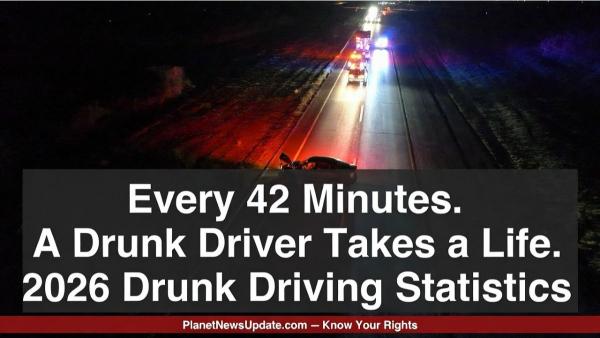
Every 42 Minutes a Drunk Driver Kills Someone in America -Here Is What Victims Are Legally Entitled to Receive
The drunk driving statistics in America in 2026 are not numbers on a page. They are funerals. They are hospital bills. They are children growing up without a parent. Every 42 minutes — right now, as you read this — a drunk driver takes a life somewhere on an American road. Understanding these statistics is not just important. For victims and families, it could be the difference between justice and silence.
In 2023, 12,429 people died in alcohol-impaired driving crashes across the United States — meaning one person was killed every 42 minutes on average. That is not a figure from a distant past. That is the reality of American roads right now.
Every single day, around 920 people are injured in a drunk driving crash — and alcohol-impaired drivers were consistently responsible for approximately 30 to 32% of all motor vehicle traffic deaths in the United States, a proportion that has remained stubbornly stable for years despite overall road safety improvements.
There is one encouraging trend in the 2024 to 2025 preliminary data — total traffic fatalities across America declined by approximately 6 to 8% in early 2025. That is meaningful progress. But here is the sobering reality: the proportion of those deaths caused by drunk driving has not dropped at all. Drunk driving remains responsible for nearly one in three traffic deaths even as other causes improve.
In 2024, approximately 804,926 Americans were arrested for suspected DUI — representing 11% of all arrests nationwide. The economic cost of impaired-driving crashes is staggering.
NHTSA estimates the cost of alcohol-impaired crashes at approximately $68.9 billion annually — while the CDC’s broader estimate, which includes the full societal cost of alcohol-related traffic deaths alone, reaches approximately $143 billion per year. Either figure illustrates the catastrophic scale of this preventable crisis.
Drivers aged 21 to 24 account for the largest share of drunk drivers in fatal crashes at 28%, while drivers aged 65 and older have seen the biggest increase in fatal drunk driving involvement over the past decade — rising by 33% since 2014.
The rate of alcohol impairment among drivers involved in fatal crashes is three times higher at night than during the day — and men are significantly more likely to be involved, with 22% of male drivers in fatal crashes found to be drunk compared to 16% of female drivers.
When it comes to the states with the highest drunk driving fatality rates, Montana consistently ranks among the very worst — with approximately 44% of all fatal crashes involving an alcohol-impaired driver, among the highest proportions of any state in the nation.
South Carolina records the highest per-capita rate of drunk driving crash fatalities at approximately 7.1 to 7.7 deaths per 100,000 people. Hawaii also remains among the states with the highest proportion of alcohol-involved fatal crashes, consistently recording figures above the national average.
The only meaningful response to these numbers is action — both from lawmakers and from victims who refuse to let the system minimize what was done to them.
State by State Compensation Differences — Where You Live Affects What You Get
One of the most important and least discussed realities of drunk driving accident law is this — the state where your crash happened can dramatically affect how much compensation you receive. The legal rules vary significantly across the country, and understanding your state’s approach is essential before you or your attorney begin negotiations.
California is one of the most victim-favorable states in the country for drunk driving cases. Rear-end crashes caused by drunk drivers in California typically result in settlements between $50,000 and $150,000, while head-on collisions can settle between $100,000 and $500,000. Pedestrian accidents involving drunk drivers can reach over $1 million, and wrongful death claims can range from $500,000 to several million dollars when punitive damages are included.
Florida is another strong state for victims. Average DUI accident settlements in Florida range from $200,000 to $250,000 depending on injury severity and case details. Florida also allows punitive damages to punish egregious drunk driving behavior, and the state’s Victim Compensation program provides a secondary avenue for recovery even when insurance coverage is inadequate.
Texas combines aggressive Dram Shop Laws with strong punitive damage availability. In Texas, if bars or restaurants served alcohol to a visibly intoxicated driver, they can be held partially responsible for the resulting accident — and both the driver and the establishment can be named as defendants in your lawsuit. Texas has seen some of the largest drunk driving settlements in the country, including a historic $150 million settlement in a fatal crash involving a commercial truck driver.
Washington State takes a different approach. Washington drunk driving settlements can range from $10,000 to over $500,000, but the state does not allow punitive damages in personal injury cases — even in drunk driving cases involving criminal conduct. This makes the attorney’s ability to maximize economic and non-economic damages even more critical in Washington cases.
Missouri and other pure comparative fault states follow rules that allow victims to recover compensation even if they were partially at fault for the crash — though their recovery is reduced by their percentage of fault. This is a critical distinction that varies by state and directly impacts what you can recover.
The bottom line is simple — always hire a drunk driving accident lawyer who is licensed and experienced in the specific state where your accident occurred. State law differences are not minor footnotes. They are the framework that determines your financial future.
When Should You Hire a Drunk Driving Accident Lawyer?
Real Case Settlement Examples — What Victims Have Actually Received
Nothing illustrates the real-world value of having a strong drunk driving accident lawyer better than looking at actual settlement outcomes. These are real cases — not estimates or projections.
$45 Million — California Spinal Cord Injury Case A high-speed collision caused by a drunk driver left a victim with permanent spinal cord injuries and severe cognitive impairment. The defendant’s blood alcohol content was more than double the legal limit. The case settled for $45 million to cover future medical care, lost earnings, and pain and suffering. This remains one of the largest drunk driving settlements in California history.
$2 Million — Fatal Drunk Driving, Missouri A family whose loved one was killed by a drunk driver pursued a wrongful death lawsuit and secured a $2 million settlement. The case was handled by a firm experienced in both the criminal and civil dimensions of drunk driving fatalities — a combination that proved decisive in the outcome.
$500,000 — Bar Liability, California A drunk driver who carried only limited personal insurance was involved in a serious crash. The victim’s attorney pursued a Dram Shop claim against the bar that had overserved the driver, resulting in a combined settlement of $500,000 — far more than the driver’s own policy would ever have covered.
$350,000 — Children Injured, California A driver who failed field sobriety tests collided with a family vehicle, injuring two children. Both required orthopedic surgery and counseling. The total settlement reached $350,000, distributed between the children and their parents.
$301,000 — Chronic Back and Neck Injuries A rear-end crash caused by a drunk driver led to chronic back and neck pain. After months of physical therapy and a missed career opportunity, the claim settled for $301,000.
$250,000 — Florida Policy Limits Settlement A victim with severe injuries from a drunk driving crash received the driver’s full insurance policy limits of $250,000. The insurance company made the decision to tender their entire policy rather than risk a larger jury verdict at trial.
These cases illustrate a consistent pattern — the more serious the injury, the more aggressively the attorney pursues every available avenue, and the higher the final outcome. The difference between a $30,000 settlement and a $500,000 settlement is often not the crash itself. It is the attorney who handled the case.
Timeline of a Typical Drunk Driving Lawsuit — What to Expect and When
One of the most common questions victims ask their attorney is simple — how long is this going to take? Understanding the typical timeline of a drunk driving lawsuit helps set realistic expectations and reduces the anxiety of an already stressful process.
Day 1 to Week 2 — Immediate Response The clock starts the moment the crash happens. Your attorney files a formal letter of representation, puts the insurance company on notice, and begins preserving critical evidence — surveillance footage, police reports, toxicology results, and witness statements. Medical documentation of your injuries begins immediately.
Week 2 to Month 3 — Investigation and Medical Treatment Your attorney conducts a thorough investigation of all liable parties — the driver, any establishments that overserved them, and any other contributing factors. You continue receiving medical treatment. Your attorney monitors your medical progress carefully because the full extent of your injuries must be documented before any demand can be made.
Month 3 to Month 6 — Demand Letter Once your medical treatment is complete or your condition has stabilized, your attorney prepares a formal demand letter to the insurance company outlining all damages — medical expenses, lost wages, pain and suffering, and punitive damage claims. This demand letter is typically the most important document in your case.
Month 6 to Month 12 — Negotiation Insurance companies rarely accept the first demand. Your attorney negotiates aggressively on your behalf. Most drunk driving cases — the vast majority — settle during this phase without ever going to trial.
Month 12 to Month 24 — Litigation if Necessary If the insurance company refuses to offer fair compensation, your attorney files a civil lawsuit. The litigation process includes depositions, discovery, expert witnesses, and pretrial motions. The overwhelming majority of cases settle before reaching trial — but having a lawyer willing and prepared to go to trial is what forces insurance companies to take your case seriously.
Trial — If Required A small percentage of cases go to full trial before a jury. In drunk driving cases, juries are typically very sympathetic to victims and very willing to award significant punitive damages. The threat of trial is your attorney’s most powerful negotiating tool — and defendants know it.
Understanding this timeline helps you stay patient, stay focused on your recovery, and trust the process your attorney is managing on your behalf.
What Happens If You Are Partially at Fault in a Drunk Driving Accident?
This is a question many victims are afraid to ask — but it is one of the most important in determining what you can recover. The good news is that being partially at fault does not automatically eliminate your right to compensation. How much it reduces your recovery depends entirely on which state your accident occurred in.
Pure Comparative Fault States In pure comparative fault states — including California, New York, Florida, and Missouri — you can recover compensation even if you were 99% at fault for the accident. Your recovery is simply reduced by your percentage of fault. If you were found 20% responsible and your total damages are $200,000, you receive $160,000. Being partially at fault does not bar you from recovery.
Modified Comparative Fault States Most states — including Texas, Illinois, and Colorado — follow a modified comparative fault rule. You can recover compensation as long as you were less than 51% (or in some states, 50%) at fault. If you are found to be 51% or more at fault, you recover nothing. This makes the exact percentage of fault determination critical in these states.
Contributory Negligence States A small number of states — including Alabama, Maryland, North Carolina, and Virginia — follow the harshest rule of all. Under pure contributory negligence, if you are found even 1% at fault for the accident, you are barred from recovering any compensation at all. In these states, having an experienced attorney who can fight against any attempt to assign you partial fault is absolutely essential.
How Drunk Driving Changes the Fault Calculation Here is something critically important that many victims do not know — the fact that the other driver was drunk is a powerful factor that courts and juries weigh heavily when assigning percentages of fault. Even in cases where a victim made a minor traffic error that contributed to the collision, the drunk driver’s decision to operate a vehicle while impaired is treated as the primary and overriding cause of the crash in the vast majority of jurisdictions.
Courts consider driving under the influence as demonstrating conscious disregard for the rights and safety of others — which not only satisfies the legal standard for punitive damages but also significantly influences how fault is assigned between the parties.
An experienced drunk driving accident lawyer knows how to protect you from inflated fault percentages assigned by insurance companies trying to reduce their payout. Never accept an insurance company’s initial fault determination without having your attorney review it first. That initial percentage is a negotiating position — not a legal verdict.
All settlement figures and case examples are sourced from ConsumerShield, Megeredchian Law, Baumgartner Law Firm, Lehmbecker Law, and Helbock Law as of 2025–2026. Individual results vary based on case circumstances, jurisdiction, and legal representation. This content is for informational purposes only and does not constitute legal advice.