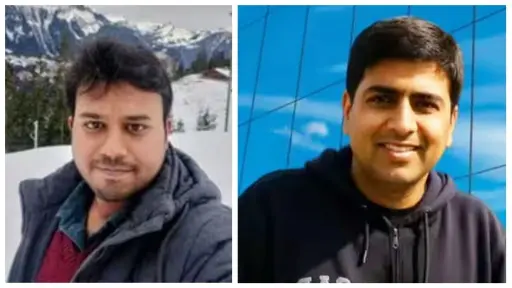
Amar Subramanya: From Bengaluru to Apple – The New King of Apple Intelligence
In the fast-moving world of artificial intelligence, innovation happens at lightning speed. Companies in Silicon Valley compete fiercely for top talent. Few news stories capture attention like a leadership change at Apple.
Today, we explore the story of Amar Subramanya—a Bangalore-born prodigy. His journey from the busy streets of India’s tech hub to global AI leadership is a true Silicon Valley immigrant success story.
At 46, Subramanya has been named Apple’s Vice President of AI. He now leads Apple’s push into generative AI. He replaces John Giannandrea, who is retiring after nearly ten years of shaping Siri and Apple’s AI.
Subramanya combines academic excellence, engineering skill, and strategic vision. This is more than a hire; it could change how we use iPhones, Macs, and other Apple devices.
This blog post covers his full journey—from his early life to his AI research, career at Google and Microsoft, and his private personal life.
Amar Subramanya From Bangalore to Silicon Valley: Early Life and Education
Amar Subramanya was born in Bangalore, India’s Silicon Valley. He grew up in the late 1970s in a city full of energy and technology. His early exposure to engineering shaped his love for innovation.
He grew up in a middle-class family. His parents valued education and hard work, though details remain private. They encouraged curiosity and discipline.
In 2001, he graduated from Bangalore University with a Bachelor of Engineering (BE) in electrical, electronics, and communications. This degree gave him strong technical skills.
Subramanya’s desire to learn more took him to the United States. He studied at UC Berkeley from 1997 to 2001, strengthening his computer science and engineering knowledge.
He then pursued a PhD at the University of Washington, Seattle (2005–2009). His research focused on semi-supervised learning and graphical models. These techniques train AI systems even when labeled data is limited. At that time, data scarcity was a big challenge for AI.
He also worked on speech recognition, natural language processing (NLP), and human activity analysis. He blended theory with practical applications.
Amar speaks English (native), Hindi (professional), and Kannada (full professional). This multilingual skill helps him work on global AI systems.
He earned several awards, including the Microsoft Research Graduate Fellowship in January 2007, which recognized his leadership potential in AI. He worked as a visiting researcher at Microsoft Research, focusing on multi-sensory fusion for speech systems and speaker verification.
These years also marked the start of his life in the U.S. He built a network that supported his career while staying connected to his Indian heritage.
Pioneering Research: PhD and Early Contributions
His PhD work was not just academic. It launched him into groundbreaking research in semi-supervised learning. This field lets AI learn from large datasets without full labeling.
He focused on graphical models, which show relationships in data like nodes in a graph. This helped AI scale and become efficient. His work solved the “cold start” problem in traditional supervised learning.
One major achievement was co-authoring the book “Graph-Based Semi-Supervised Learning” with Partha Pratim Talukdar. This book became a key reference in machine learning courses worldwide.
During this time, he published papers on:
- Entity resolution (merging duplicate records)
- Multilingual NLP (AI handling many languages)
- Cross-document coreference (linking entities across texts)
- Audio-visual speech enhancement (improving speech in noisy environments)
These contributions powered early voice assistants and search engines. They also laid the foundation for today’s generative AI.
His personal website and Google Research pages highlight his main interests: machine learning and NLP. He served as a Senior Research Scientist at Google. Talks and workshops from this time focused on scalable AI.
He also developed discipline and work-life balance habits that helped him sustain innovation over the long term.
Must Read: Is Allstate the Right Choice for Insurance in 2026? Good or Too Expensive?
A Stellar 16-Year Tenure at Google
Amar joined Google in 2009 as a researcher. Over 16 years, he grew from a hands-on AI engineer to a leader overseeing major projects.
By 2023, he became head of engineering for Gemini, Google’s multimodal AI model with up to 1.2 trillion parameters.
He led teams of over 100 engineers to integrate text, image, and video AI into Google products like Search, YouTube, and Android. These tools became smarter and more proactive.
He emphasized privacy-first AI, using synthetic and licensed data instead of harvesting user data. This approach aligns with Apple’s philosophy.
Achievements at Google include:
- Scaling foundation models for real-time applications
- Contributing to advanced NLP papers
- Leading cross-functional collaborations for Gemini
- Improving entity resolution for Google’s knowledge graph
- Advancing multilingual NLP for global reach
He described Google as a place of “relentless excellence”, which built his resilience and strategic skill.
Brief but Impactful Stint at Microsoft
In July 2025, Amar joined Microsoft as Corporate Vice President (CVP) of AI.
He worked on Copilot, the enterprise AI in Office, Azure, and Teams. He focused on multimodal integration, AI safety, and evaluation.
He noted that Microsoft had a “low-ego but ambitious” culture, which contrasted with Google’s intensity. This environment allowed him to thrive.
Though his time at Microsoft was short, he showed adaptability, bridging consumer AI at Google with enterprise AI at Microsoft.
The Apple Chapter: A New Era for Apple Intelligence
On December 2, 2025, Amar became Apple’s VP of AI, reporting to Craig Federighi.
He now oversees Apple Foundation Models, machine learning research, and AI Safety and Evaluation.
Apple wants to catch up in on-device generative AI, where rivals like Samsung are ahead. Amar’s privacy-first approach fits Apple’s user-centered model.
Apple CEO Tim Cook praised his deep expertise in AI. Industry observers called the hire a “talent coup”, and Indian media celebrated it as a success story.
Key Research and Publications: Shaping AI’s Core
Amar’s research has been influential. Key works include:
- Graph-Based Semi-Supervised Learning (book with Partha Pratim Talukdar)
- Entity resolution papers
- Multilingual NLP advancements
- Cross-document coreference resolution
- Audio-visual speech enhancement
His research helped Google Gemini scale to trillion-parameter AI. Awards like the Microsoft Research Fellowship and UC Berkeley Engineering Leadership Professional Program (2015) support his credentials.
Personal Life: Privacy, Family, and Balance
Amar keeps a very private personal life.
He was born around 1979 in Bengaluru, likely of Kannada-speaking background. He values his family and cultural roots.
He is married and has two children. Names and professions are private. He occasionally mentions them as inspiration during work.
He describes himself as a “low-ego collaborator” who balances work and family life. He advocates for sustainable innovation.
He enjoys philosophy, especially works by Jiddu Krishnamurti, and mentors young AI talents quietly.
He lives in Menlo Park, California, and maintains a professional-only LinkedIn profile. No personal social media.
What This Means for Apple and the AI Landscape
Amar’s arrival is timely. Apple, behind in generative AI, now focuses on on-device AI for privacy.
His Gemini experience may make Apple Intelligence multimodal—combining text, images, and audio. Siri could evolve significantly.
Microsoft loses a CVP, Google loses a Gemini architect, and Apple gains top talent. His appointment is inspiring for Indian-origin tech professionals.
Challenges include Apple’s secretive culture, fast product timelines, and AI ethics regulations. Amar’s low-ego, ambition-driven style suits these challenges.
Conclusion: A Visionary for the AI Age
Amar Subramanya is more than an executive. He is a bridge between Bangalore’s engineering labs and Apple’s AI labs.
At 46, he has over 20 years of achievements and a quiet, family-centered personal life.
Apple’s AI is in strong hands. Amar is not just catching up—he is reshaping the AI race.
FAQs
Why did John Giannandrea step down as Apple’s AI chief?
John Giannandrea is stepping down after leading Apple’s AI division since 2018. He will continue as an advisor until his retirement next spring. The move comes amid reports that Apple has fallen behind its peers in AI development.
What teams and responsibilities will Amar Subramanya oversee at Apple?
Amar Subramanya will lead Apple’s foundation models, AI research, and AI safety teams. Other AI-related teams previously under Giannandrea will be reassigned to COO Sabih Khan and Services Chief Eddy Cue. He will report to software chief Craig Federighi.
How is Apple approaching AI differently from companies like Microsoft and Google?
Apple focuses on on-device AI rather than cloud-based models. It spends less on AI infrastructure but prioritizes user privacy. Apple has also partnered with OpenAI to integrate ChatGPT into products like Siri, while continuing to develop its own Apple Intelligence suite and hardware solutions.
How did Apple try to accelerate AI development before Subramanya joined?
Apple reassigned engineers from other projects, including the self-driving car program, to focus on building Apple Intelligence, a new AI system. They aimed to catch up with competitors but faced setbacks, delaying key releases like the improved Siri assistant.
What is the significance of Subramanya reporting to Craig Federighi?
By reporting to Apple’s software chief, Subramanya can align AI research closely with Apple’s products and software ecosystem. Federighi had already played a key role in AI efforts, and this reporting structure ensures faster integration of AI features like Siri and Apple Foundation Models.
Why was Apple struggling with Siri under John Giannandrea?
Despite his expertise, Giannandrea faced challenges improving Siri. Upgraded versions were delayed because they did not meet Apple’s quality standards. Features like notification summaries caused errors, and Apple lagged behind competitors using generative AI, such as ChatGPT.