2026 Winter Paralympics: Google Doodle Celebrates the Start of Winter Sports on March 6 – 79 Medals, 665 Athletes, Schedule & Everything
On March 6, 2026, anyone who opened Google’s homepage saw something special sitting above the search bar — a colorful, animated celebration of winter sports, marking the official opening of the 14th Winter Paralympic Games in Milano and Cortina d’Ampezzo, Italy.
While the world had been watching the Winter Olympics unfold across the same stunning Italian venues since February 6, the Paralympics — the Games that often produce the most astonishing athletic performances, the deepest human stories, and the most powerful reminders of what the human body and spirit can accomplish — were just beginning.
This is your complete guide to everything happening in Italy from March 6 to March 15, 2026.
2026 Winter Paralympics at a Glance
| Official Name | Milano Cortina 2026 Winter Paralympic Games |
| Edition | 14th Winter Paralympic Games |
| Dates | March 6–15, 2026 (wheelchair curling from March 4) |
| Host Cities | Milan, Cortina d’Ampezzo, Verona, Val di Fiemme |
| Host Country | Italy |
| Athletes | 665 (record) |
| Sports | 6 |
| Medal Events | 79 (record) |
| Countries Participating | 56 National Paralympic Committees |
| Opening Ceremony | March 6 — Verona Arena — “Life in Motion” |
| Opening Ceremony Time | 2 p.m. ET |
| Closing Ceremony | March 15 — Cortina Curling Olympic Stadium — “Italian Souvenir” |
| Google Doodle | “Winter Sports Begin 2026” — published March 6, 2026 |
| Mascot | Milo the stoat (Paralympic) / Tina the stoat (Olympic) |
| Paralympic Torch Name | “Essential” |
| Flame Lit At | Stoke Mandeville Hospital, UK |
| Torchbearers | 501 — covering 2,000 km |
| Medal Design | Braille on front face — two uneven mirroring semicircles |
| First Gold Medals | March 7 — Para alpine skiing women’s downhill VI + Para biathlon women’s sprint sitting |
| Final Event | Para ice hockey gold medal game — March 15 |
| US TV Coverage | NBC, USA Network, CNBC, Peacock |
| Streaming | Olympics.com + official app |
| All-Time Most Medals | Austria — 345 |
| All-Time Most Golds | Norway — 140 |
| Most Decorated Athlete | Ragnhild Myklebust (Norway) — 27 medals |
| Team USA Athletes | 72 |
| US Para Hockey Goal | Unprecedented 5th consecutive gold |
| Ticket Prices | From EUR 15 (89% under EUR 35) |
| New Event | Wheelchair curling mixed doubles (Paralympic debut) |
| 50th Anniversary | First Winter Paralympics held 1976 in Örnsköldsvik, Sweden |
On March 6, 2026, Google published a Doodle titled “Winter Sports Begin 2026” — joining the global celebration of the opening of the Milano Cortina 2026 Paralympic Winter Games. The Doodle appeared on Google’s homepage, the most visited page on the internet, greeting hundreds of millions of daily users with a colorful animated celebration of winter Para sports.
Google’s decision to mark the opening of the Winter Paralympics with a dedicated Doodle is significant. Google’s Doodles have evolved significantly since their modest beginnings. The company’s first altered logo appeared in 1998, when founders Larry Page and Sergey Brin inserted a playful graphic to signal they were attending the Burning Man festival. What began as a simple out-of-office indicator has since grown into a creative tradition, with more than 5,000 Doodles produced to commemorate historic events, cultural icons, and global celebrations. When Google chooses to mark an event with a Doodle, it is choosing to tell a billion people simultaneously that this thing matters, that it deserves your attention, that it is worth celebrating.
The 2026 Winter Paralympics deserve every bit of that attention. With 665 Para athletes and 79 sets of medals to be awarded, Milano Cortina 2026 will feature a record number of athletes and medals. The Games are being held against the backdrop of the Dolomites — one of the most breathtakingly beautiful mountain landscapes on earth — and inside venues that range from a brand-new 14,000-seat ice hockey arena to a Roman amphitheater that is nearly 2,000 years old.
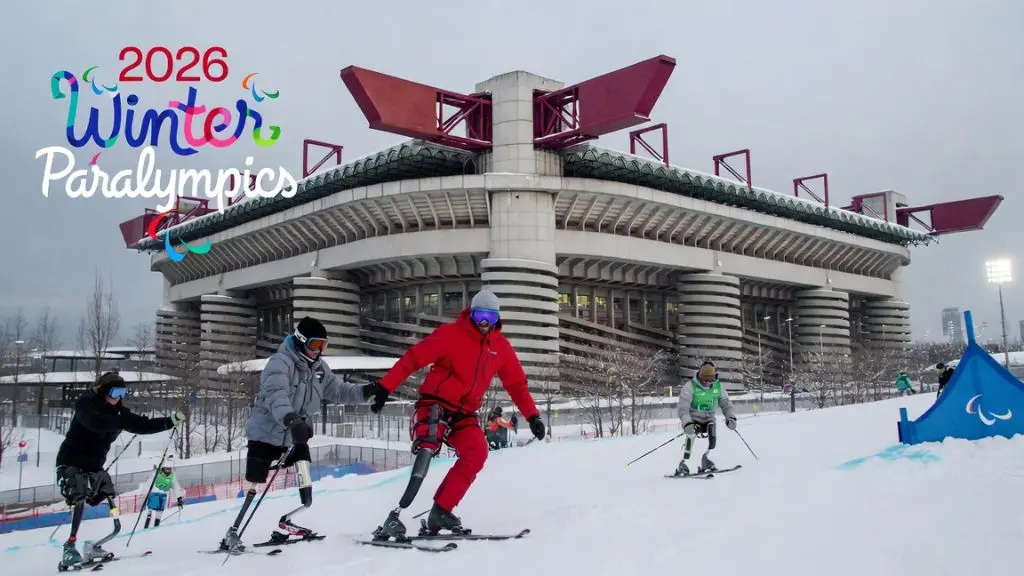
The Winter Paralympics were held in Italy for the first time in 2006
This is not a smaller, quieter version of the Winter Olympics that ended on February 22. This is its own extraordinary event, with its own extraordinary athletes, its own extraordinary stories, and its own capacity to stop your breath.
Part One: What Are the Winter Paralympics?
The Basics: Definition and History
The Paralympic Games are the premier international multi-sport event for athletes with physical, vision, and intellectual impairments — held in the same host cities as the Olympic Games, using the same venues, and governed by the International Paralympic Committee (IPC).
This edition marks the 50th anniversary of the first Winter Paralympics, which were held in Örnsköldsvik, Sweden, in 1976. Half a century of winter Para sport. Half a century of athletes who were told, in various ways and by various voices, that their bodies were not capable — and who responded by racing down mountains at 100 kilometers per hour and skiing across frozen Nordic landscapes for dozens of kilometers and shooting targets with precision that sighted competitors would envy.
The 2026 Winter Paralympics, also known as the Milano Cortina 2026 Winter Paralympic Games, is the 14th edition of the Winter Paralympic Games. It is taking place from 6 to 15 March at sites across Lombardy and Northeast Italy.
This will be the third Paralympic Games hosted in Italy, following the 1960 Summer Paralympics in Rome — the inaugural Paralympic Games — and the 2006 Winter Paralympics in Turin. Italy has a deep and historic connection to the Paralympic movement that makes 2026 feel like a homecoming in the truest sense.
Records Being Set in 2026
More than 650 of the world’s best athletes with disabilities will compete for 79 gold medals across six sports. The number of athletes and medals available makes this the largest Winter Paralympics in history — a reflection of the growing global reach and participation of the Paralympic movement.
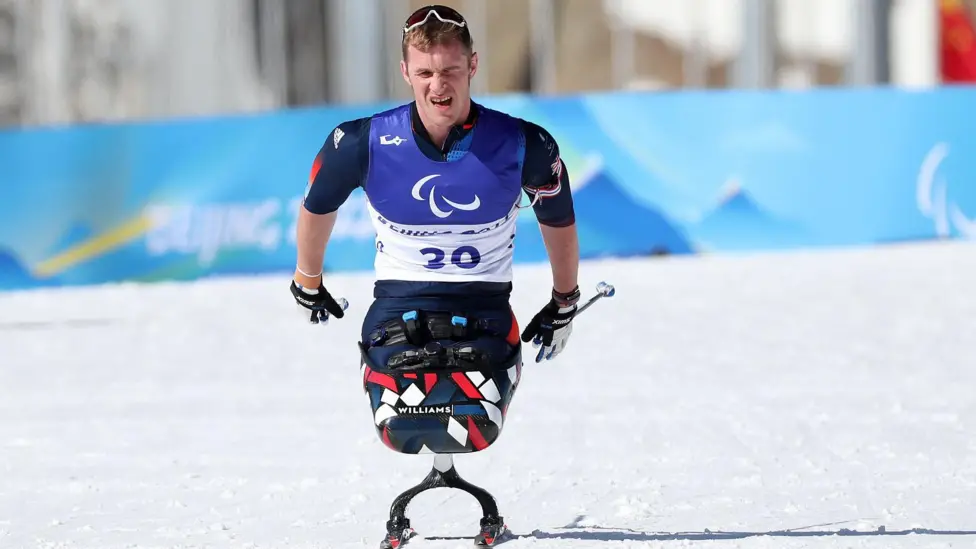
Scott Meenagh lost both of his legs when he stepped on an improvised explosive device (IED) while serving in Afghanistan in 2011
A total of 56 National Paralympic Committees have qualified athletes for the Games. Fifty-six countries. From every continent. All of them sending their best athletes to compete on Italian snow and ice.
Part Two: Where and When — The Host Cities and Venues
Milano Cortina 2026: A Multi-City Marvel
Competition takes place across four locations: Milan, Verona, Tesero and Cortina d’Ampezzo. The geographic spread of the Games — across multiple Italian cities and regions — makes 2026 the most geographically expansive Winter Paralympics in recent history.
It will be the first Paralympic Games since Tignes-Albertville 1992 to officially feature multiple host cities, and will be the first Winter Paralympics since Vancouver 2010 where the opening and closing ceremonies will be held in different venues.
The Five Competition Venues
Five competition venues will be used for the 2026 Paralympic Games, in addition to non-competitive venues including three Paralympic Villages:
Milano Santagiulia Ice Hockey Arena — Para ice hockey: Built specifically for the Milano Cortina Games, this new 14,000-seat venue will be converted into a multi-use center for sports and live entertainment after the Paralympics. It is the newest and largest dedicated venue of the Games — a gleaming modern arena that will host the ice hockey tournament from start to finish, including what will be the final competitive event of the Games before the Closing Ceremony.
Tofane Alpine Skiing Centre, Cortina d’Ampezzo — Para alpine skiing: The legendary Cortina slopes that have hosted international skiing competitions for decades become the theater for Para alpine skiing — athletes racing down at speeds that exceed 100 kilometers per hour in sitting, standing, and visually impaired categories. Para Alpine skiing takes place from 7–15 March at the Tofane Alpine Skiing Centre.
Tesero Cross-Country Skiing Stadium — Para biathlon and Para cross-country skiing: Located in Val di Fiemme, the Tesero stadium is one of the most celebrated cross-country skiing venues in the world — having hosted multiple World Championships and World Cup events. It becomes the home of both Para biathlon and Para cross-country skiing at the 2026 Games.
Cortina Para Snowboard Park — Para snowboard: The snowboard park at Cortina hosts the banked slalom and snowboard cross events. Para snowboard will be held at the Cortina Para Snowboard Park in the banked slalom and snowboard cross events. Competition takes place on 7–8 and 14 March with eight medal events across the board.
Cortina Curling Olympic Stadium — Wheelchair curling and Closing Ceremony: The Cortina Curling Olympic Stadium will welcome the world’s top curlers as they compete for Paralympic Winter Games medals. Originally built for the 1956 Winter Olympics — the first held in Italy — and home to the Opening Ceremony and figure skating of those Games.
The Paralympic Villages
Three Paralympic Villages serve the 2026 Games — the Milano Olympic and Paralympic Village for the ice hockey athletes, the Predazzo Olympic and Paralympic Village for the biathlon and cross-country skiing competitors, and a third village serving the alpine skiing, snowboard, and curling athletes in the Cortina region.
Part Three: The Opening Ceremony — Life in Motion at the Verona Arena
March 6, 2026: The Most Historic Venue in Paralympic History
The opening ceremony is scheduled for 6 March 2026 at the Verona Arena in Verona, entitled “Life in Motion,” with production by Filmmaster Group.
The Verona Arena is not a modern stadium. It is a Roman amphitheater built in the first century AD — nearly 2,000 years ago — that has been hosting public spectacles, operas, and performances continuously for almost two millennia. It is one of the best-preserved ancient Roman structures in the world, with a seating capacity of approximately 15,000 people. The Roman amphitheater has undergone extensive works ahead of the ceremony to improve accessibility for persons with disabilities.
The decision to hold the Paralympic Games’ opening ceremony inside a 2,000-year-old Roman amphitheater — and to modify that amphitheater specifically to make it accessible for athletes and spectators with disabilities — is both practically complex and deeply symbolic. Accessibility was not a consideration when the Romans built the Arena. It is the central consideration of the Paralympic movement. The 2026 Games chose to hold their opening moment inside one of the oldest public gathering places in Western civilization and made it work for everyone.
The opening ceremony will take place at 2 p.m. ET on March 6. For American viewers, that is early afternoon. The ceremony airs live on USA Network and Peacock.
The Torch Relay: From Stoke Mandeville to Verona
The torch relay took place from 24 February to 6 March 2026, with 501 torchbearers covering 2,000 kilometres. The flame was lit at the Stoke Mandeville Hospital in the United Kingdom.
The Stoke Mandeville Hospital in Buckinghamshire, England, is not an arbitrary choice for the lighting of the Paralympic flame. It is the birthplace of the Paralympic movement itself — the hospital where Dr. Ludwig Guttmann organized the first Stoke Mandeville Games for World War II veterans with spinal injuries in 1948, a small local competition that became the direct precursor to the Paralympic Games as we know them today. Every Paralympic flame begins where the movement began — in the English countryside, at a hospital that changed the world by deciding that disabled veterans deserved sport and competition and the dignity of athletic excellence.
The flame was sent to five Italian cities; the relay visited Cortina d’Ampezzo, Venice, and Padua, ending at the Verona Arena for the opening ceremony.
The Paralympic Flame arrived in Milan on February 25, 2026. Forty-nine torchbearers carried the flame through the city centre, starting from Largo Cairoli and arriving in Piazza Duomo via Via Dante and Piazza Cordusio. Giorgio Minisini and Arianna Sacripante lit the Paralympic Cauldron on the stage in Piazza Duomo.
The Torch Itself: Named “Essential”
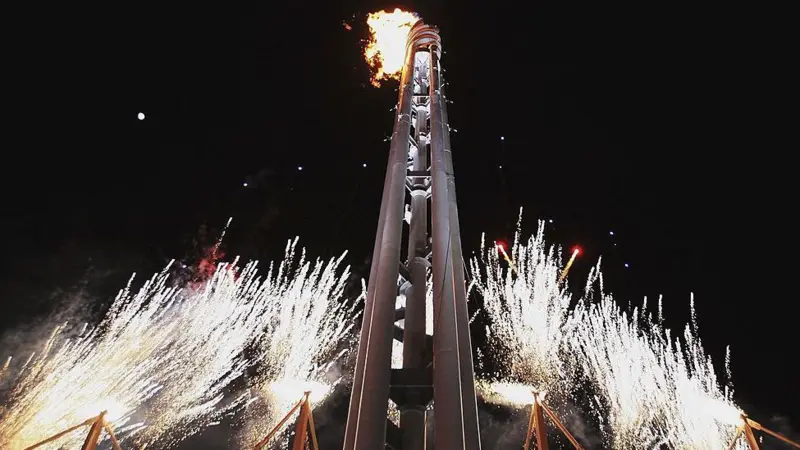
The Paralympic torch is bronze. Named “Essential” — developed by Eni and its subsidiary Versalis, designed by Studio Carlo Ratti Associati and produced in Italy by Cavagna Group — the torches are made primarily of an alloy of recycled aluminium and bronze. The name carries its own quiet philosophy. What is essential? Movement. Competition. Inclusion. The human body doing what it was made to do, regardless of what shape that body takes.
Closing Ceremony: March 15 at the 1956 Olympic Venue
On 15 March, the Games will close at the Cortina Curling Olympic Stadium, a venue that staged the Opening Ceremony of the 1956 Olympic Winter Games. The closing ceremony is entitled “Italian Souvenir.” Opening at the oldest surviving Roman amphitheater in Italy. Closing at the venue that opened the very first Italian Winter Olympics. The 2026 Games are wrapped in Italian history from first moment to last.
Part Four: The Six Sports — Everything You Need to Know
Sport 1: Para Alpine Skiing — Speed, Precision, Courage
Para alpine skiing is an exciting, technical, and daring sport in which athletes race down steep slopes at speeds of over 100 kilometres per hour. The sport has featured at every Paralympic Winter Games since the inaugural edition in 1976.
Athletes compete in three categories: sitting (athletes with lower limb impairments who use a mono-ski or bi-ski), standing (athletes with upper or lower limb impairments who stand on one or two skis), and vision impaired (athletes who race with a sighted guide who skis ahead or beside them, communicating the course via earpiece).
Athletes will compete in 30 medal events at Milano Cortina 2026. Thirty medal events — the largest program of any single sport at the Games. Events include downhill, super-G, super combined, giant slalom, and slalom, all across the three disability categories.
Sport 2: Para Biathlon — Skiing and Shooting
Para biathlon combines cross-country skiing with rifle shooting — athletes ski a course, stop at a shooting range, aim at targets using laser-equipped rifles, and ski on. Missing a target results in either a time penalty or an additional penalty loop, making accuracy as important as speed.
The sport made its Winter Paralympic debut in 1988 and has been one of the most watched events at every Games since. The combination of cardiovascular endurance, technical skiing skill, and the fine motor control required for precise shooting creates a multi-dimensional athletic challenge that is genuinely unlike anything else in sport.
Sport 3: Para Cross-Country Skiing — The Foundation Sport
Para cross-country skiing has been at every edition of the Winter Paralympics since the inaugural event in 1976, with only Para Alpine skiing sharing that distinction. It is the foundational Winter Paralympic sport — 50 years of continuous history, 50 years of athletes pushing human endurance across frozen Nordic terrain.
The Para cross-country skiing events start on Day 4 of the Paralympic Winter Games, beginning with the sprint races on 10 March. Competition concludes on the final day of Milano Cortina 2026, 15 March, with the IS Free VI races.
One of the sport’s special caveats is that many Para athletes compete across both cross-country and Para biathlon. The most decorated winter Para athlete in history — Norwegian skier and biathlete Ragnhild Myklebust — won 27 medals across the two sports between 1988 and 2002.
Sport 4: Para Ice Hockey (Sled Hockey)
Sled hockey will take center stage at the Milano Santagiulia Ice Hockey Arena.
Para ice hockey — known in North America as sled hockey — is played on sleds rather than skates. Athletes propel themselves with two short sticks that have picks on one end for propulsion and blades on the other for shooting. The sport is fast, physical, and relentlessly exciting — closer in its intensity to NHL hockey than to anything that the word “Paralympic” might lead you to expect.
The United States enter the Games seeking an unprecedented fifth consecutive Paralympic gold medal in Para ice hockey. Team USA Paralympians have won 335 Winter Paralympic medals through Beijing 2022.
The gold-medal hockey game will close out the Paralympics and is scheduled to be the final event of the Games before the Closing Ceremony. The final competition event of the 2026 Winter Paralympics will be the Para ice hockey gold medal game — a perfect ending to a Games that begins with alpine skiing and ends with the sport that best captures the Games’ intensity and drama.
Sport 5: Para Snowboard — The Newest Discipline
Para snowboard made its Paralympic debut at the 2014 Sochi Winter Games and has brought a youthful, visually spectacular energy to the Paralympic program ever since. Athletes compete in banked slalom — navigating a course of banked turns as quickly as possible — and snowboard cross, where multiple athletes race down a course simultaneously.
Eight medal events will be contested at the Cortina Para Snowboard Park. The Cortina mountain backdrop provides the kind of visual drama that makes snowboard events some of the most immediately compelling in the Paralympic program.
Sport 6: Wheelchair Curling — Strategy on Ice
Cortina d’Ampezzo is the place to be for wheelchair curling, which began prior to the Opening Ceremony on 4 March. The sport made its Paralympic debut at Torino 2006, and returns to Italian ice.
Wheelchair curling differs from Olympic curling in one significant way: there is no sweeping. Athletes deliver the stone from a stationary wheelchair, making shot selection and delivery precision even more critical. The result is a sport that rewards intelligence, strategy, and technique above all other qualities.
One medal event — wheelchair curling mixed doubles — will be featured at the Winter Paralympics for the first time. The introduction of mixed doubles at the 2026 Games reflects the Paralympic movement’s continuing evolution — adding new formats that increase participation and create new competitive opportunities.
Part Five: The Complete Schedule — Day by Day
The Opening Ceremony for the 2026 Paralympics took place Friday, March 6. While that marks the “beginning” of the games, some sports — like wheelchair curling and Para alpine skiing — were already underway. Both of those events began Wednesday, March 4.
Here is the complete competition schedule:
March 4 (Wednesday) — Day -2: Wheelchair curling mixed doubles preliminary round begins. Para alpine skiing training runs at Tofane. The Games are technically underway before the opening ceremony.
March 5 (Thursday) — Day -1: Wheelchair curling mixed doubles continues. Alpine skiing preparation continues on the Tofane course.
March 6 (Friday) — Day 1: Opening Ceremony The Games officially open at the Verona Arena with the “Life in Motion” ceremony at 2 p.m. ET. Wheelchair curling continues. The Paralympic flame burns in Verona.
March 7 (Saturday) — Day 2: First Medals Following the Opening Ceremony on 6 March, the first medals of the Games are to be awarded in the Para Alpine skiing women’s downhill VI and the Para biathlon women’s sprint sitting events, both on 7 March. The first gold medals of the 2026 Winter Paralympics go to a visually impaired alpine skier and a sitting biathlete. The Games begin with a celebration of two of their oldest and most beloved sports.
March 8 (Sunday) — Day 3: Para alpine skiing continues — men’s downhill events. Para biathlon men’s sprint. Para snowboard events begin at Cortina Para Snowboard Park. Para snowboard competition on 7–8 and 14 March with eight medal events.
March 9 (Monday) — Day 4: Para alpine skiing super-G events. Para biathlon middle distance events. Wheelchair curling mixed team competition begins alongside mixed doubles.
March 10 (Tuesday) — Day 5: The Para cross-country skiing events start on Day 4 of the Paralympic Winter Games, beginning with the sprint races on 10 March. The Nordic disciplines come alive at Val di Fiemme. Sprint races in all classes — sitting, standing, and visually impaired. Para alpine skiing super combined.
March 11 (Wednesday) — Day 6: Para cross-country skiing sprint finals. Para biathlon pursuit events. Para alpine skiing giant slalom begins. Para ice hockey group stage games in Milan.
March 12 (Thursday) — Day 7: Para cross-country skiing medium distance races. Para biathlon individual events. Alpine skiing giant slalom finals. Para ice hockey continues.
March 13 (Friday) — Day 8: Para cross-country skiing long distance events. Para alpine skiing slalom begins. Wheelchair curling semifinals. Para ice hockey semifinals.
March 14 (Saturday) — Day 9: Para alpine skiing slalom finals. Para snowboard final medal events on 14 March. Wheelchair curling finals. Para ice hockey bronze medal game. The penultimate day of competition delivers some of the most anticipated finals of the Games.
March 15 (Sunday) — Day 10: Closing Day Competition concludes on the final day of Milano Cortina 2026, 15 March, with the IS Free VI races in Para cross-country skiing. The Para ice hockey gold medal game — the final competitive event of the Games. The closing ceremony is entitled “Italian Souvenir” and takes place at the Cortina Curling Olympic Stadium.
Part Six: The Medals — Design, History, and Records
The Medal Design: Braille and Duality
On 15 July 2025, the Milano Cortina 2026 Organising Committee unveiled the designs of the medals. The front side of each medal represents the Braille on the left and the logo on the right, and the back is the Paralympics logo.
The front face of the medal is constructed from a combination of two uneven, mirroring semicircles. These symbolic planes represent a myriad of dualities. The medal conveys the hard work and spirit behind the Games in the two cities, Milano and Cortina.
The inclusion of Braille on the medal face is not decorative. It is functional — visually impaired athletes can read their own medal with their fingers. This is Paralympic design thinking at its finest: a medal that serves every athlete who wears it, including the ones who cannot see it.
Every medalist receives a plush toy mascot on the podium.
The Mascot: Milo the Stoat
Milo is a friendly stoat who will share the excitement and joy of Paralympic winter sports at Milano Cortina 2026. He works together with his sister Tina, the Olympic mascot. The siblings are young and playful, making them likely the first Gen Z mascots to represent the Olympics and the Paralympics.
Milo and Tina were named for the two host cities of the 2026 Winter Paralympics and Winter Olympics — Milan and Cortina d’Ampezzo.
All-Time Medal Records
Going into the 2026 event, Austria has won the most medals in the history of the Winter Paralympics with 345. Norway has won the most gold medals in the history of the Winter Paralympic Games with 140 (334 total). Norwegian cross-country skier and biathlete Ragnhild Myklebust holds the record for the most Winter Paralympic medals with 27 — 22 gold, three silver and two bronze — won between 1988 and 2002.
Part Seven: Athletes to Watch — The Stars of 2026
Oksana Masters: The Living Legend
19-time Paralympic medallist Oksana Masters holds five Para cross-country skiing gold medals among her collection. Born in Ukraine, adopted by an American mother, Masters has competed at six Paralympic Games across summer and winter editions — overcoming a childhood marked by radiation exposure near Chernobyl that resulted in her being born with physical impairments affecting both arms and legs. She is the most decorated American Para athlete in Winter Paralympic history and arguably the most inspiring figure in Para sport globally.
Kendall Gretsch: Summer and Winter
Kendall Gretsch also has a versatile résumé, competing as a summer and winter Paralympian with gold medals across both Games. Gretsch won gold in the paratriathlon at the Tokyo 2020 Summer Paralympics and gold in the Para biathlon at the Beijing 2022 Winter Paralympics — one of the most extraordinary double accomplishments in Para sport history.
Jake Adicoff: Chasing Nordic Glory
Jake Adicoff was a high school senior when he attended his first Paralympic Winter Games in 2014. In the mountains above Sochi, Russia, he came close to winning medals. The USA’s reigning world 10km and 20km world champion arrives at Milano Cortina 2026 as one of the gold medal favorites in Para cross-country skiing’s visually impaired category — carrying 12 years of Olympic dreams into the Val di Fiemme.
Declan Farmer: The Sled Hockey Dynasty
As the Paralympic Winter Games Milano Cortina 2026 approach, Declan Farmer finds himself at a familiar place: leading the most successful sled hockey team on earth into another Paralympic Winter Games. Five Paralympic gold medals. Seven World Para Ice Hockey Championships. Farmer is the defining figure of American Para ice hockey — a player whose individual brilliance has been the centerpiece of American dominance in the sport for over a decade.
Jen Lee: Service and Sport
For Paralympic sled hockey goalie Jen Lee, the path to service began in the aftermath of one of America’s darkest days. “My inspiration, and what really drew me to want to join the military, was 9/11,” the 39-year-old recalled. Lee represents the extraordinary pipeline between military service, injury, and Paralympic competition that has produced some of the most powerful stories in Para sport.
Zebastian Modin: Chasing Gold
Eight-time Paralympic medallist Zebastian Modin is chasing his first gold in Para cross-country skiing’s visually impaired category. The Swedish skier has been one of the most consistently excellent athletes in the sport for years — collecting medals at every Games but somehow always finishing just short of the top podium step.
Part Eight: How to Watch — Complete Broadcast Guide
Television Coverage in the United States
The 2026 Paralympics will air on various networks and streaming platforms, including NBC, Peacock, USA Network, CNBC and NBCSports. Until the Opening Ceremony, coverage of the games can only be viewed via streaming.
USA Network will carry the Opening Ceremony. CNBC will then carry live coverage of events, with NBC picking up either live coverage during the day or prime-time viewing later at night. Between Monday, March 9, and Friday, March 13, USA Network will carry daily coverage of the 2026 Paralympics. Coverage will shift back to CNBC on Saturday, March 14, with NBC once again providing prime-time coverage later that evening. On the final day of the Paralympics, CNBC will provide early coverage, though NBC will air the gold-medal hockey game. The 2026 Paralympics Closing Ceremony will air on CNBC.
International Streaming
The Paralympic Winter Games will be live on Olympics.com and the official app in many territories. The official Paralympics app provides live streams, results, schedules, and athlete profiles for viewers around the world.
Tickets
Tickets for the six sports start from EUR 15 (subject to availability) and 89 per cent of tickets cost less than EUR 35. Tickets for children under 14 start at EUR 10. The Paralympic Games have made accessibility — in both the physical and financial sense — a genuine priority.
Part Nine: The Controversies — Russia, Belarus, and the Boycotts
The National Flag Debate
A number of delegations are boycotting the opening ceremony in protest of the IPC allowing Russian and Belarusian athletes to compete under their national flags. This controversy — over whether athletes from countries engaged in active aggression should be permitted to compete representing their nations — has divided the Paralympic movement as it has divided the Olympic movement.
Organisers stated that all participating National Paralympic Committees would still be featured in the parade of nations regardless of athlete presence, with volunteer flag bearers and video packages being used to represent NPCs which could not attend.
The issue reflects the profound tension at the heart of international sport in 2026: between the principle that athletes should not be penalized for the actions of their governments, and the principle that national representation carries political meaning that cannot be cleanly separated from athletic competition.
Part Ten: The Legacy — What Milano Cortina 2026 Means
Italy’s Third Paralympic Games
This will be the third Paralympic Games hosted in Italy, following the 1960 Summer Paralympics in Rome — the inaugural Paralympic Games — and the 2006 Winter Paralympics in Turin. Italy has a claim on the Paralympic movement’s history that no other country can match. The very first Paralympic Games were held in Rome. And now, 66 years later, Italy is hosting the Winter Games against the backdrop of the Dolomites — connecting the movement’s origin to its present with a continuity that feels intentional and right.
Accessibility as a Value, Not an Afterthought
The modifications made to the 2,000-year-old Verona Arena to improve accessibility for the opening ceremony are a symbol of something larger about what the Paralympic movement represents. Accessibility is not an afterthought in these Games. It is a design principle — built into the medal design with Braille, built into the ticket pricing with affordable options for families, built into the venue modifications with ramps and accommodations that allow athletes and spectators with every kind of disability to participate fully.
That is the promise of the Paralympic Games. Not a smaller, quieter version of the Olympics for people who could not make the main event. An event that insists — through its design, its scale, its athletes, and its 2,000-year-old opening venue modified for maximum inclusion — that every human body deserves to compete, to be watched, and to be celebrated.
Google agreed. On March 6, 2026, it said so to a billion people.