2026 Grammy Nominations: Complete Analysis of Music’s Biggest Night
2026 Grammy Nominations: The Recording Academy unveiled nominations for the 68th annual Grammy Awards on November 7, 2025, setting the stage for what promises to be one of the most competitive ceremonies in recent memory. With the show scheduled for February 1, 2026, at the Crypto.com Arena in Los Angeles, this year’s nominations reflect a dynamic musical landscape marked by hip-hop dominance, unexpected breakouts, and notable omissions that have sparked industry-wide conversation.
2026 Grammy Nominations
Kendrick Lamar emerges as the frontrunner with an impressive nine nominations, cementing his status as one of the Recording Academy’s most celebrated artists. Fresh off his five-win sweep at the 2025 ceremony for “Not Like Us” (including both Song and Record of the Year), Lamar’s latest album GNX and his SZA collaboration “luther” position him for potential back-to-back dominance. His showing underscores the Academy’s continued appreciation for lyrical excellence and artistic depth in hip-hop.
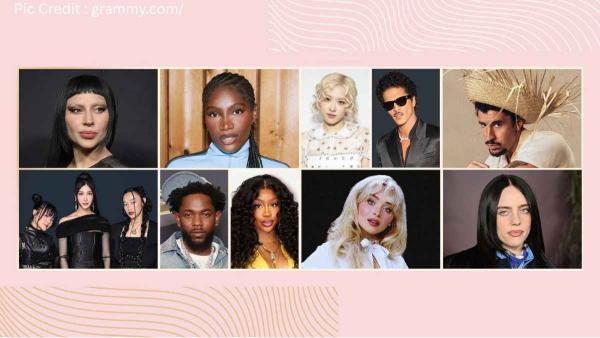
Lady Gaga follows with seven nominations—her highest total ever, surpassing her previous record of six from 2010. The nominations for MAYHEM represent a triumphant return to her dance-pop roots, with the hypnotic single “Abracadabra” earning nods across multiple categories. Producers Jack Antonoff and Cirkut also scored seven nominations each, highlighting their instrumental roles in shaping 2025’s sonic landscape.
The year’s biggest surprise came in the form of Leon Thomas, who landed six nominations—far exceeding industry expectations. The R&B artist’s Mutt earned Album of the Year recognition alongside nominations spanning traditional and contemporary R&B categories. Sabrina Carpenter, Bad Bunny, and mixer Serban Ghenea round out the six-nomination club, each representing different facets of pop’s evolving identity.
The Big Four – A New Era of Possibilities
Album of the Year
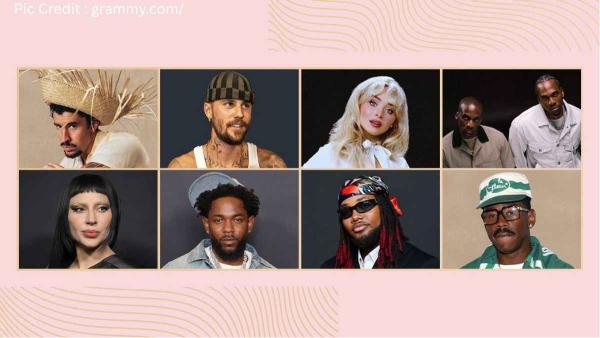
Eight contenders vie for the night’s most prestigious honor, with four artists—Bad Bunny, Kendrick Lamar, Lady Gaga, and Sabrina Carpenter—nominated across all three top categories (Album, Record, and Song of the Year):
- Bad Bunny – Debí Tirar Más Fotos
- Justin Bieber – Swag
- Sabrina Carpenter – Man’s Best Friend
- Clipse, Pusha T & Malice – Let God Sort Em Out
- Lady Gaga – MAYHEM
- Kendrick Lamar – GNX
- Leon Thomas – Mutt
- Tyler, the Creator – Chromakopia
Notably, whoever wins will be a first-time Album of the Year recipient, making this category particularly historic. Three of the eight nominees represent hip-hop—Lamar’s GNX, Clipse’s Let God Sort Em Out, and Tyler’s Chromakopia—showcasing the genre’s contemporary range from institutionalist to veteran stalwart to ambitious upstart. This is a significant acknowledgment that the hyperlyrical wing of rap continues to resonate most powerfully in Grammy circles.
Record of the Year
The Record of the Year category celebrates not just the artists but also the producers, engineers, mixers, and mastering engineers behind the year’s most impactful singles:
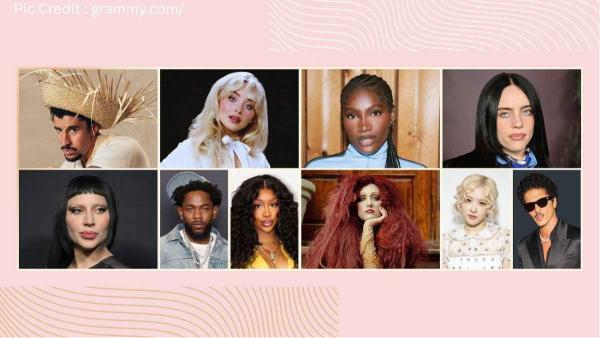
- Bad Bunny – “DtMF”
- Sabrina Carpenter – “Manchild”
- Doechii – “Anxiety”
- Billie Eilish – “WILDFLOWER”
- Lady Gaga – “Abracadabra”
- Kendrick Lamar With SZA – “luther”
- Chappell Roan – “The Subway”
- ROSÉ & Bruno Mars – “APT.”
This lineup reflects 2025’s most ubiquitous tracks, from Bad Bunny’s nostalgic meditation on Puerto Rican identity to the viral sensation “APT.”—which made ROSÉ the first K-pop artist nominated in this category. The category notably spans cultural boundaries, with songs in English, Spanish, and Korean all competing for the same honor.
Song of the Year
As a songwriter’s award, Song of the Year recognizes the craft behind the melodies and lyrics that defined the year:
- “Abracadabra” – Lady Gaga
- “Anxiety” – Doechii
- “APT.” – ROSÉ & Bruno Mars
- “DtMF” – Bad Bunny
- “Golden [From ‘KPop Demon Hunters’]” – HUNTR/X
- “luther” – Kendrick Lamar With SZA
- “Manchild” – Sabrina Carpenter
- “WILDFLOWER” – Billie Eilish
The inclusion of “Golden” from the Netflix animated film KPop Demon Hunters represents one of the year’s most discussed nominations, putting the fictional group HUNTR/X—or rather, its human vocalists—in the company of past animated nominees like Gorillaz and the Chipmunks.
Best New Artist
This year’s Best New Artist category features unconventional paths to recognition:
- Olivia Dean
- KATSEYE (formed on a HYBE reality show)
- The Marias
- Addison Rae (TikTok star turned dance-pop artist)
- sombr
- Leon Thomas
- Alex Warren
- Lola Young
Leon Thomas stands out as the only nominee with substantial nominations beyond this category. Surprisingly, Alex Warren’s “Ordinary”—which spent 10 weeks atop the Billboard Hot 100 and soundtracked countless TikTok videos—failed to secure nominations in any major categories beyond Best New Artist, marking one of the year’s most glaring omissions.
Genre Highlights and Innovations
Hip-Hop’s Strong Showing
Despite a commercially down year for hip-hop, Grammy voters gave the genre exceptional representation. Beyond Kendrick Lamar’s nine nominations, Doechii, Clipse, and Tyler, the Creator each earned five nominations. The recognition spans from Doechii’s viral hit “Anxiety” (which cleverly samples Gotye’s Grammy-winning “Somebody That I Used to Know”) to Clipse’s first album in 18 years, Let God Sort Em Out—a collaboration with Pharrell Williams that proved the duo’s enduring relevance.
Tyler, the Creator’s nominations demonstrate his genre-defying artistry: Chromakopia competes in Best Rap Album and Album of the Year, while Don’t Tap the Glass earned a nomination for Best Alternative Music Album alongside The Cure, Bon Iver, Hayley Williams, and Wet Leg. His productions incorporate plush R&B, electro, rock guitars, trap beats, psychedelia, and noise—proof that genre categories increasingly struggle to contain contemporary artistry.
Pop’s Evolution
Pop nominations reveal a genre in transition. Sabrina Carpenter’s rapid turnaround with Man’s Best Friend—her second album in just over a year—earned her another shot at the top categories after her Grammy-winning Short n’ Sweet. Her lead single “Manchild,” a country-tinged synth-pop takedown of immature men, became her first No. 1 debut on the Billboard Hot 100.
Lady Gaga’s MAYHEM represents a conscious return to the dark, bass-driven pop that launched her career, with “Abracadabra” evoking the gothic theatricality of “Bad Romance” while incorporating contemporary production techniques. The album balances intimate balladry, playful provocation, and electrifying theatrics—a celebration of every version of Gaga that exists.
Latin Music’s Breakthrough
Bad Bunny’s six nominations represent a significant victory for those concerned about Latin music’s representation in major categories. After being shut out of the top three categories in recent years, the Puerto Rican superstar earned recognition for Album, Record, and Song of the Year with Debí Tirar Más Fotos. The album—recorded entirely in Puerto Rico with local collaborators—blends salsa, bomba, plena, and early reggaeton into a deeply personal and political statement about Puerto Rican identity.
The title track “DtMF” (“I Should Have Taken More Photos”) became a cultural phenomenon, with fans using it to soundtrack compilations of their own memories on TikTok. Its meditation on regret and lost moments—”I should’ve taken more pictures when I had you/I should’ve given you more kisses and hugs whenever I could”—struck a universal chord that transcended language barriers.
The KPop Demon Hunters Phenomenon
Netflix’s animated film KPop Demon Hunters became the streaming service’s most-watched title of all time, rivaling Disney juggernauts like Encanto and Frozen. Yet the Grammys appeared unsure how to handle the fictional girl group HUNTR/X. While “Golden” earned four nominations including the coveted Song of the Year, it was noticeably absent from Record of the Year.
The song’s inspirational message—”I’m done hidin’, now I’m shinin’/Like I’m born to be”—and EJAE’s impressive A5 climax showcased the high-stakes emotion that made the film resonate globally. The nomination puts HUNTR/X in rare company, following in the footsteps of Gorillaz, Stewie Griffin, and Alvin and the Chipmunks as animated performers recognized by the Academy.
Rock and Alternative Recognition
Baltimore hardcore band Turnstile emerged as an unexpected force with five nominations spread across rock, alternative, and even metal categories. The eclecticism of Never Enough earned recognition in Best Rock Song and Performance (“Never Enough”), Best Alternative Music Performance (“Seein’ Stars”), and Best Metal Performance (“Birds”)—though the latter might rankle metal purists who question the band’s genre classification.
New Categories and Structural Changes
The 2026 Grammys introduce two significant category additions:
Best Album Cover debuts as a standalone category, complementing the existing Best Recording Package award. The inaugural nominees showcase diverse artistic visions:
- Tyler, the Creator’s CHROMAKOPIA (featuring a sepia-toned portrait with a ceramic mask)
- Bad Bunny’s Debí Tirar Más Fotos (empty lawn chairs before a banana tree)
- Djo’s The Crux (a fictional hotel scene shot on the Paramount lot)
- Perfume Genius’s Glory (an unsettling domestic scene)
- Wet Leg’s moisturizer (all five band members credited as art directors)
Best Traditional Country Album recognizes artists preserving country’s roots traditions, separate from the contemporary country category.
Notable Snubs and Surprises
The Missing Hits
Several chart-dominant songs failed to materialize in nominations:
Justin Bieber’s “Daisies” earned critical acclaim for its doo-wop-influenced, handmade aesthetic—produced by Dijon and Mk.gee—but was absent from Record and Song of the Year despite Bieber’s four total nominations. The omission likely reflects his post-Scooter Braun positioning at the industry’s fringes.
Lorde’s complete shutout from nominations for Virgin continues a troubling pattern. Since her 2018 Album of the Year nomination for Melodrama, the New Zealand artist has received zero nominations for her subsequent albums (Solar Power and Virgin)—despite both addressing the very anxieties about fading relevance that now seem prescient.
Country’s Lockout
Country music was entirely absent from the four all-genre categories (Album, Record, Song of the Year, and Best New Artist). Morgan Wallen’s decision not to submit I’m the Problem—2025’s second-biggest album—certainly impacted the genre’s chances, but rising stars like Megan Moroney, Ella Langley, and Zach Top were all considered strong Best New Artist contenders yet failed to make the cut. Nashville’s year-after-year exclusion from major categories continues to fuel discussion about the genre’s perception within the Academy.
Regional Roots Concerns
The Best Regional Roots Music Album category, designed to preserve America’s hyperlocal musical traditions, featured exclusively Louisiana-based music this year—New Orleans funk and zydeco. While culturally significant, the category’s complete exclusion of Hawaiian music and other regional holdouts raises questions about the award’s original intent.
Categorization Confusion
Leon Thomas’s nominations revealed the Academy’s struggle with genre definitions. Despite his album Mutt earning Album of the Year recognition, the Grammy categorizers faced a timing conundrum: the title track’s single release preceded the eligibility date of August 30, 2024. The solution? Nominating his NPR Tiny Desk Concert version for Best R&B Performance—an “old-school live performance” in Academy parlance. Meanwhile, “Vibes Don’t Lie” received a Best Traditional R&B Performance nomination despite being built on a four-bar loop rather than traditional band instrumentation.
Cultural Impact and Industry Trends
The Streaming Era’s Influence
Nominations increasingly reflect streaming dominance and viral potential. Doechii’s “Anxiety” originated as a 2019 YouTube upload, was sampled by Sleepy Hallow in 2023, then resurfaced via TikTok before Doechii re-recorded and officially released it. This circuitous path to success—and Grammy recognition—exemplifies how contemporary hits can simmer for years before achieving mainstream recognition.
ROSÉ’s “APT.” similarly leveraged cross-cultural appeal, introducing global audiences to the Korean drinking game that inspired the song. Its interpolation of Toni Basil’s “Mickey” and blend of pop-punk, new wave, and indie rock created an irresistibly bright anthem that topped charts in over 50 countries and spent 12 weeks at No. 1 on the Billboard Global 200.
The Producer’s Moment
Producer nominations highlight the behind-the-scenes architects of 2025’s soundscape. Jack Antonoff’s seven nominations span his work with Sabrina Carpenter, Kendrick Lamar, and others, while Cirkut’s production on Lady Gaga’s comeback and ROSÉ’s crossover hit earned equal recognition. The Producer of the Year, Non-Classical category features Dan Auerbach, Cirkut, Dijon, Blake Mills, and Sounwave—each representing distinct production philosophies from vintage-inspired to cutting-edge digital.
Visual Media Integration
The Best Song Written for Visual Media category demonstrates music’s evolving relationship with film, television, and gaming:
- Nine Inch Nails’s “As Alive as You Need Me to Be” [From TRON: Ares]
- “Golden” [From KPop Demon Hunters]
- “Never Too Late” by Elton John & Brandi Carlile [From Elton John: Never Too Late]
- Multiple songs from Sinners
The Best Score Soundtrack for Video Games category continues expanding, with nominees including Helldivers 2, Indiana Jones and the Great Circle, and Star Wars Outlaws, acknowledging gaming’s cultural parity with traditional visual media.
Looking Ahead – 2026 Grammy Nominations:
The 2026 Grammys ceremony will broadcast live on CBS and stream on Paramount+ on February 1, with highlights available year-round on live.GRAMMY.com. As the Recording Academy’s voting members—a peer group of music creators including artists, songwriters, producers, and engineers—deliberate their choices, several narratives will define Music’s Biggest Night:
Can Kendrick Lamar achieve consecutive years of dominance across the top categories? Will Lady Gaga’s return to form earn her first Album of the Year win? Can Bad Bunny break through Latin music’s traditional barriers in the all-genre categories? And will Leon Thomas complete his unexpected rise from producer-for-hire to Grammy-winning artist?
The nominations reflect a music industry grappling with technological disruption, genre fluidity, and global interconnectedness. From animated avatars to TikTok sensations, from Puerto Rican cultural statements to hardcore bands earning pop recognition, the 2026 Grammy nominations capture a moment when music’s boundaries have never been more permeable—even as the categories designed to contain them feel increasingly antiquated.
As the ceremony approaches, one thing remains certain: the 68th annual Grammy Awards will celebrate a year when music’s diversity, creativity, and cultural impact reached unprecedented heights, even as debates about who was recognized—and who was overlooked—continue to shape the conversation about music’s most prestigious honors.
Winners will be announced February 1, 2026, during the Grammy Awards ceremony at Crypto.com Arena in Los Angeles, broadcasting live at 8 p.m. ET/5 p.m. PT on CBS and Paramount+.